朝顔
壱In one line一言で言うと
Asagao, the morning glory, is the flower Japanese children grow at school and a plant with a long breeding history.
弐In 30 seconds30秒で説明する
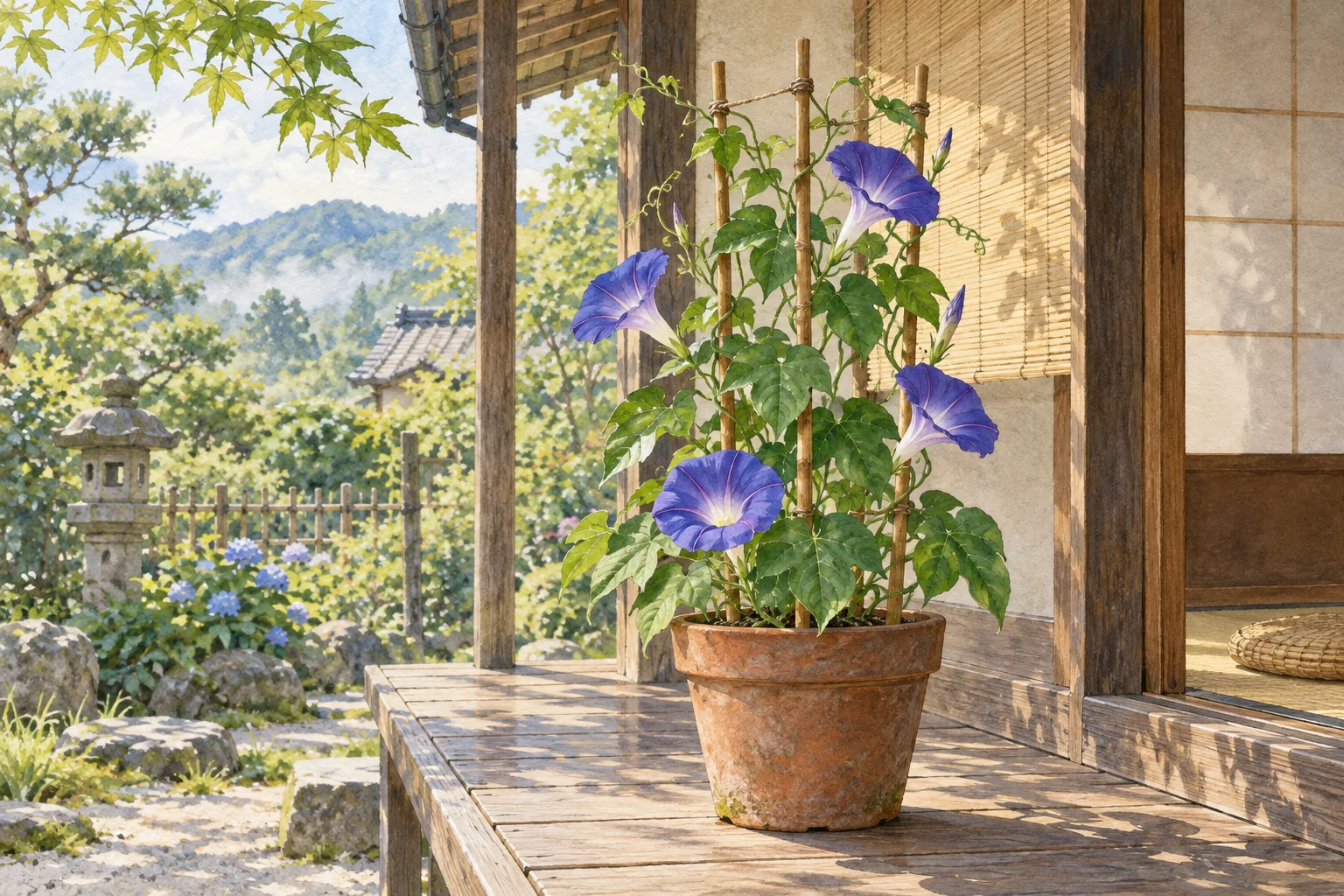
Morning glories climb a bamboo frame and open early, closing by the afternoon, which is where the Japanese name, morning face, comes from. Many Japanese adults grew one in a pot in the first year of elementary school and carried it home for the summer holidays. In the Edo period the plant went through waves of collecting and breeding, producing strange twisted forms still cultivated by specialists today.
参As a short speechスピーチ・英作文
Ask a Japanese adult about morning glories and you will usually get a memory rather than a botanical fact. In the first year of elementary school, children are each given a pot, a seed and a bamboo tripod, water it every morning, record the leaves and the flowers in a picture diary, and then carry the pot home on the last day of term, which is how many families end up with a morning glory on the balcony every July.
The plant suits this: it grows fast, climbs visibly, and opens a new flower most mornings. The name means morning face, because the flowers open at dawn and are gone by afternoon. There is also a serious history here.
The plant arrived from China, probably as a medicinal seed, and in the Edo period it became the object of collecting crazes, with growers breeding bizarre mutated forms whose flowers are split, frilled or barely recognizable, sold and judged at shows. Those strange varieties still exist, maintained by specialists, and a large morning glory market is held in Tokyo every July.
朝顔あさがおasagaothe morning glory
小学一年生が鉢で育て、夏休みに持ち帰る花。江戸には品種改良の大流行があった。
壱一言で言うとIn one line
朝顔は日本の子どもが学校で育てる花であり、長い品種改良の歴史を持つ植物です。
弐30秒で説明するIn 30 seconds
朝顔は竹の支柱に絡んで朝早く咲き、午後にはしぼみます。「朝の顔」という日本語の名はそこから来ています。日本の大人の多くは、小学一年生のときに鉢で育て、夏休みに持ち帰りました。江戸時代には収集と品種改良の流行が何度か起き、今も愛好家が育てる奇妙にねじれた形が生まれました。
参スピーチ・英作文As a short speech
日本の大人に朝顔のことを尋ねると、たいてい植物の知識ではなく思い出が返ってきます。小学一年生のとき、子どもは鉢と種と竹の支柱をもらい、毎朝水をやり、葉と花を絵日記に記録し、学期の最後の日に鉢を持ち帰ります。
だから多くの家庭のベランダに、七月になると朝顔があるのです。この植物はそれに向いています。速く育ち、目に見えて伸び、ほとんど毎朝あたらしい花を開きます。名前は「朝の顔」という意味で、花は夜明けに開き、午後には姿を消すからです。そして真面目な歴史もあります。
おそらく薬用の種として中国から伝わり、江戸時代には収集の大流行の的になりました。栽培家たちは、花が裂け、縮れ、ほとんど花に見えないほど変わった変異の形を育て、品評会で売り買いし、競いました。その奇妙な品種は今も愛好家によって維持され、東京では毎年七月に大きな朝顔の市が立ちます。
こう聞かれたらQuestions people actually ask
QWhy do schools use this particular flower?
AIt germinates reliably, grows fast enough for a child to see progress in days, climbs a support so the change is visible, and flowers within the school term. It is also easy to collect seeds from, so the cycle can be shown from seed to seed within a year.
どうして学校はこの花を使うのですか。確実に芽を出し、子どもが数日で変化を見られるほど速く育ち、支柱に絡むので伸びが目に見え、学期のうちに咲くからです。種も採りやすいので、種から種までの一巡を一年で見せられます。
QWhat are the strange twisted ones?
AThey are called henka asagao, mutated morning glories, bred in the Edo period from plants carrying genetic changes that distort the leaves and flowers. Many are so altered that they cannot set seed themselves, so growers maintain them by raising seeds from normal-looking sibling plants that carry the trait.
あの奇妙にねじれたものは何ですか。変化朝顔と呼ばれ、葉や花をゆがめる遺伝的な変異を持つ株から江戸時代に育てられました。多くは変化が大きすぎて自分では種をつけられないため、その形質を持つふつうに見える兄弟株から種を採って維持します。
QWhen and where can I see them?
AJuly is the month. The best-known event is the morning glory market held at a temple in the Iriya area of Tokyo in early July, where hundreds of stalls sell potted plants. Botanical gardens often display the mutated varieties, which are more interesting than they sound.
いつ、どこで見られますか。七月です。最もよく知られるのは七月の初めに東京の入谷の寺で開かれる朝顔市で、何百もの店が鉢を売ります。植物園では変化朝顔が展示されることが多く、名前から想像するよりずっと面白いものです。
そのまま使えるフレーズPhrases you can use
- They open at dawn and close by afternoon.夜明けに咲いて、午後にはしぼみます。
- Most kids grow one in first grade.たいてい一年生のときに育てます。
- We carried the pot home for the holidays.夏休みに鉢を持ち帰りました。
- The twisted ones were bred in the Edo period.変わった形のものは江戸時代に作られました。
- There's a morning glory market in July.七月に朝顔市があります。
豆知識Background
朝顔は奈良時代に中国から伝わったとされ、当初は種子が薬として扱われたと説明されます。江戸時代には園芸の対象として流行し、文化・文政期と嘉永・安政期に大きな二度のブームがあったとされます。この時期に、葉や花が大きく変形した「変化朝顔」が多数作り出されました。変化の強い個体は結実しないものが多く、劣性の形質を持つ正常な株から種を採って維持する方法が続けられています。小学校での栽培は生活科の教材として定着し、夏休み前に鉢を持ち帰る光景は全国的なものです。東京の入谷鬼子母神の朝顔市は七月初旬に開かれ、夏の風物詩として知られます。俳句では秋の季語とされ、新暦の感覚とずれる例としてしばしば紹介されます。
出典日本文化ナビ(原田英語.com)「朝顔を英語で説明する(asagao)」https://www.haradaeigo.com/japanese-culture/w/asagao
- 文
- 日本文化ナビ編集部(原田英語.com)— 英文・和訳・解説はすべて独自に作成
- イラスト
- 日本文化ナビ オリジナル
- 発行
- 原田英語.com https://www.haradaeigo.com/
- 印刷日
- 2026.10.17
© 2026 Harada Eigo (原田英語.com). Text and illustration: Japan Culture Navi.
ページはこちら