夢占い
壱In one line一言で言うと
Yume-uranai is Japanese dream divination, reading the content of a dream as a sign about the dreamer's fortune.
弐In 30 seconds30秒で説明する
Yume-uranai interprets the content of a dream as a hint about the dreamer's fortune, health or upcoming events, using stock symbols that get repeated across books, magazines and apps: a snake often reads as good luck or transformation, teeth falling out usually signals anxiety or loss, and seeing Mount Fuji in your first dream of the new year is considered one of the luckiest omens of all. The tradition overlaps with hatsuyume, the custom of paying special attention to the first dream of the new year, and shares roots with Chinese dream lore, though most people today check a meaning out of curiosity rather than real belief.
参As a short speechスピーチ・英作文
Yume-uranai treats a dream not as random noise from a tired brain but as a message worth decoding, and Japan has built up a large stock of standard symbols to help with that. Some are widely shared with dream lore elsewhere: a snake often signals good luck, transformation or hidden danger depending on the details, and dreaming that your teeth are falling out usually points to anxiety, stress or a fear of loss.
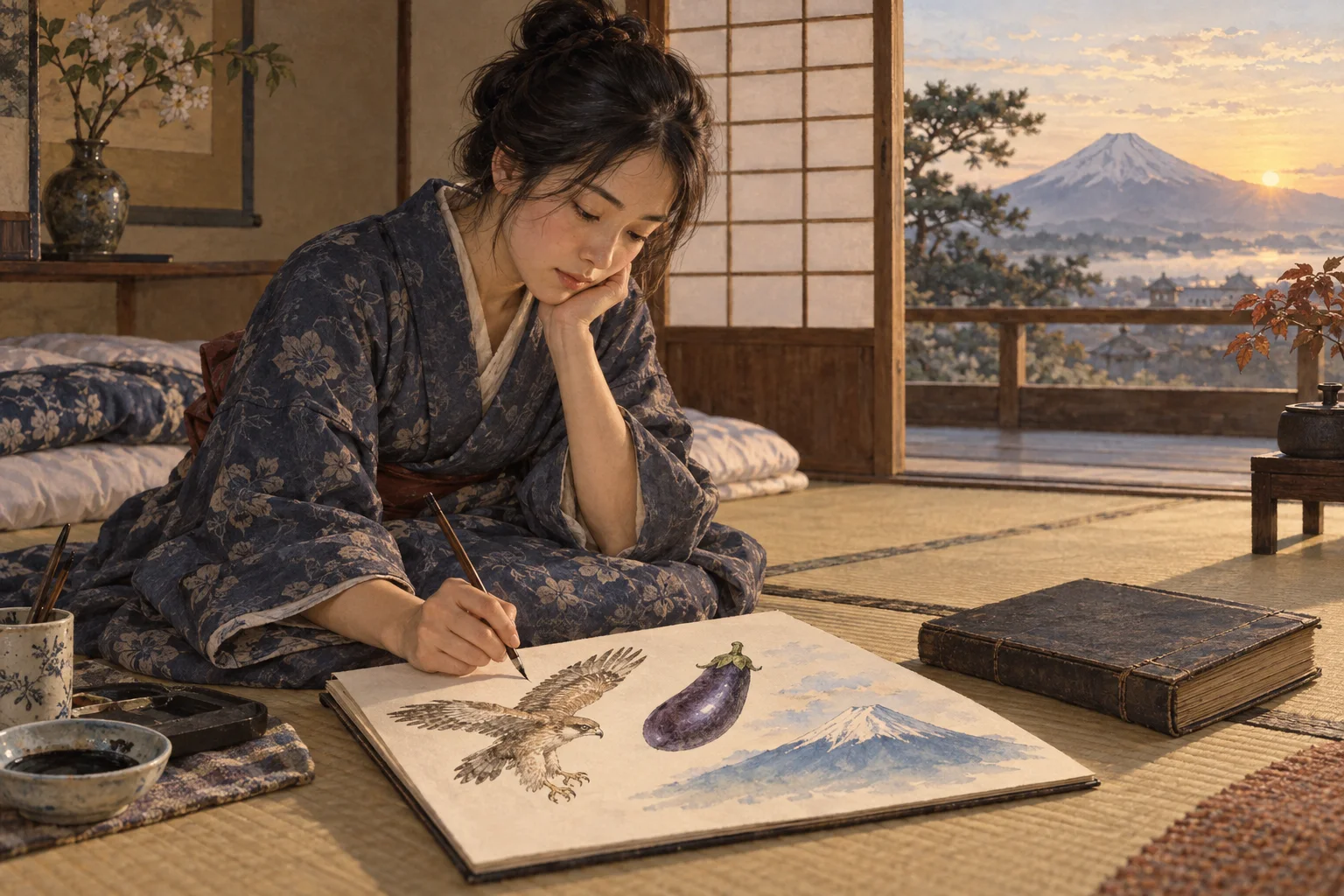
Others are distinctly Japanese, most famously hatsuyume, the first dream of the new year, where seeing Mount Fuji, a hawk and an eggplant, in that order, is considered the luckiest possible combination, an association that goes back centuries though its exact origin has several competing explanations. Books, magazines and now smartphone apps offer huge indexes of dream symbols people can look up the morning after a vivid dream, and while a small number of people take the readings seriously, most treat it the way they treat a horoscope: entertaining, occasionally eerily accurate, and not something to actually plan a day around.
夢占いゆめうらないyume-uranaiJapanese dream divination
見た夢の中身で運勢を占う。歯が抜ける夢は昔から特に気にされる。
壱一言で言うとIn one line
夢占いとは、見た夢の内容から運勢の兆しを読み取るとされる占いです。
弐30秒で説明するIn 30 seconds
夢占いは、見た夢の内容を、夢を見た人の運勢や健康、これから起こることの兆しとして読み解く占いで、本や雑誌、アプリで繰り返し使われる決まった象徴があります。蛇の夢は幸運や変化のしるしとされることが多く、歯が抜ける夢はたいてい不安や喪失のしるしとされ、初夢で富士山を見るのはもっとも縁起の良い前兆の一つとされます。この伝統は、新年最初に見る夢に特に注目する初夢の風習と重なり、中国の夢占いのルーツとも共通する部分がありますが、今ではほとんどの人が本気で信じるというより、興味半分で意味を確かめる程度です。
参スピーチ・英作文As a short speech
夢占いは、夢を疲れた脳が出すただの雑音としてではなく、読み解く価値のあるメッセージとして扱うもので、日本にはそれを助ける定番の象徴が数多く蓄積されています。蛇の夢のように、ほかの国の夢占いとも広く共有される象徴もあり、細部によって幸運や変化、あるいは隠れた危険のしるしとされます。
歯が抜ける夢は、たいてい不安やストレス、喪失への恐れを示すとされます。一方で、日本ならではのものもあり、もっとも有名なのは新年最初に見る夢である初夢で、富士山・鷹・茄子の順に見るのがもっとも縁起が良い組み合わせとされます。この結びつきは何世紀も前にさかのぼるとされますが、正確な由来には複数の説があります。
本や雑誌、今ではスマートフォンのアプリが、印象的な夢を見た翌朝に調べられる膨大な夢の象徴の索引を提供しており、本気で受け止める人はごく一部ですが、たいていの人は星占いと同じように扱います。おもしろく、時にぞっとするほど当たることもありますが、それを基に一日の予定を立てるようなものではありません。
こう聞かれたらQuestions people actually ask
QWhy is Mount Fuji considered such a lucky thing to dream about?
AIt's part of hatsuyume, the first dream of the new year, where Fuji, a hawk and an eggplant are traditionally ranked the three luckiest images, though there are several competing explanations for why this particular order stuck.
富士山の夢を見るのがそんなに縁起がいいのはなぜですか。新年最初の夢である初夢の一部で、富士山・鷹・茄子は伝統的に最も縁起の良い三つの象徴とされますが、なぜこの順番が定着したのかには複数の説があります。
QDoes a bad dream actually mean something bad will happen?
AMost people don't treat it that literally. A dream about teeth falling out, for example, is usually read as reflecting existing anxiety rather than predicting a specific future event.
悪い夢を見ると本当に悪いことが起きるのですか。たいていの人はそこまで文字通りには受け取りません。例えば歯が抜ける夢は、特定の未来の出来事を予言するというより、すでにある不安の表れとして読まれることが多いです。
QWhere do people look up what a dream means?
ADream dictionaries in book form have existed for a long time, and today most people just search the symbol on a smartphone app or website that lists common dream meanings.
夢の意味はどこで調べるのですか。夢占いの本は昔からありますが、今ではたいていの人がスマートフォンのアプリやサイトで、その象徴を検索して調べます。
そのまま使えるフレーズPhrases you can use
- I dreamed about a snake last night — is that good?昨夜蛇の夢を見たんですが、これって良いことですか。
- Fuji, a hawk and an eggplant — that's the luckiest first dream.富士山と鷹と茄子。それが一番縁起のいい初夢です。
- Dreaming your teeth fall out usually means you're stressed.歯が抜ける夢はたいてい、ストレスを表しているとされます。
- I looked up what my dream meant this morning.今朝、自分が見た夢の意味を調べました。
- It's fun to check, but I don't take it too seriously.調べるのは楽しいけど、本気にはしていません。
豆知識Background
夢占いは中国の夢に関する占いの影響を受けつつ、日本独自の象徴体系を発達させてきたとされる。代表的なのが初夢で、正月に見る夢の中でも「一富士二鷹三茄子」の順に見るのが縁起が良いとされ、その由来には、徳川家康が晩年を過ごした駿河国の名物を並べたという説など、複数の説がある。歯が抜ける夢や蛇の夢など、夢の意味を解く本は江戸時代にも出版されており、現在は書籍だけでなくスマートフォンのアプリでも手軽に調べられる。
出典日本文化ナビ(原田英語.com)「夢占いを英語で説明する(yume-uranai)」https://www.haradaeigo.com/japanese-culture/en/yume-uranai
- 文
- 日本文化ナビ編集部(原田英語.com)— 英文・和訳・解説はすべて独自に作成
- イラスト
- 日本文化ナビ オリジナル
- 発行
- 原田英語.com https://www.haradaeigo.com/
- 印刷日
- 2026.10.17
© 2026 Harada Eigo (原田英語.com). Text and illustration: Japan Culture Navi.
ページはこちら