焼き魚
壱In one line一言で言うと
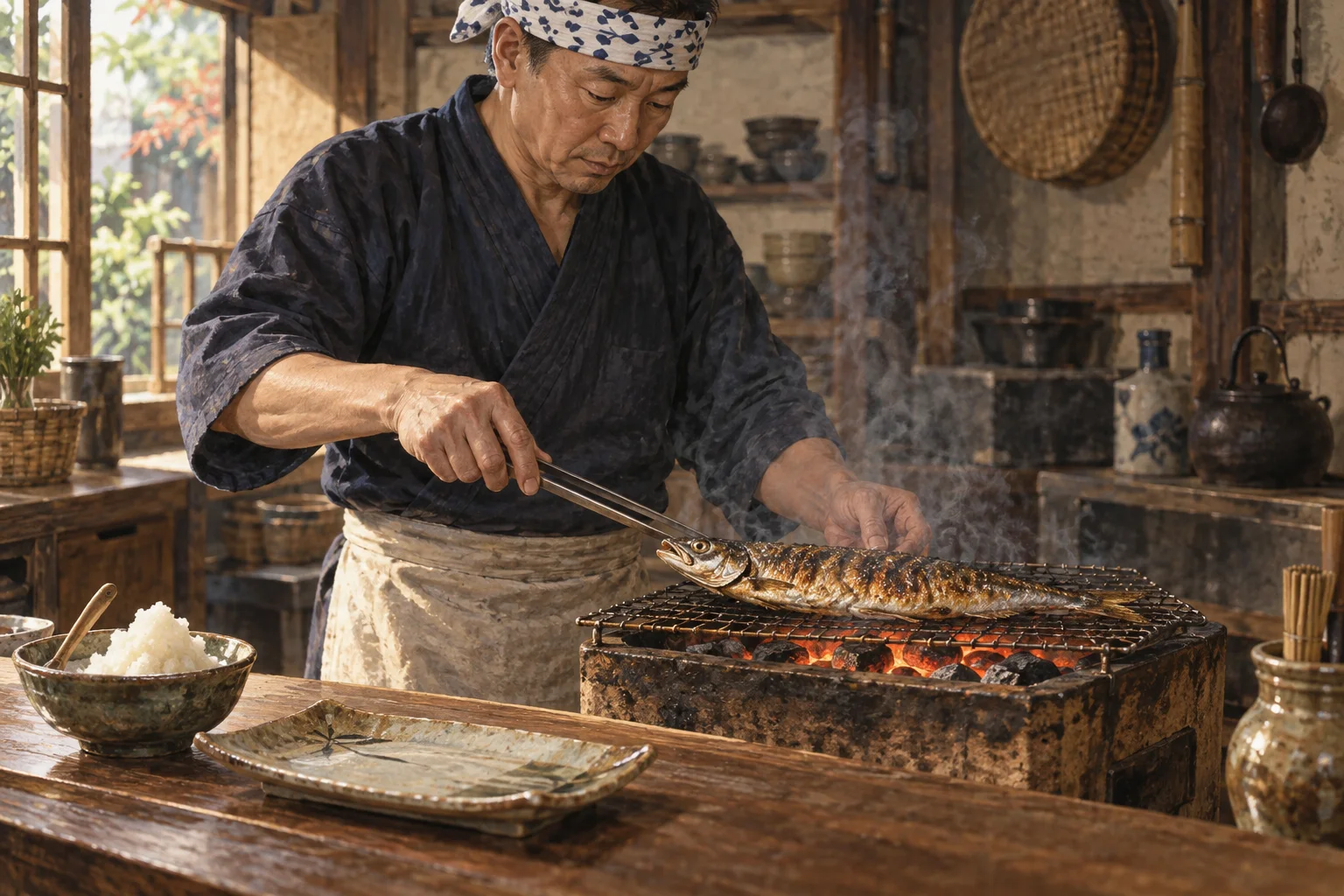
Grilled fish salted and cooked plain is the center of a traditional Japanese breakfast.
弐In 30 seconds30秒で説明する
Yakizakana means fish grilled with nothing but salt, or brushed with a soy glaze. Mackerel, salmon, saury and horse mackerel are the everyday choices. It is served whole or as a fillet with the skin on, eaten with rice, and most Japanese gas stoves have a small built-in grill for exactly this.
参As a short speechスピーチ・英作文
Grilled fish is the plainest and most characteristic dish in Japanese home cooking. Salt is sprinkled on the fish, it rests for a while, and then it goes under a grill until the skin blisters. That is the whole method. Most Japanese kitchen stoves have a narrow drawer-like grill under the burners, built for this one purpose.
The fish arrives whole or as a split fillet with the skin on, and you eat it with rice, soup and pickles. Eating it neatly is a skill: work along the top fillet with chopsticks, then lift the backbone away rather than turning the fish over, which is considered clumsy.
Some fish, especially horse mackerel and saury, are also sold dried overnight, which concentrates the flavor and is what many people eat at breakfast. One honest note on availability: saury catches have fallen sharply in recent years, and the fish that was once the cheap symbol of autumn is now often expensive.
焼き魚やきざかなyakizakanagrilled fish with salt
塩をふって焼くだけ。日本の朝食の中心にある一皿。
壱一言で言うとIn one line
塩をふって素焼きにした魚は、伝統的な日本の朝食の中心にある一皿です。
弐30秒で説明するIn 30 seconds
焼き魚とは、塩だけをふって焼いた魚、あるいはたれを塗って焼いた魚のことです。サバ、サケ、サンマ、アジが日ごろの定番です。皮つきのまま丸ごとか切り身で出され、ご飯と一緒に食べます。日本の多くのガスこんろには、まさにこのための小さな魚焼きグリルがついています。
参スピーチ・英作文As a short speech
焼き魚は、日本の家庭料理で最も素朴で、最も特徴的な一皿です。魚に塩をふり、しばらく置いてから、皮が泡立つまで焼く。方法はそれだけです。日本の台所のこんろの多くには、その一つのために作られた、引き出しのような細長い魚焼きの部分がついています。
魚は丸ごとか、皮のついた開きの形で出され、ご飯と汁と漬物と一緒に食べます。きれいに食べるのは技術です。箸で上側の身を頭のほうから食べ進め、魚をひっくり返すのではなく背骨を持ち上げて外します。ひっくり返すのは不作法とされます。
アジやサンマは一晩干した干物としても売られ、味が凝縮します。朝に食べるのはこちらという人も多くいます。手に入りやすさについて正直に書いておくと、サンマの漁獲量は近年大きく落ち込み、かつて秋の安い象徴だった魚が、今では高値になることが多くなりました。
こう聞かれたらQuestions people actually ask
QHow do I eat a whole grilled fish politely?
AEat the upper side from head to tail, then lift the spine out with your chopsticks and set it aside, and eat the lower side. Turning the fish over is generally avoided.
魚を一尾、きれいに食べるにはどうすればよいですか。上側を頭から尾へ食べ、それから箸で背骨を持ち上げて外に置き、下側を食べます。魚をひっくり返すのは、一般に避けられます。
QDo people eat the skin?
AUsually yes, and with salted grilled fish many people say it is the best part. The small bones near the fins are left, and sometimes a small dish is provided for them.
皮も食べるのですか。たいてい食べますし、塩焼きでは皮がいちばんおいしいと言う人も多くいます。ひれのそばの小骨は残し、そのための小皿が出ることもあります。
QWhat is the grated white thing served with it?
AGrated daikon radish, often with a little soy sauce. It cuts the oil and is meant to be eaten with the fish rather than as a separate side dish.
横に添えてある白いおろしたものは何ですか。大根おろしです。少し醤油をかけることもあります。脂を切るためのもので、別の一品としてではなく、魚と一緒に食べます。
そのまま使えるフレーズPhrases you can use
- Just salt, nothing else.塩だけで焼いてあります。
- Don't turn the fish over.魚は裏返さないでください。
- Watch out for small bones.小骨に気をつけてください。
- The grated radish goes with it.大根おろしと一緒にどうぞ。
- This one is dried overnight.これは一夜干しです。
豆知識Background
焼き魚は、塩をふって焼く塩焼きと、たれを塗って焼く照り焼きに大きく分かれます。家庭のこんろには魚焼きグリルが備えられていることが多く、両面焼きのものが普及しています。干物は魚を開いて塩水につけ、干して水分を抜いたもので、保存のための技術が味の技術になった例です。サンマは秋の味覚として親しまれてきましたが、近年は漁獲量の落ち込みが続き、価格が上がっています。魚を裏返さずに食べる作法は、船に乗る人の縁起かつぎに由来するとも言われます。
出典日本文化ナビ(原田英語.com)「焼き魚を英語で説明する(yakizakana)」https://www.haradaeigo.com/japanese-culture/en/yakizakana
- 文
- 日本文化ナビ編集部(原田英語.com)— 英文・和訳・解説はすべて独自に作成
- イラスト
- 日本文化ナビ オリジナル
- 発行
- 原田英語.com https://www.haradaeigo.com/
- 印刷日
- 2026.10.17
© 2026 Harada Eigo (原田英語.com). Text and illustration: Japan Culture Navi.
ページはこちら