作業着と社章
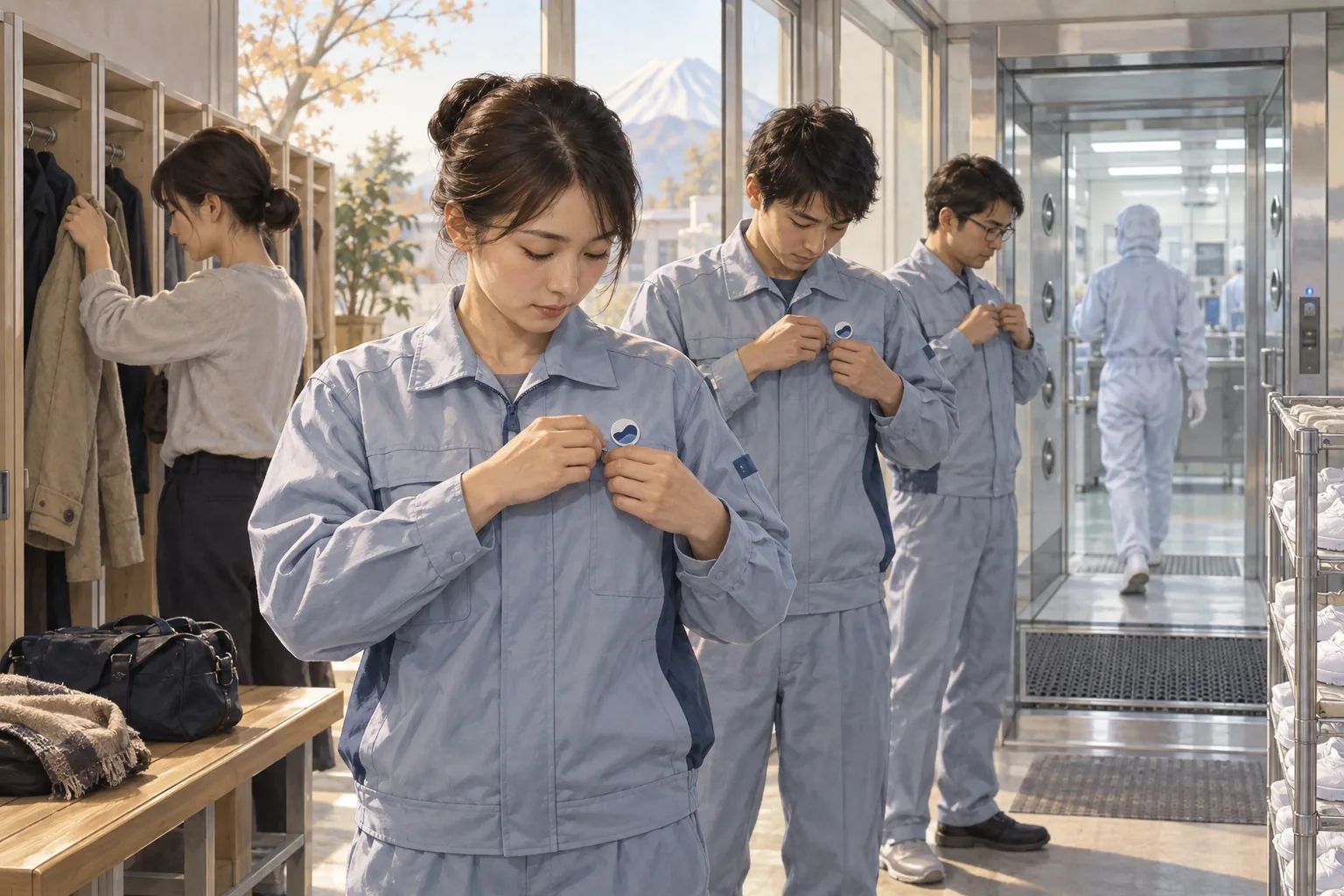
壱In one line一言で言うと
Sagyogi to shasho, or work uniforms and lapel pins, are the company-issued jacket everyone wears and the company badge.
弐In 30 seconds30秒で説明する
In Japanese manufacturing, construction and utilities, everyone from the newest hire to the president often wears the same company work jacket. It signals that the office and the shop floor are one organization. Separately, many white-collar employees wear a lapel pin with the company badge, and some industries use it as identification. Both practices have weakened but remain visible, and the uniform is also practical safety wear.
参As a short speechスピーチ・英作文
Visit a Japanese factory and you may not be able to tell the president from a new technician, because both are wearing the same jacket with the company name on the chest. The company work uniform, the sagyogi, is issued to everyone in many manufacturing, construction, transport and utility firms, and executives wear it on site and often in the office too.
The stated reason is unity: if management dresses like the shop floor, the organization is one body rather than two classes. There are practical reasons as well, since work clothing carries safety requirements, pockets for tools and reflective material. The second item is the lapel pin. Many companies issue a small metal badge with their logo, worn in the buttonhole of a suit jacket, and in some industries it functions as a first check of who you are.
Both customs are weaker than they were. Many younger workplaces, especially in technology, have dropped uniforms and pins entirely, and some firms redesigned their work jackets to be something staff would actually choose to wear. But on a construction site or in a regional manufacturer, both are still completely normal.
作業着と社章さぎょうぎとしゃしょうsagyogi to shashocompany uniforms and lapel pins
社長まで同じ作業着を着る会社がある。襟の小さなバッジが、どこの社員かを語る。
壱一言で言うとIn one line
作業着と社章とは、多くの日本の会社が支給する全員共通の作業着と、所属を示す襟の小さな記章です。
弐30秒で説明するIn 30 seconds
日本の製造業、建設業、公益事業では、入りたての新人から社長まで同じ会社の作業着を着ることがよくあります。事務所と現場が一つの組織だと示す意味があります。別に、事務職の社員が襟に社章のバッジをつけることも多く、業界によっては身分の証明として使われます。どちらも以前より弱まりましたが今も見られ、作業着は安全のための服でもあります。
参スピーチ・英作文As a short speech
日本の工場を訪ねると、社長と入ったばかりの技術者の区別がつかないかもしれません。どちらも胸に社名の入った同じ上着を着ているからです。会社の作業着は、製造業、建設業、運輸、公益事業の多くの企業で全員に支給され、経営陣も現場では、そしてしばしば事務所でもこれを着ます。掲げられる理由は一体感です。
経営側が現場と同じ服装をすれば、組織は二つの階層ではなく一つの体になるという考えです。実際的な理由もあります。作業服には安全上の要件があり、工具を入れるポケットや反射材がついています。もう一つが社章です。多くの会社が自社のロゴの入った小さな金属のバッジを支給し、背広の襟の穴につけます。
業界によっては、相手が誰かを確かめる最初の手がかりとして働きます。どちらの習慣も以前より弱まりました。若い職場、特にIT企業の多くでは制服も社章もなくなり、社員が進んで着たくなるように作業着を作り直した企業もあります。それでも建設の現場や地方の製造業では、どちらもまったくふつうのことです。
こう聞かれたらQuestions people actually ask
QDoes the president really wear the same uniform?
AIn many manufacturers, yes, at least on site and at company events, and some wear it daily. It is presented as a statement that everyone is doing the same work for the same organization. Whether staff read it that way or as a performance varies by company.
社長も本当に同じ作業着を着るのですか。多くの製造業では、少なくとも現場や社内の行事では実際にそうで、毎日着る人もいます。全員が同じ組織で同じ仕事をしているという表明として説明されます。社員がそう受け取るか、演出と見るかは会社によります。
QWhat is the small pin on a suit lapel?
AUsually a company badge, sometimes a professional qualification or an industry association. In finance, construction and government-facing work it can serve as an informal identification. Another common pin, a round one in rainbow colors, shows support for the UN Sustainable Development Goals rather than membership in a company.
スーツの襟についている小さなバッジは何ですか。たいていは社章ですが、資格や業界団体のものもあります。金融、建設、官公庁を相手にする仕事では、略式の身分証のように働くことがあります。よく見かける別の虹色の丸いバッジは、会社の所属ではなく、国連の持続可能な開発目標(SDGs)への賛同を示すものです。
QDo office workers have uniforms too?
AIt used to be common for women in clerical roles to wear a company uniform while men wore suits, which was criticized as marking a difference in status. Many companies abolished it from the 1990s onward. Banks, some retailers and public offices still have them, now more often for all staff.
事務の人にも制服があるのですか。かつては事務の女性が制服を着て男性は背広という形が一般的で、立場の違いを示すものとして批判されました。1990年代以降、多くの企業が廃止しました。銀行や一部の小売、官公庁には今も残り、今では全員が着る形が多くなっています。
そのまま使えるフレーズPhrases you can use
- Everyone wears the same work jacket here.ここでは全員が同じ作業着を着ます。
- You can't tell the manager from the staff.上司と社員の区別がつきません。
- That pin on his lapel is the company badge.襟のあのバッジは社章です。
- The uniform is also safety wear.作業着は安全のための服でもあります。
- Most tech companies don't bother with this.IT企業ではあまり見かけません。
豆知識Background
作業着を全社員に支給し、経営者も着用する形は、製造業を中心に日本の企業文化として語られてきました。現場と経営の距離を縮める象徴として説明される一方、実際には安全性や機能の要請も大きく、作業服には反射材や難燃の素材、工具用のポケットなどが備えられています。社章は襟の穴につける小さなバッジで、社員である証と所属の表示を兼ね、業界によっては初対面の確認に使われます。事務職の制服は、かつて女性のみに課される例が多く、男女の役割の固定につながるとして批判され、1990年代以降に廃止する企業が相次ぎました。近年はデザイン性を高めた作業着を打ち出し、通勤にも着られる服として売り出す企業も現れています。
出典日本文化ナビ(原田英語.com)「作業着と社章を英語で説明する(sagyogi to shasho)」https://www.haradaeigo.com/japanese-culture/en/work-uniforms
- 文
- 日本文化ナビ編集部(原田英語.com)— 英文・和訳・解説はすべて独自に作成
- イラスト
- 日本文化ナビ オリジナル
- 発行
- 原田英語.com https://www.haradaeigo.com/
- 印刷日
- 2026.10.17
© 2026 Harada Eigo (原田英語.com). Text and illustration: Japan Culture Navi.
ページはこちら