和紙
壱In one line一言で言うと
Washi is traditional Japanese paper made from long plant fibers, so it is thin but extremely strong.
弐In 30 seconds30秒で説明する
Washi is made from the inner bark of shrubs such as kozo, not from wood pulp. The fibers are much longer than in ordinary paper, which is why washi can be thin and translucent and still resist tearing. It is used for shoji doors, calligraphy, lanterns and restoring old documents, and three washi traditions are on the UNESCO list.
参As a short speechスピーチ・英作文
Washi is Japanese paper, and the difference from ordinary paper is in what it is made of. Most paper is wood pulp, with short fibers. Washi is made from the inner bark of shrubs, usually kozo, and those fibers are long, so they tangle into a sheet that is extremely strong for its thinness.
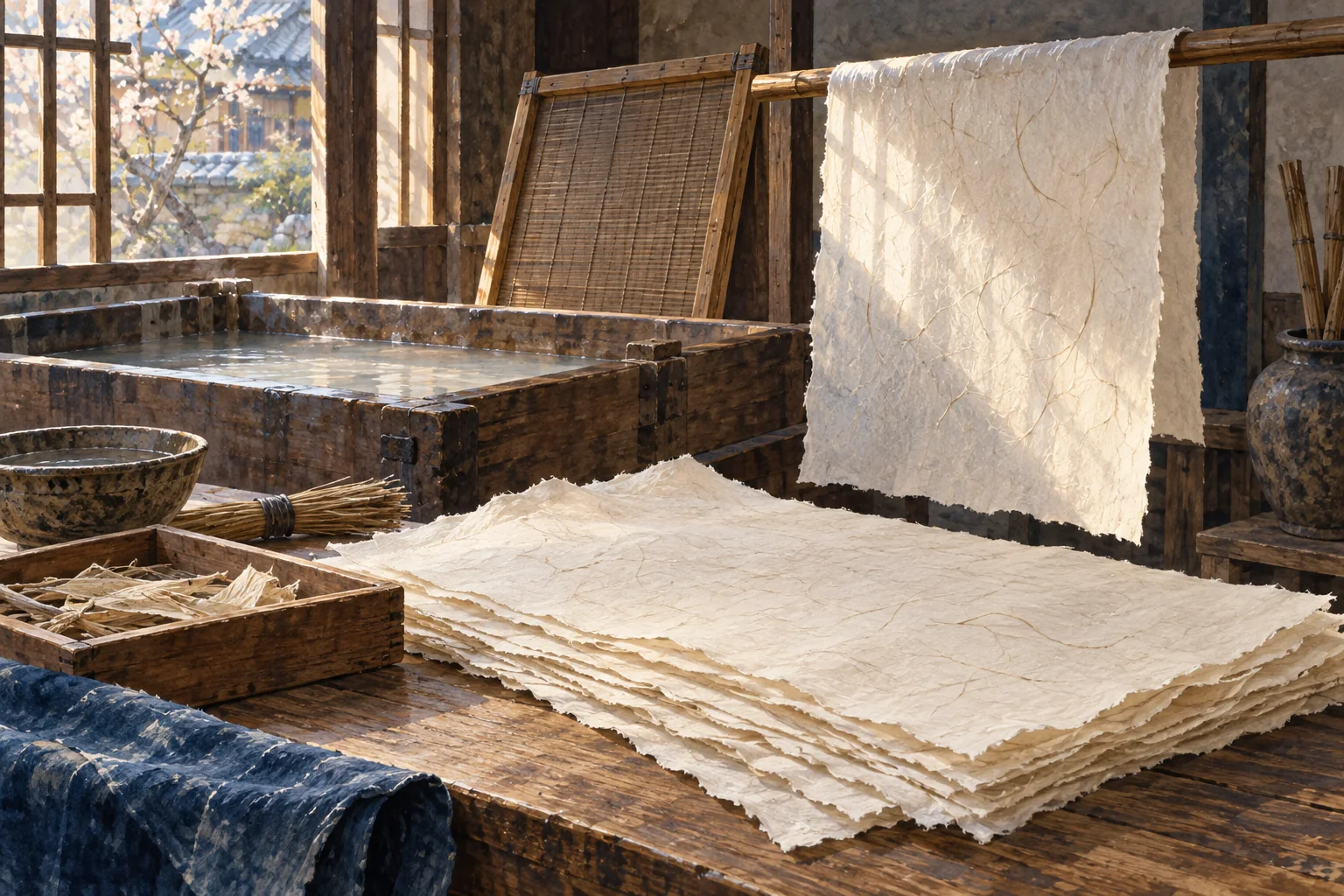
That is why you can make a sliding door out of it and why it can be thin enough to see light through. The making is done by hand: the bark is boiled, beaten, suspended in water with a plant mucilage, and scooped onto a bamboo screen with a rocking motion that lays the fibers in different directions.
Well-made washi lasts a very long time, and conservators at museums outside Japan use it to repair centuries-old European documents, because it is strong, chemically stable and thin enough to be almost invisible. In 2014 UNESCO listed three washi-making traditions together as intangible cultural heritage, expanding an earlier entry for one of them.
和紙わしwashitraditional Japanese paper
木ではなく樹皮の繊維で作る。だから千年もつ紙になる。
壱一言で言うとIn one line
和紙とは、長い植物の繊維で作る日本の伝統的な紙で、薄いのに非常に丈夫です。
弐30秒で説明するIn 30 seconds
和紙は木材パルプではなく、楮(こうぞ)などの樹皮の内皮から作ります。繊維がふつうの紙よりずっと長いため、薄く透けるほどでも破れにくいのです。障子、書、提灯に使われ、古文書の修復にも用いられます。三つの和紙の技術がユネスコの一覧に登録されています。
参スピーチ・英作文As a short speech
和紙は日本の紙ですが、ふつうの紙との違いは原料にあります。多くの紙は木材パルプで、繊維が短い。和紙は低木の樹皮の内側、多くは楮から作り、その繊維は長いので、絡み合った紙は薄さのわりにきわめて丈夫になります。だからこれで引き戸が作れますし、光が透けるほど薄くもできるのです。
作り方は手仕事です。皮を煮て、叩いてほぐし、植物のねばりを加えた水に浮かべ、簀桁ですくいながら前後に揺らして繊維を色々な向きに重ねます。よい和紙はとても長くもち、日本国外の美術館の修復家が、何百年も前のヨーロッパの文書の補修に使っています。
丈夫で、化学的に安定していて、ほとんど見えないほど薄くできるからです。2014年、ユネスコは先に記載されていた一つに二つを加え、三つの和紙の技術をまとめて無形文化遺産に登録しました。
こう聞かれたらQuestions people actually ask
QWhy is it so much stronger than normal paper?
AFiber length. Kozo fibers are many times longer than wood pulp fibers, so they interlock rather than simply pressing together. The sheet holds even when very thin.
どうして普通の紙よりずっと丈夫なのですか。繊維の長さです。楮の繊維は木材パルプの何倍も長く、押し固めるのではなく絡み合います。だから薄くても保ちます。
QWhere can I see it being made?
AThe three traditions recognized by UNESCO are in Gifu, Shimane and Saitama, and workshops in those areas offer paper-making experiences. Winter is the traditional season, because cold water gives a better sheet.
作っているところはどこで見られますか。ユネスコに登録された三つの産地は岐阜・島根・埼玉で、いずれも紙漉き体験ができます。冷たい水のほうが良い紙になるため、冬が本来の季節です。
QIs it used for anything modern?
AYes: conservation work in major museums, Japanese banknotes, which use mitsumata, one of the traditional washi fibers, lampshades, and increasingly in interior design and packaging where its texture is the point.
いまのものに使われることはありますか。使われています。主要な美術館の修復、和紙の原料の一つである三椏を使う日本の紙幣、照明の傘、そして風合いを生かした内装や包装に広がっています。
そのまま使えるフレーズPhrases you can use
- It's made from bark fiber, not wood pulp.木材パルプではなく、樹皮の繊維で作ります。
- The long fibers make it strong even when thin.繊維が長いので、薄くても丈夫です。
- Museums use it to repair old documents.美術館が古い文書の修復に使っています。
- It's made by hand, in cold water.冷たい水で、手作業で漉きます。
- Three washi traditions are on the UNESCO list.三つの和紙の技術がユネスコに登録されています。
豆知識Background
2014年にユネスコ無形文化遺産に登録された「和紙:日本の手漉和紙技術」は、岐阜県の本美濃紙、島根県の石州半紙、埼玉県の細川紙の三つ(石州半紙は2009年に単独で記載され、このとき統合された)。原料は楮・三椏(みつまた)・雁皮(がんぴ)が中心で、とくに楮の繊維は長く強い。漉くときに加える「ネリ」はトロロアオイの根から取る粘液で、繊維の沈降を遅らせ均一な紙にする働きをする。冬に漉くのは、水温が低いほど繊維の分散が良く、雑菌も繁殖しにくいため。正倉院には8世紀の和紙の文書が現存しており、千年以上の耐久性が実証されている。大英博物館をはじめ海外の美術館・博物館でも修復材料として使われている。
出典日本文化ナビ(原田英語.com)「和紙を英語で説明する(washi)」https://www.haradaeigo.com/japanese-culture/en/washi
- 文
- 日本文化ナビ編集部(原田英語.com)— 英文・和訳・解説はすべて独自に作成
- イラスト
- 日本文化ナビ オリジナル
- 発行
- 原田英語.com https://www.haradaeigo.com/
- 印刷日
- 2026.10.17
© 2026 Harada Eigo (原田英語.com). Text and illustration: Japan Culture Navi.
ページはこちら