付喪神
壱In one line一言で言うと
Tsukumogami are household objects said to gain a spirit after very long use.
弐In 30 seconds30秒で説明する
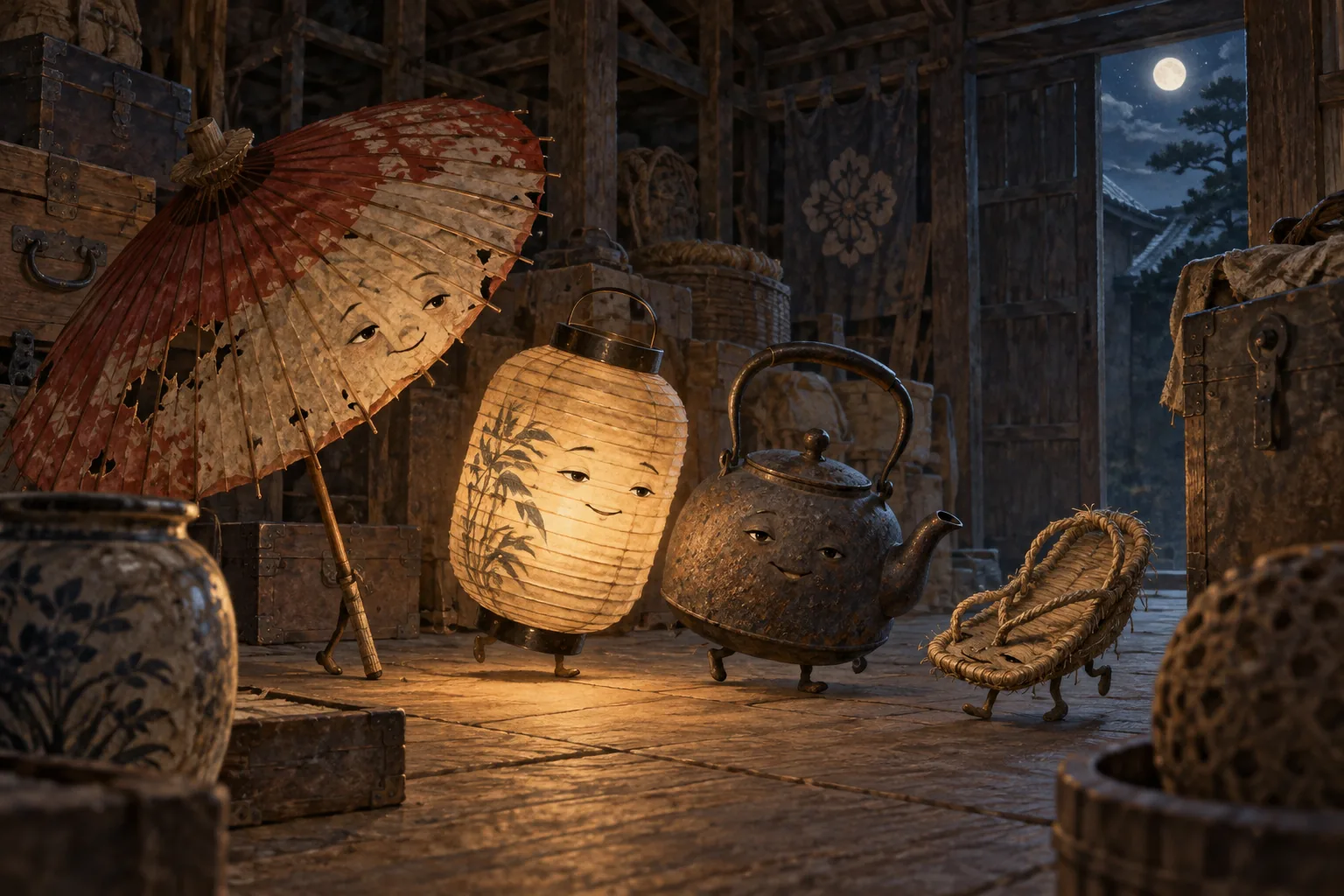
Tsukumogami are everyday objects that folklore says acquire a spirit after very long use, traditionally a hundred years. Old umbrellas, sandals, lanterns and teapots appear in medieval picture scrolls as animated creatures, often resentful at having been discarded. The idea survives in ceremonies where worn-out tools are offered rather than simply thrown away.
参As a short speechスピーチ・英作文
Tsukumogami is the idea that an object that has been used for a very long time, traditionally a hundred years, acquires a spirit of its own. Medieval picture scrolls show processions of animated household goods: an umbrella hopping on one leg with a single eye, a sandal, a lantern with a split mouth, a tea kettle sprouting a tail.
In the scrolls they are usually angry, because they were thrown out after long service, and they take revenge before eventually being converted and finding peace. The interesting part is that the idea is still doing work.
Japan holds ceremonies for worn-out objects: needles are pushed into soft tofu at a needle memorial each February, and there are services for used dolls, for brushes, for chopsticks, for spectacles, even for tools at a factory. None of this requires believing that a needle has a soul. It encodes a habit of not treating a thing that served you as trash.
付喪神つくもがみtsukumogamiobjects that come alive with age
百年使った道具は魂を持つ。だから古い道具は供養して捨てる。
壱一言で言うとIn one line
付喪神とは、長く使われた道具が魂を持つようになったものとされる存在です。
弐30秒で説明するIn 30 seconds
付喪神とは、非常に長く使われた道具が魂を持つようになるとされる存在で、伝統的には百年が目安とされます。古い傘、草履、提灯、茶釜が、中世の絵巻に動き出す姿で描かれ、捨てられたことを恨んでいることもよくあります。この考えは、使い古した道具をただ捨てずに供養する行事として今も残っています。
参スピーチ・英作文As a short speech
付喪神とは、非常に長く使われた道具が、伝統的には百年を目安に、自らの魂を持つようになるという考えです。中世の絵巻には、動き出した家財の行列が描かれています。一本足で跳ねる一つ目の傘、草履、口の裂けた提灯、尾の生えた茶釜。
絵巻の中で彼らはたいてい怒っています。長く仕えた末に捨てられたからで、仕返しをしたのち、やがて仏道に入って安らぎます。面白いのは、この考えが今も働いていることです。日本では使い古した物のための供養が行われます。
二月には針供養で豆腐に針を刺し、人形、筆、箸、眼鏡、工場の道具のための法要まであります。針に魂があると信じている必要はありません。ここに入っているのは、自分に仕えた物をごみとして扱わないという習慣です。
こう聞かれたらQuestions people actually ask
QDo people actually believe objects have spirits?
AAlmost nobody states it as a belief. What survives is the practice: taking worn-out dolls or needles to a temple rather than throwing them away, and a general discomfort about discarding something that was used for a long time.
物に魂が宿ると、本当に思っているのですか。信じていると口にする人はまずいません。残っているのは行いのほうです。古い人形や針をごみにせず寺に納めること、そして長く使ったものを捨てることへの、漠然とした落ち着かなさです。
QWhat is a needle memorial?
AA ceremony held at certain shrines and temples, usually on February 8th or December 8th, where broken sewing needles are pushed into tofu or konjac so they can rest softly. It spread among people who sewed for a living.
針供養とは何ですか。一部の寺社で、多くは2月8日か12月8日に行われる行事で、折れた縫い針を豆腐やこんにゃくに刺して、やわらかい場所で休ませます。縫い物を生業とする人々のあいだで広まったとされます。
そのまま使えるフレーズPhrases you can use
- Objects are said to gain a spirit after long use.長く使った道具は魂を持つと言われます。
- They appear in medieval picture scrolls.中世の絵巻に描かれています。
- Old dolls are taken to a temple, not thrown away.古い人形はごみにせず寺に納めます。
- There's even a memorial service for needles.針のための供養もあります。
豆知識Background
付喪神を描いた『付喪神絵巻』は室町時代のもので、捨てられた道具が妖怪となって人を襲い、のちに仏道に入る筋書きです。針供養は2月8日または12月8日に行われ、東京の浅草寺境内の淡島堂や、和歌山の淡嶋神社が知られます。人形供養は全国の寺社で受け付けており、送料を添えて郵送できるところもあります。使い終えた筆や包丁、眼鏡の供養も行われています。
出典日本文化ナビ(原田英語.com)「付喪神を英語で説明する(tsukumogami)」https://www.haradaeigo.com/japanese-culture/en/tsukumogami
- 文
- 日本文化ナビ編集部(原田英語.com)— 英文・和訳・解説はすべて独自に作成
- イラスト
- 日本文化ナビ オリジナル
- 発行
- 原田英語.com https://www.haradaeigo.com/
- 印刷日
- 2026.10.17
© 2026 Harada Eigo (原田英語.com). Text and illustration: Japan Culture Navi.
ページはこちら