ツバメの巣
壱In one line一言で言うと
Swallows nesting above a shop entrance are considered good luck in Japan, so owners protect rather than remove them.
弐In 30 seconds30秒で説明する
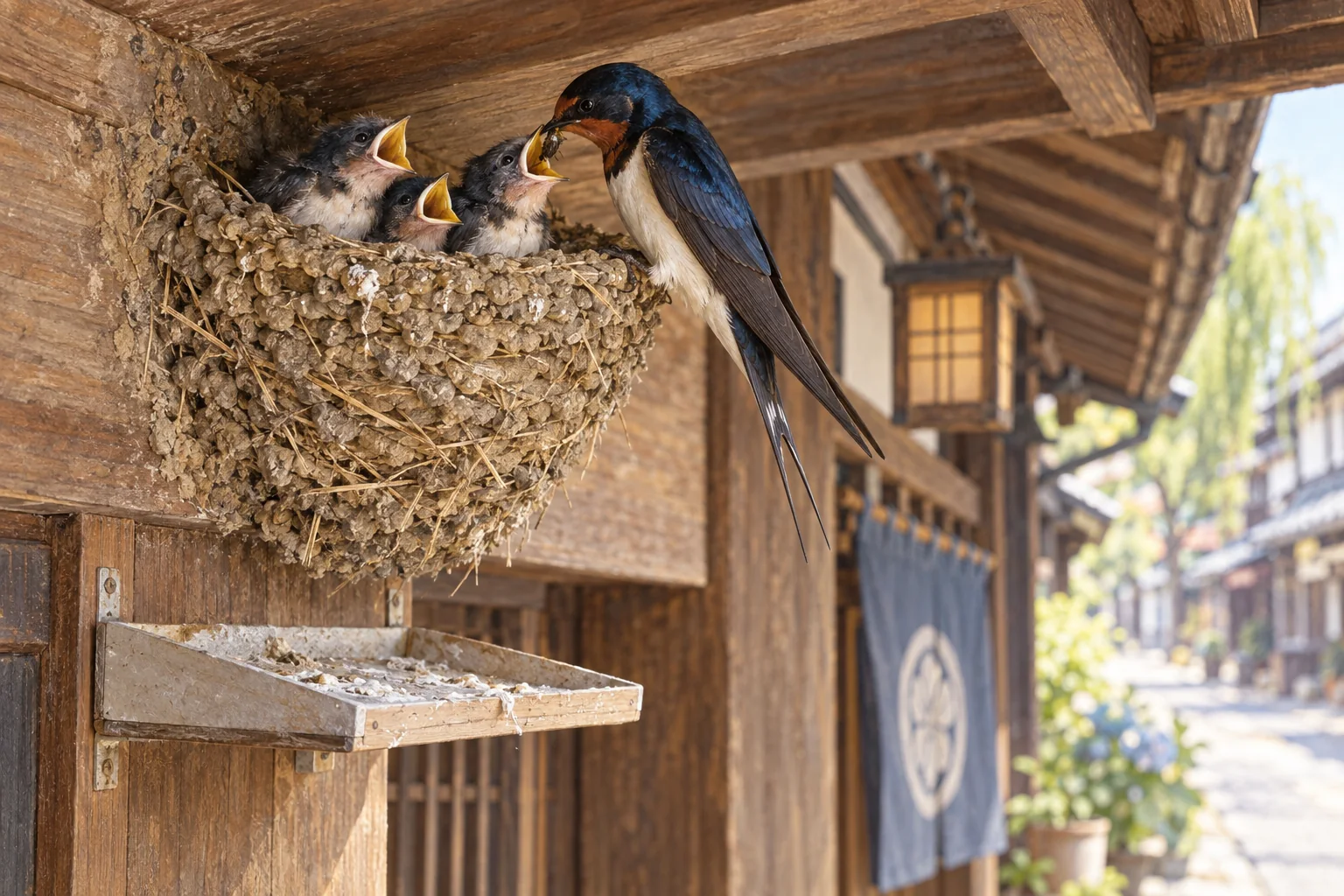
Barn swallows arrive in Japan from Southeast Asia each spring and often build mud nests directly above the entrance of a shop, station or private home, returning to the same site year after year. Rather than removing the nest, many shop owners set up a small tray or piece of cardboard just below it to catch droppings, and treat the birds as a sign of good fortune, since a nest is said to mean prosperity and safety for the household or business. The swallows raise their chicks through early summer and fly back south by autumn.
参As a short speechスピーチ・英作文
Walk under the awning of an old shop in a Japanese shopping street between April and July and you may well see a small mud cup wedged against the beam, with a piece of cardboard or a plastic tray taped just below it. That is a swallow's nest, and the tray is not there because the owner wants the bird gone. Swallows arrive in Japan each spring after wintering in Southeast Asia and often choose the same nest site, or one very close to it, year after year, and a long-standing belief holds that a swallow nesting above your entrance brings good fortune and protects the household or business from misfortune, partly because swallows eat large numbers of flying insects and were historically seen as useful and unthreatening.
Shop owners who might otherwise object to droppings and mess instead build a small catch-tray, watch over the nest, and sometimes put up signs asking customers not to disturb it while the chicks are inside. The parents often raise two broods across the season before the whole family heads south again as the weather cools.
ツバメの巣つばめのすtsubame no suthe swallow nests built above shop entrances every spring
軒先に巣を作ると縁起がいいとされる。店は糞よけの受け皿を置いて共存する。
壱一言で言うとIn one line
軒先にツバメが巣を作ると縁起がよいとされ、店主は巣を撤去せず、守りながら共存します。
弐30秒で説明するIn 30 seconds
ツバメは毎年春、東南アジアから日本へ渡ってきて、店や駅、民家の玄関の真上によく泥で巣を作り、同じ場所に何年も戻ってくることがあります。多くの店主は巣を撤去せず、その下に小さな受け皿や段ボールを置いてフンを受け止め、鳥を幸運の印として扱います。巣ができると家や商売が栄え、無事に守られるという言い伝えがあるからです。ツバメは初夏にかけてひなを育て、秋には南へ帰っていきます。
参スピーチ・英作文As a short speech
四月から七月ごろ、日本の古い商店街のひさしの下を歩くと、梁に押し付けるように作られた小さな泥の巣と、その真下にテープで留められた段ボールやプラスチックの受け皿を見かけることがあります。これはツバメの巣で、受け皿は店主が鳥を追い払いたいから置いているわけではありません。
ツバメは毎年春、東南アジアで冬を越したあと日本に渡ってきて、同じ巣、あるいはごく近くの場所に何年も戻ってくることがよくあります。軒先にツバメが巣を作ると幸運をもたらし、家や商売を災いから守るという昔からの言い伝えがあり、これはツバメが多くの飛ぶ虫を食べてくれる、人に害のない鳥として長く親しまれてきたことにも関係しています。
フンや汚れに文句を言ってもよさそうな店主が、むしろ小さな受け皿を作って巣を見守り、ひながいるあいだは触らないよう客に貼り紙をすることさえあります。親鳥はシーズンのあいだに二回ひなを育てることも多く、涼しくなるころには家族そろって再び南へ旅立っていきます。
こう聞かれたらQuestions people actually ask
QWhy don't shop owners just remove the nest?
AA long-standing belief holds that a swallow's nest brings good luck and protects the household or business, and killing or removing chicks is also restricted under Japan's wildlife protection law, so most owners simply manage the mess instead.
店主はなぜ巣を撤去しないのですか。ツバメの巣は幸運をもたらし、家や商売を守るという言い伝えが古くからあり、また鳥獣保護管理法によってひなを駆除したり巣を撤去したりすることも制限されているため、多くの店主は汚れの対策をするだけで済ませます。
QWhere do the swallows come from and go to?
AThey winter in Southeast Asia, including places like the Philippines and Indonesia, and migrate to Japan each spring to breed, returning south again in autumn once the chicks have fledged.
ツバメはどこから来て、どこへ帰るのですか。フィリピンやインドネシアといった東南アジアで冬を越し、春に繁殖のため日本へ渡ってきます。ひなが巣立つと、秋には再び南へ帰っていきます。
QIs it true they come back to the exact same nest?
AOften to the same nest or the same general spot, repairing and reusing an old nest rather than building entirely from scratch, which is part of why long-running shops can end up with a nest used for many consecutive years.
本当にまったく同じ巣に戻ってくるのですか。同じ巣、あるいは同じような場所に戻ってくることが多く、一から作り直すのではなく、古い巣を直して再利用します。長く続く店で、何年も同じ巣が使われ続けることがあるのは、このためです。
そのまま使えるフレーズPhrases you can use
- The swallows came back to the same spot this year.今年もツバメが同じ場所に戻ってきました。
- A nest above your door is supposed to bring good luck.入口の上に巣ができると縁起がよいとされています。
- We put up a tray to catch the droppings.フンを受けるために受け皿を置きました。
- Please don't disturb the nest — there are chicks inside.巣にはひながいるので、触らないでください。
- They'll fly south again once the chicks fledge.ひなが巣立てば、また南へ帰っていきます。
豆知識Background
ツバメは春に東南アジアから日本へ渡り、店舗や駅、民家の軒先に泥で巣を作って子育てをし、秋には再び南へ帰る渡り鳥である。同じ巣や近い場所に何年も戻ってくることが多く、軒先の巣は幸運や商売繁盛の印とされ、撤去せずにフン受けの皿や段ボールを設けて共存する店が多い。ツバメが虫を多く食べる益鳥として古くから親しまれてきたことも、この言い伝えの背景にあるとされる。ひなや卵の駆除・捕獲は鳥獣保護管理法により原則として禁じられている。
出典日本文化ナビ(原田英語.com)「ツバメの巣を英語で説明する(tsubame no su)」https://www.haradaeigo.com/japanese-culture/en/tsubame-no-su
- 文
- 日本文化ナビ編集部(原田英語.com)— 英文・和訳・解説はすべて独自に作成
- イラスト
- 日本文化ナビ オリジナル
- 発行
- 原田英語.com https://www.haradaeigo.com/
- 印刷日
- 2026.10.17
© 2026 Harada Eigo (原田英語.com). Text and illustration: Japan Culture Navi.
ページはこちら