鳥取砂丘
壱In one line一言で言うと
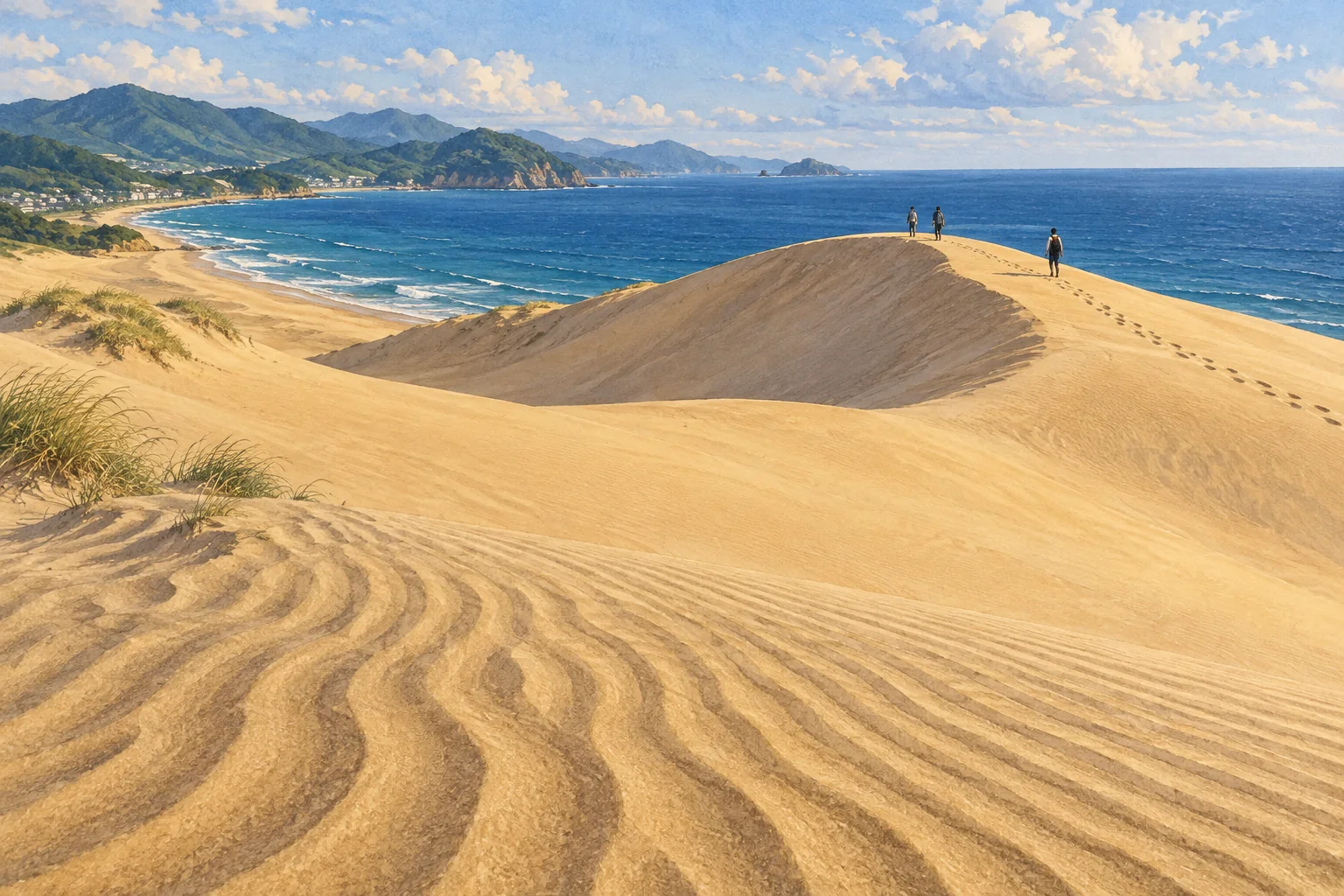
Tottori sakyu, or the Tottori Sand Dunes, are coastal dunes on the Japan Sea, not a desert.
弐In 30 seconds30秒で説明する
The Tottori dunes stretch about sixteen kilometers along the Japan Sea coast and about 2.4 kilometers inland, with ridges rising to around fifty meters. The sand came from a river carrying weathered granite to the sea, where waves and wind pushed it back onto the shore over thousands of years. It is not a desert: this coast gets plenty of rain and snow.
参As a short speechスピーチ・英作文
The Tottori Sand Dunes are on the Japan Sea coast, and nearly everyone who hears about them asks whether Japan has a desert. It does not. A desert is defined by how little rain falls, and this coast is one of the snowiest, wettest parts of the country in winter.
A dune is defined by how the sand got there, which is a different question entirely. Here the Sendai river carried weathered granite sand down from the mountains, the sea currents pushed it along the shore, and the wind piled it up.
That has been going on for something like a hundred thousand years. The ridges reach about fifty meters, and from the top you see the sea on one side and green hills on the other, which is a strange combination. You can ride a camel, which is honestly a tourist addition and not a local tradition.
鳥取砂丘とっとりさきゅうTottori sakyuthe large coastal dunes on the Japan Sea, often mistaken for a desert
砂漠ではない。雨はよく降る。砂を運んできたのは川と海である。
壱一言で言うとIn one line
鳥取砂丘とは、砂漠ではなく、日本海に面した海岸の砂丘です。
弐30秒で説明するIn 30 seconds
鳥取砂丘は日本海の海岸に沿っておよそ16キロ、内陸へ2.4キロほど広がり、高いところは50メートルほどになります。砂は、風化した花崗岩を川が海へ運び、それを波と風が何千年もかけて岸へ押し戻したものです。砂漠ではありません。この海岸は雨も雪もよく降ります。
参スピーチ・英作文As a short speech
鳥取砂丘は日本海に面しています。話を聞いた人はたいてい「日本に砂漠があるのか」と尋ねます。ありません。砂漠は雨の少なさで決まるもので、この海岸は冬、国内でも指折りに雪と雨の多い場所です。
砂丘は砂がどう来たかで決まるので、まったく別の話です。ここでは千代川が風化した花崗岩の砂を山から運び、海の流れが岸沿いに押し流し、風が積み上げました。それが十万年ほど続いてきました。
高いところは50メートルほどで、上に立つと片側に海、反対側に緑の丘が見えます。不思議な取り合わせです。ラクダにも乗れますが、正直に言えばこれは観光のための後づけで、地元の習わしではありません。
こう聞かれたらQuestions people actually ask
QSo is this Japan's biggest sand dune?
AIt is often called the biggest one you can visit. There is a larger dune field in Aomori, but it lies inside a defense testing area and is closed to the public.
では、ここが日本最大の砂丘なのですか。一般に訪ねられる砂丘としては最大だとよく言われます。青森にもっと広い砂丘がありますが、防衛の試験場の中にあり、立ち入れません。
QWhat is the difference between a dune and a desert?
AA desert is a place where very little rain falls. A dune is a landform built by wind-blown sand, which can exist in a rainy place. Tottori is the second, not the first.
砂丘と砂漠は何が違うのですか。砂漠は雨が非常に少ない場所のことです。砂丘は風が運んだ砂が作る地形で、雨の多い土地にもできます。鳥取は後者で、前者ではありません。
QIs the dune shrinking?
AThe area of bare sand has shrunk since the twentieth century, partly because of planted windbreak forests and river works that reduced the sand supply. Volunteers pull out invading weeds to keep the sand open.
砂丘は小さくなっているのですか。裸の砂の面積は20世紀から縮みました。防砂林の植栽や、川の工事で砂の供給が減ったことが理由とされます。砂を保つため、侵入する草をボランティアが抜いています。
誤解されやすいA common misunderstanding
MYTHTottori has a desert.鳥取に砂漠があると思われがちです。
FACTIt has coastal sand dunes. The region gets heavy rain and snow; the sand is there because a river and the sea put it there, not because of dryness.あるのは海岸の砂丘です。この地方は雨も雪も多く、砂があるのは乾燥のせいではなく、川と海が運んだからです。
そのまま使えるフレーズPhrases you can use
- It's a dune, not a desert.砂漠ではなく砂丘です。
- This coast gets a lot of snow in winter.この海岸は冬、雪がよく降ります。
- A river brought the sand down from the mountains.砂は川が山から運んできたものです。
- The highest ridge is about fifty meters.いちばん高い尾根で50メートルほどです。
- Take your shoes off — it's easier to walk.靴を脱いだほうが歩きやすいですよ。
豆知識Background
鳥取砂丘は東西およそ16キロ、南北2.4キロに広がり、観光で訪れられる砂丘としては日本最大とされる。もっとも高い尾根は「馬の背」と呼ばれ、標高およそ50メートル。砂の供給源は中国山地から流れる千代川で、風化した花崗岩の砂が海へ運ばれ、波と風で岸に戻された。日本にはこれより広い猿ヶ森砂丘(青森県)があるが、防衛装備庁の試験場の中にあり、一般には公開されていない。砂丘の草を抜く除草作業がボランティアによって続けられている。
出典日本文化ナビ(原田英語.com)「鳥取砂丘を英語で説明する(Tottori sakyu)」https://www.haradaeigo.com/japanese-culture/en/tottori-sand-dunes
- 文
- 日本文化ナビ編集部(原田英語.com)— 英文・和訳・解説はすべて独自に作成
- イラスト
- 日本文化ナビ オリジナル
- 発行
- 原田英語.com https://www.haradaeigo.com/
- 印刷日
- 2026.10.17
© 2026 Harada Eigo (原田英語.com). Text and illustration: Japan Culture Navi.
ページはこちら