高度経済成長
壱In one line一言で言うと
Kodo keizai seicho, or rapid economic growth, is the period from the mid-1950s to 1973 when Japan's economy boomed.
弐In 30 seconds30秒で説明する
From the mid-1950s until the oil crisis of 1973, Japan's economy grew at close to ten percent a year. Cities filled with workers from the countryside, households acquired appliances, and the 1964 Tokyo Olympics and the first shinkansen line became symbols of it. The same period produced severe industrial pollution.
参As a short speechスピーチ・英作文
The high growth era runs from around the mid-1950s to the oil crisis of 1973, and during it the Japanese economy grew at close to ten percent a year, one of the fastest sustained expansions any large economy had seen up to that time.
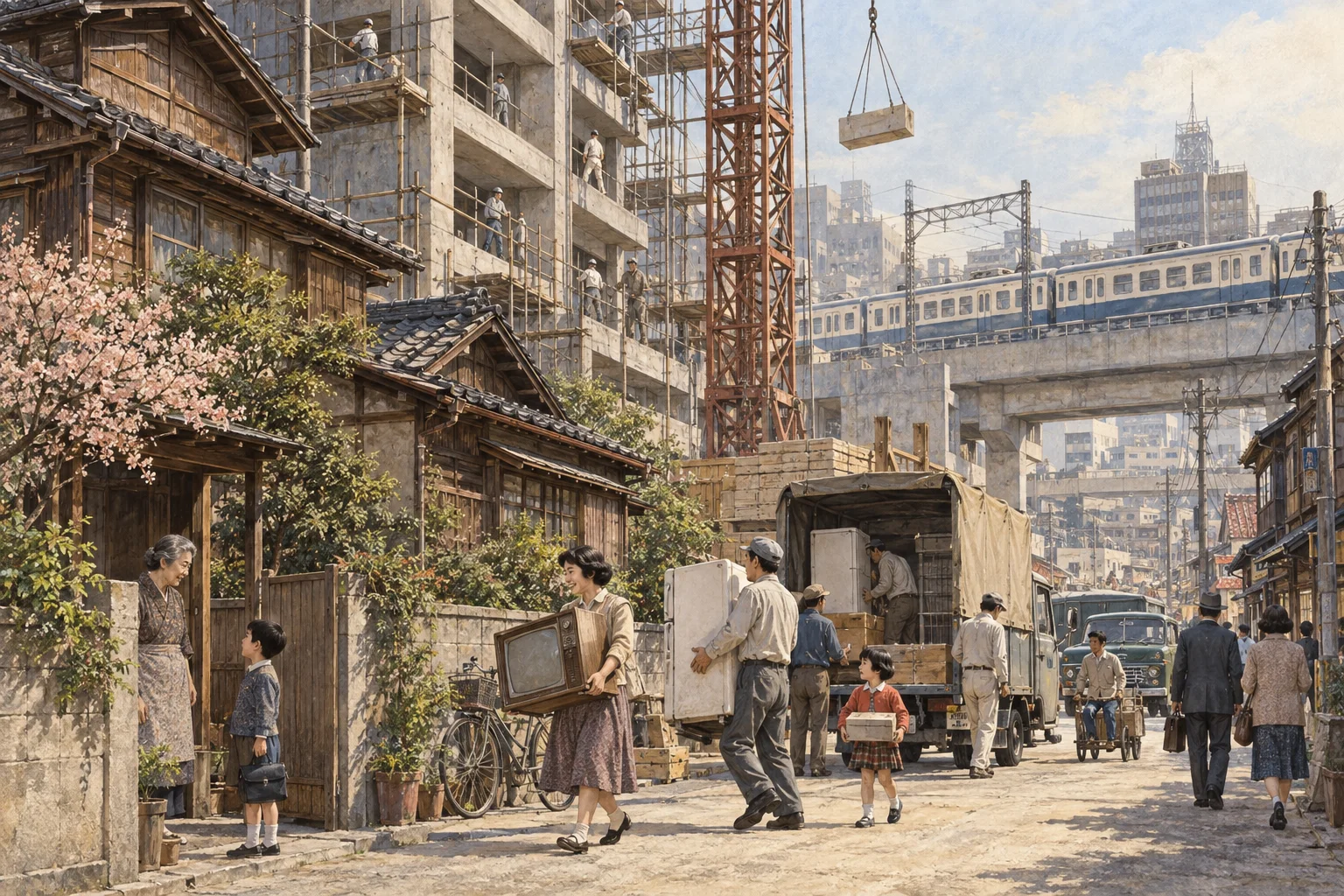
Young workers moved from the countryside to the cities in enormous numbers, often straight from middle school, and were called golden eggs by employers. Households acquired a washing machine, a refrigerator and a black and white television, then a car, an air conditioner and a color television.
The 1964 Tokyo Olympics and the shinkansen line that opened days before it were deliberately staged as proof that the country had recovered. The costs were real and are taught in schools. Industrial pollution caused severe disease in several regions, cities filled with smog, and the environmental laws passed around 1970 were a response to that damage rather than an afterthought.
高度経済成長こうどけいざいせいちょうkodo keizai seichoJapan's postwar economic boom
焼け野原から二十数年で世界第二位の経済規模へ。代償に公害があった。
壱一言で言うとIn one line
高度経済成長とは、1950年代半ばから1973年まで、日本経済が急速に拡大した時期のことです。
弐30秒で説明するIn 30 seconds
1950年代半ばから1973年の石油危機まで、日本経済は年におよそ一割の伸びを続けました。地方から働き手が都市に集まり、家庭に電化製品が入り、1964年の東京オリンピックと最初の新幹線がその象徴になりました。同じ時期に深刻な産業公害も生まれました。
参スピーチ・英作文As a short speech
高度経済成長は、およそ1950年代半ばから1973年の石油危機までを指し、この間、日本経済は年に一割近い伸びを続けました。当時、大きな経済がこれほど長く速く拡大した例はほとんどありませんでした。
地方から都市へ若い働き手が大量に移り、中学を出てすぐに出てくる者も多く、雇う側は彼らを金の卵と呼びました。家庭には洗濯機、冷蔵庫、白黒テレビが入り、続いて自動車、冷房、カラーテレビが入りました。
1964年の東京オリンピックと、その数日前に開業した新幹線は、この国が立ち直った証として意図的に演出されました。代償は本物で、学校でも教えられています。いくつかの地域で産業公害が深刻な病を引き起こし、都市は煙霧に覆われ、1970年前後に作られた環境の法律は、その被害への対応でした。
こう聞かれたらQuestions people actually ask
QWhat ended it?
AThe oil crisis of 1973. Japan imported almost all its oil, prices quadrupled, inflation surged and growth fell sharply. The economy kept expanding afterwards but at a much lower and more normal rate.
何がそれを終わらせたのですか。1973年の石油危機です。日本は石油のほぼすべてを輸入しており、価格が四倍になって物価が急騰し、成長率は大きく下がりました。その後も経済は伸びましたが、ずっと低い、ふつうの水準になりました。
QWhat was the pollution problem?
AIndustrial waste caused severe illness in several regions, and the resulting court cases established the responsibility of the companies involved. Japanese schools teach these cases directly, and they led to environmental legislation and an environment agency.
公害の問題とは何ですか。工場の排出物がいくつかの地域で深刻な病を引き起こし、その裁判によって企業の責任が認められました。日本の学校はこれらの事件を正面から教えており、環境の法律と環境庁の設置につながりました。
そのまま使えるフレーズPhrases you can use
- Growth was close to ten percent a year.成長率は年に一割近くありました。
- Workers moved from the countryside to the cities.地方から都市へ働き手が移りました。
- The 1964 Olympics were a symbol of recovery.1964年のオリンピックは復興の象徴でした。
- The pollution was severe and is taught in schools.公害は深刻で、学校でも教えられています。
豆知識Background
この時期の家電は「三種の神器」と呼ばれ、白黒テレビ、洗濯機、冷蔵庫を指しました。のちにカラーテレビ、クーラー、自動車が「新三種の神器」と呼ばれます。東海道新幹線は1964年10月1日、東京オリンピックの開会の直前に開業しました。地方から集団で就職した若者を乗せた列車は「集団就職列車」と呼ばれました。四大公害病と呼ばれる健康被害は各地で訴訟となり、1971年には環境庁が設置されました。
出典日本文化ナビ(原田英語.com)「高度経済成長を英語で説明する(kodo keizai seicho)」https://www.haradaeigo.com/japanese-culture/en/the-high-growth-era
- 文
- 日本文化ナビ編集部(原田英語.com)— 英文・和訳・解説はすべて独自に作成
- イラスト
- 日本文化ナビ オリジナル
- 発行
- 原田英語.com https://www.haradaeigo.com/
- 印刷日
- 2026.10.17
© 2026 Harada Eigo (原田英語.com). Text and illustration: Japan Culture Navi.
ページはこちら