関東大震災
壱In one line一言で言うと
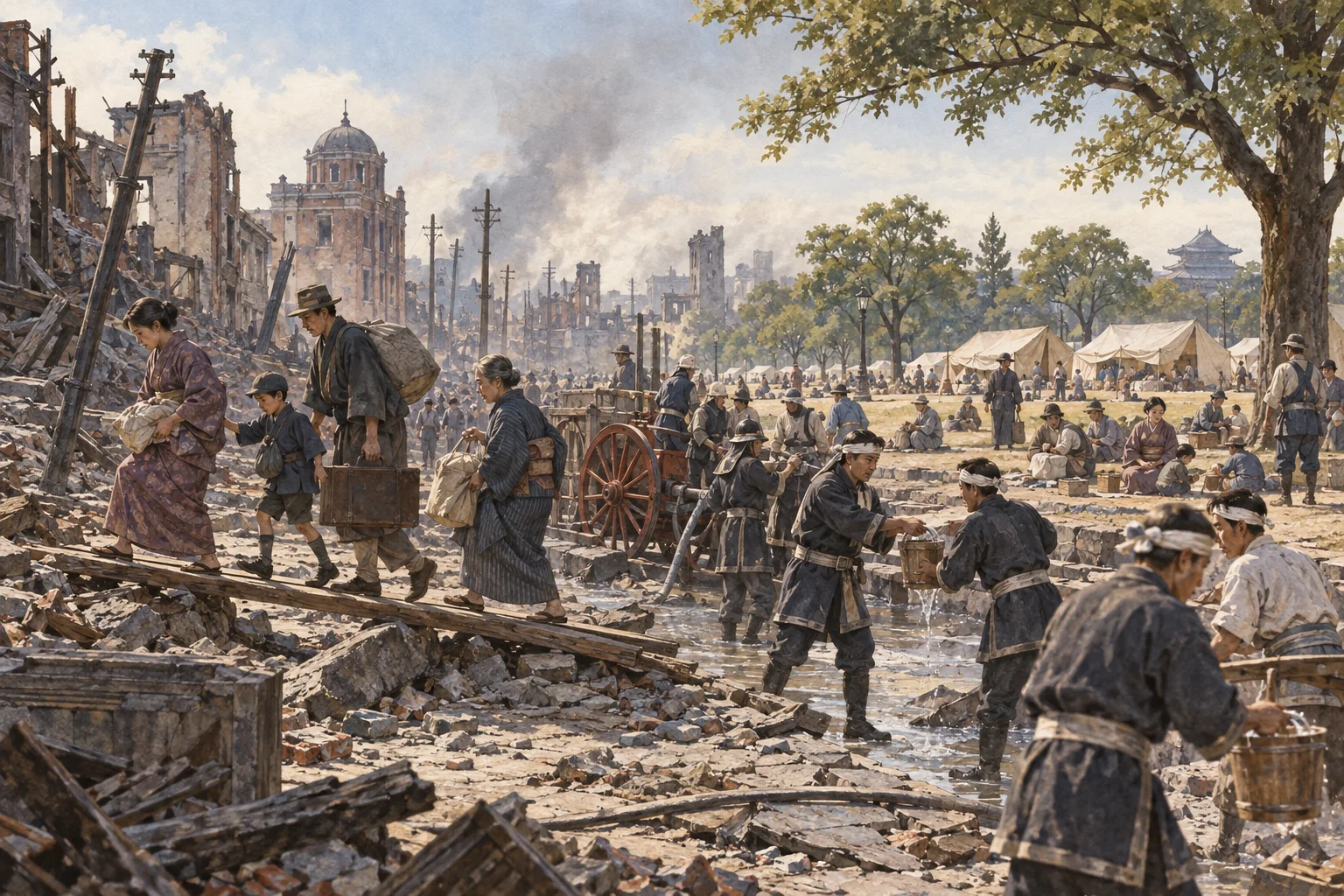
Kanto daishinsai, or the Great Kanto Earthquake, is the 1923 quake that destroyed Tokyo and Yokohama, mostly by fire.
弐In 30 seconds30秒で説明する
At two minutes before noon on September 1st, 1923, a magnitude 7.9 earthquake struck the Kanto region. It was lunchtime, cooking fires were lit, and a typhoon offshore was driving strong winds. The fires that followed did most of the damage. Around 105,000 people died or went missing. September 1st is now Japan's disaster preparedness day.
参As a short speechスピーチ・英作文
The Great Kanto Earthquake struck at two minutes before noon on the first of September, 1923, a magnitude 7.9 quake centered under Sagami Bay. The timing mattered enormously. It was lunch preparation, so tens of thousands of cooking fires were burning in wooden houses, and a typhoon off the coast was pushing strong winds across the city.
Fire, not the shaking, killed most of the roughly 105,000 people who died or disappeared. In one open lot in Tokyo where people had gathered with their belongings, a firestorm killed tens of thousands in a single place. There is a second part that must be said.
In the days after, false rumors spread that Koreans were poisoning wells and setting fires, and Korean residents, along with Chinese residents and some Japanese mistaken for them, were killed by vigilante groups and, in some cases, by soldiers and police. Japan commemorates the first of September as disaster preparedness day. Both lessons belong to it.
関東大震災かんとうだいしんさいKanto daishinsaithe 1923 earthquake and fires that destroyed Tokyo and Yokohama
9月1日は防災の日。この日の教訓は、揺れよりも火と流言にある。
壱一言で言うとIn one line
関東大震災とは、主にそのあとの火災によって東京と横浜を壊滅させた、1923年の地震です。
弐30秒で説明するIn 30 seconds
1923年9月1日の正午2分前、マグニチュード7.9の地震が関東を襲いました。昼食どきで火を使っており、沖の台風が強い風を送っていました。被害の多くは、そのあとの火災によるものです。死者・行方不明はおよそ10万5千人。9月1日は、いま防災の日になっています。
参スピーチ・英作文As a short speech
関東大震災は1923年9月1日、正午2分前に起きました。マグニチュード7.9、震源は相模湾の下です。時刻が決定的でした。昼食の支度どきで、木造の家々で何万もの火が燃えており、沖の台風が強い風を街へ送り込んでいました。
死者・行方不明およそ10万5千人の大半を奪ったのは、揺れではなく火です。東京のある空き地では、家財を持って集まった人々を火災旋風が襲い、一か所で数万人が亡くなりました。もう一つ、言わねばならないことがあります。
その後の数日、朝鮮人が井戸に毒を入れ、火を放っているという根拠のない流言が広まり、在日朝鮮人、中国人、そして彼らと取り違えられた日本人が、自警団や、一部では軍隊・警察によって殺されました。日本は9月1日を防災の日としています。この日の教訓は、その両方です。
こう聞かれたらQuestions people actually ask
QWhy did fire cause so much of the damage?
AThe quake hit as lunch was being cooked in wooden houses packed together, and strong winds from a nearby typhoon spread the flames. Water mains broke, so there was little to fight them with.
どうして被害の多くが火災だったのですか。密集した木造の家で昼食の火を使っている時刻に揺れが来たこと、近くの台風による強い風が炎を広げたことです。水道管も壊れ、消す手立てがほとんどありませんでした。
QWhat changed afterwards?
AIn 1924 building law gained its first earthquake-resistance standards, and wide roads and parks were cut through the rebuilt city as firebreaks. Much of central Tokyo's street layout dates from that reconstruction.
そのあと何が変わったのですか。1924年には建築の法律に初めて耐震の基準が入り、再建の際に広い道路と公園が防火の帯として通されました。いまの都心の道の形は、この復興に多くを負っています。
QWhy is September 1st a school event?
AIt is disaster preparedness day, set in 1960. Schools and companies hold evacuation drills, and in many places the new school term begins around then, so many Japanese people remember doing a drill around that date.
どうして9月1日に学校で行事があるのですか。1960年に定められた防災の日だからです。学校や会社で避難訓練が行われます。新学期の時期とも重なるので、この日の前後に訓練をした記憶のある人が多くいます。
誤解されやすいA common misunderstanding
MYTHThe earthquake itself killed most of the victims.犠牲者の多くは地震そのもので亡くなった、と思われがちです。
FACTThe great majority died in the fires that followed, driven by strong winds and fed by dense wooden housing. The shaking began the disaster; the fire made it what it was.大半は、そのあとの火災で亡くなりました。強い風にあおられ、密集した木造の家が燃え広がったためです。揺れは始まりであり、被害の規模を決めたのは火でした。
そのまま使えるフレーズPhrases you can use
- It struck just before noon on September 1st, 1923.1923年9月1日の正午直前に起きました。
- Most of the deaths were from fire, not the shaking.死者の多くは揺れではなく火災によるものです。
- About 105,000 people died or went missing.死者・行方不明はおよそ10万5千人です。
- September 1st is disaster preparedness day.9月1日は防災の日です。
- False rumors led to killings afterwards.そのあと、根拠のない流言が虐殺を招きました。
豆知識Background
大正12年(1923年)9月1日午前11時58分、相模湾北西部を震源とするマグニチュード7.9の地震が発生した。死者・行方不明はおよそ10万5千人、全壊した家屋は約11万棟、焼失は約21万棟にのぼる。本所の被服廠跡では、避難した人々が火災旋風に巻かれ、一か所で3万人以上が犠牲になったとされる。震災後、朝鮮人が井戸に毒を入れたなどの流言が広がり、多数の朝鮮人・中国人が殺害された。国は9月1日を「防災の日」と定めており、これは昭和35年(1960年)からである。
出典日本文化ナビ(原田英語.com)「関東大震災を英語で説明する(Kanto daishinsai)」https://www.haradaeigo.com/japanese-culture/en/the-great-kanto-earthquake
- 文
- 日本文化ナビ編集部(原田英語.com)— 英文・和訳・解説はすべて独自に作成
- イラスト
- 日本文化ナビ オリジナル
- 発行
- 原田英語.com https://www.haradaeigo.com/
- 印刷日
- 2026.10.17
© 2026 Harada Eigo (原田英語.com). Text and illustration: Japan Culture Navi.
ページはこちら