四十九日と霊
壱In one line一言で言うと
Shijukunichi to rei, the forty-nine days of the soul, is the Buddhist idea that it lingers between worlds after death.
弐In 30 seconds30秒で説明する
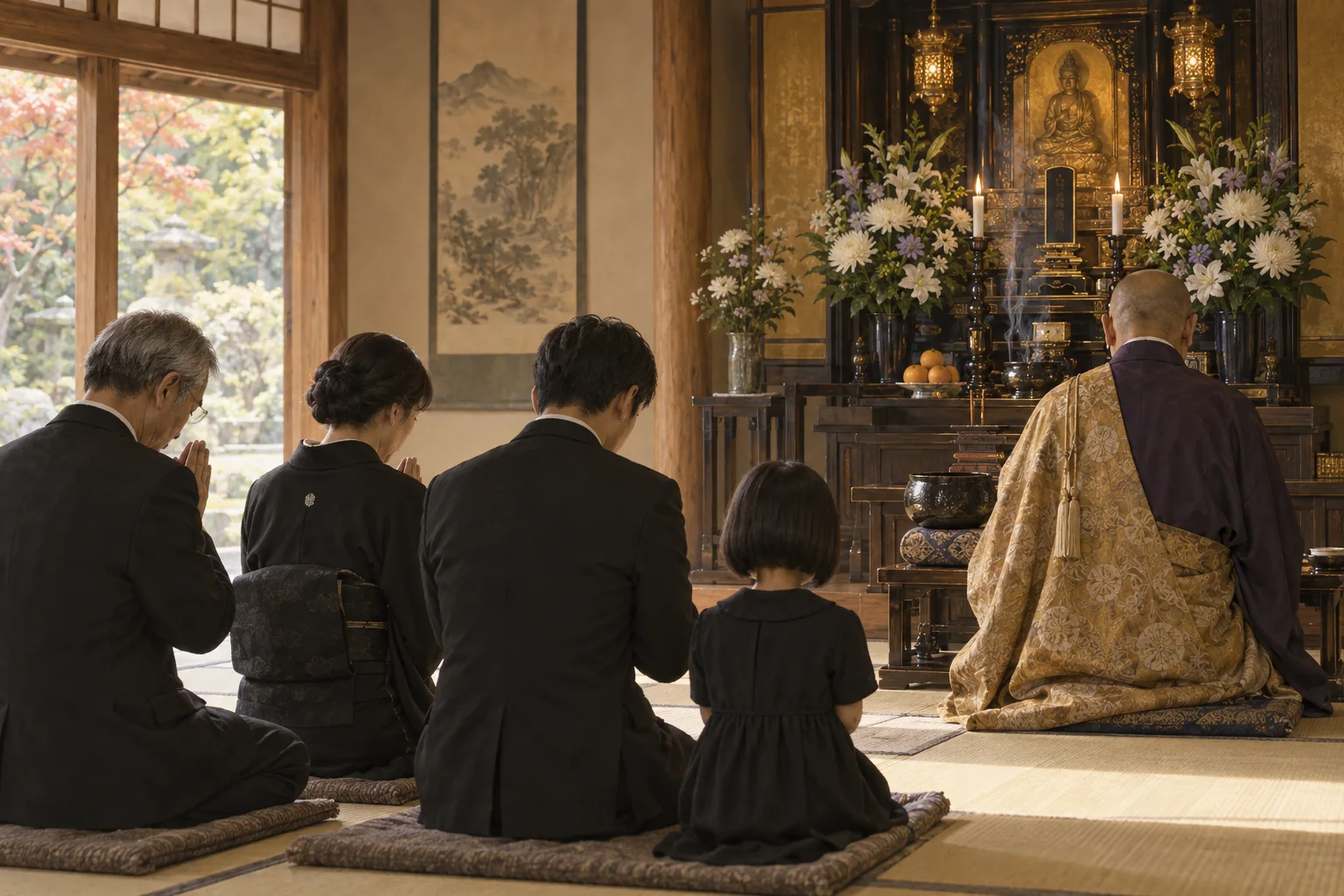
In Japanese Buddhist tradition, the forty-nine days after death are treated as a transitional period, during which the soul is said to undergo a series of judgments before being reborn or settling into the afterlife. Traditionally, every seventh day is marked with a small memorial service, and the forty-ninth day, called shijuku-nichi, is the major one, when family and relatives gather, a priest chants sutras, and the deceased's position on the household Buddhist altar is formally settled. After this day the strictest period of mourning ends, and families traditionally resume things like shrine visits and celebrations, although many still skip New Year's greeting cards for about a year.
参As a short speechスピーチ・英作文
When someone dies in Japan, the mourning doesn't really end at the funeral; it continues for another forty-nine days, following an old Buddhist idea that the soul spends this period moving through a series of judgments before its next state is decided. Traditionally, a small memorial is held every seventh day during that stretch, though today many families combine or skip most of them and focus on the forty-ninth day itself, called shijuku-nichi, which is the major gathering.
Relatives come together, a priest chants sutras, and the deceased's memorial tablet is formally placed on the household Buddhist altar, a step that marks the person's shift from a raw, recent loss into an ancestor who will be honored going forward. Practically, this is also the day families often distribute a small return gift to those who gave condolence money at the funeral, and it marks the end of the strictest phase of mourning, although many families still skip New Year's cards for about a year.
四十九日と霊しじゅうくにちとれいshijukunichi to reiwhy the soul is thought to linger for forty-nine days before its fate is settled
死後49日、魂はまだこの世とあの世の間にいるとされる。
壱一言で言うとIn one line
四十九日と霊とは、人が亡くなってから49日間、魂がこの世とあの世の間にとどまるという仏教の考え方です。
弐30秒で説明するIn 30 seconds
日本の仏教の伝統では、死後49日間は移行の期間とされ、その間に魂は生まれ変わるかあの世に落ち着くかの一連の審判を受けるといわれます。伝統的には7日ごとに小さな法要が営まれ、なかでも49日目にあたる「四十九日」は大きな節目で、親族が集まり、僧侶が読経し、故人の位牌が仏壇に正式に納められます。この日を過ぎると忌明けとなり、神社への参拝や祝い事を控えるといった厳しい慎みを解くのが慣例です。ただし年賀状は、喪中として一年ほど控える家庭が多いです。
参スピーチ・英作文As a short speech
日本で誰かが亡くなると、喪はお葬式で終わるわけではなく、さらに49日間続きます。これは、魂がその間、次の状態が決まるまで一連の審判を経るという古い仏教の考えに基づいています。
伝統的には、その間7日ごとに小さな法要が営まれますが、今では多くの家庭がそのほとんどをまとめたり省いたりして、49日目にあたる四十九日そのものに重きを置きます。これが大きな集まりの日です。親族が集まり、僧侶が読経し、故人の位牌が正式に仏壇に納められます。
この一歩が、生々しい最近の喪失から、これから先ずっと敬われる先祖へと、故人の位置づけが移ることを示します。実際的には、この日はまた、葬儀で香典をくれた人への返礼の品を配ることが多い日でもあり、これを過ぎると、もっとも厳しい喪の段階は終わるとされます。ただし年賀状は、一年ほど控える家庭が多いです。
こう聞かれたらQuestions people actually ask
QDoes every family still do a memorial every seven days?
AFewer do now. Many families combine the early services or skip most of them, reserving a proper gathering with a priest for the seventh day, the forty-ninth day, and occasionally one or two others in between.
今も家族は7日ごとに法要をしているのですか。今ではそうする家庭は減っています。多くの家庭は初期の法要をまとめたり省いたりし、僧侶を呼ぶ本格的な集まりは、初七日と四十九日、あいだにあってもせいぜい一、二回にとどめます。
QWhat actually happens on the forty-ninth day itself?
ARelatives gather at the family's home or a temple, a priest chants sutras in front of the altar, the deceased's memorial tablet is placed on the household altar, and afterward guests often share a meal together.
四十九日の当日には実際に何をするのですか。親族が自宅や寺に集まり、僧侶が仏壇の前で読経し、故人の位牌が仏壇に納められ、そのあと参列者で会食をすることが多いです。
QWhy can't families send New Year's cards during this period?
AA household in mourning is traditionally expected to skip New Year's greetings out of respect, and sends a formal notice to acquaintances instead; the mourning period is generally considered to run about a year, not just forty-nine days.
この期間、なぜ年賀状を送れないのですか。喪中の家庭は伝統的に、敬意を表して年賀のあいさつを控え、代わりに知人へ喪中はがきを送ります。喪の期間は49日だけでなく、一般に一年ほどとされます。
そのまま使えるフレーズPhrases you can use
- The forty-ninth day service is this coming Sunday.四十九日の法要は今度の日曜日です。
- We're still in mourning, so we're skipping New Year's cards.まだ喪中なので、年賀状は控えています。
- The priest will chant sutras in front of the altar.僧侶が仏壇の前で読経してくれます。
- After the forty-ninth day, the tablet goes on the altar.四十九日を過ぎると、位牌が仏壇に納められます。
- We'll hand out return gifts at the memorial service.法要のときに返礼の品をお渡しします。
豆知識Background
死後49日を魂の移行期間とする考えは、仏教の輪廻思想に基づき、7日ごとに生前の行いが審判されるという中陰・中有の教えに由来するとされる。7日ごとの法要(初七日など)を全て営む家庭は今では少なく、初七日と四十九日にまとめる家庭が多い。四十九日には位牌を仏壇に納め、香典返しを行うのが一般的とされる。忌中は四十九日まで、喪中は一年ほどとするのが一般的だが、宗派や家庭によって考え方に幅がある。なお浄土真宗のように、亡くなるとすぐ浄土に生まれるとして、この期間を魂がさまよう時とは考えない宗派もある。
出典日本文化ナビ(原田英語.com)「四十九日と霊を英語で説明する(shijukunichi to rei)」https://www.haradaeigo.com/japanese-culture/en/the-forty-nine-days-after-death
- 文
- 日本文化ナビ編集部(原田英語.com)— 英文・和訳・解説はすべて独自に作成
- イラスト
- 日本文化ナビ オリジナル
- 発行
- 原田英語.com https://www.haradaeigo.com/
- 印刷日
- 2026.10.17
© 2026 Harada Eigo (原田英語.com). Text and illustration: Japan Culture Navi.
ページはこちら