手相
壱In one line一言で言うと
Tesou is Japanese palm reading, which reads the lines and shape of the hand to guess personality and fortune.
弐In 30 seconds30秒で説明する
Tesou is palm reading as practiced in Japan, focused mainly on a handful of major lines: the lifeline, the heart line, the head line, and the fate line running up the center of the palm. The practice arrived from China long ago and later absorbed Western palmistry ideas, so a fortune teller today might mix both traditions freely. It shows up everywhere from serious fortune-telling stalls in entertainment districts to smartphone apps and casual conversation among friends, and most people treat a bad reading as a talking point, not a fixed prediction.
参As a short speechスピーチ・英作文
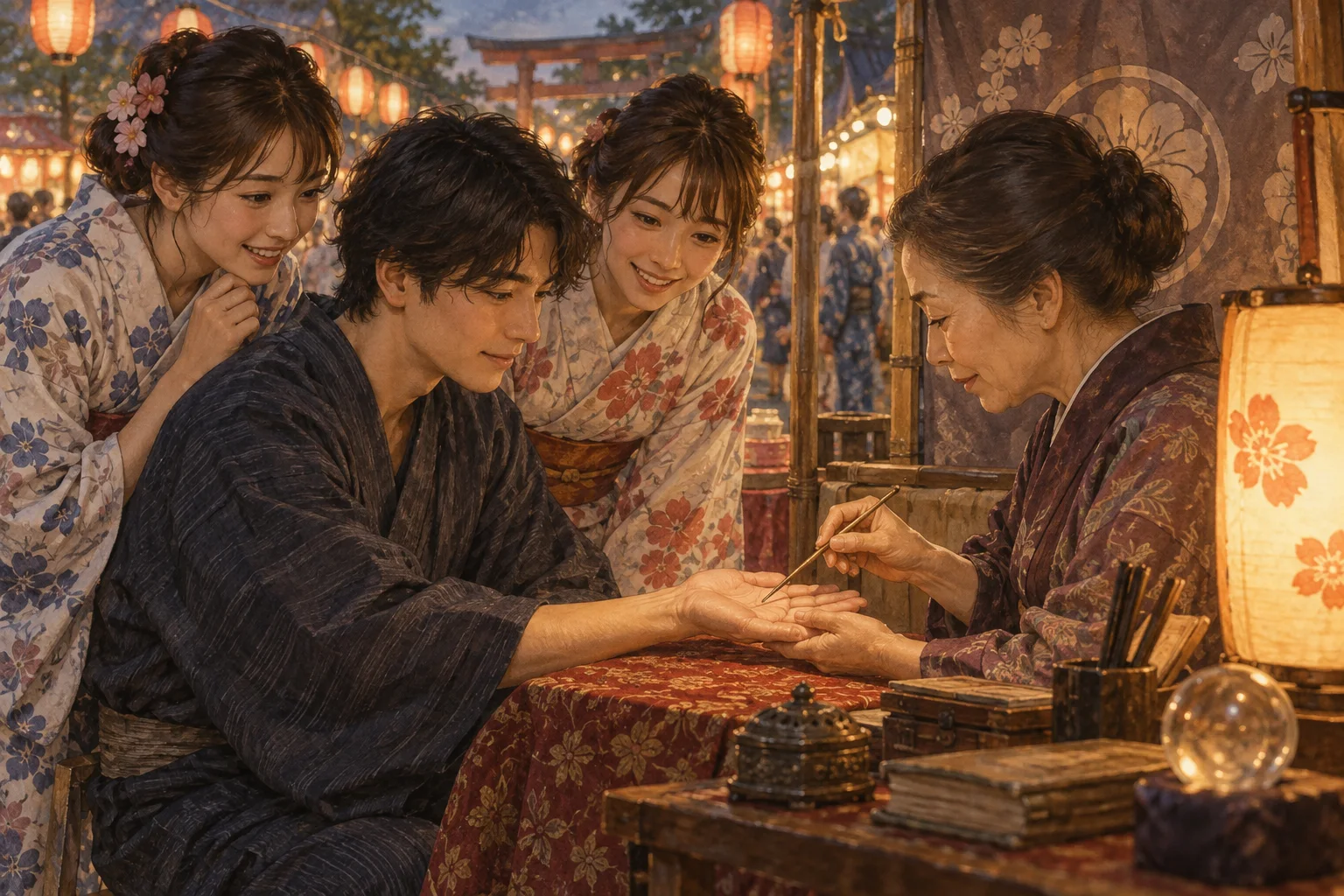
If you walk through an entertainment district in a Japanese city at night, you'll likely pass a small table with a fortune teller offering tesou, palm reading, along with other divination methods. The practice traces back to Chinese physiognomy that arrived in Japan centuries ago, focusing on a handful of major lines: the lifeline curving around the base of the thumb, the heart line and head line running across the palm, and the fate line rising toward the middle finger, each read as hinting at health, relationships, intelligence or career.
Over the twentieth century, Western palmistry ideas mixed in freely, so a modern fortune teller might blend both systems without much concern for which tradition a particular line comes from. What's notable is how casually most people treat it: palm reading shows up in magazines, TV shows and phone apps as much as in serious fortune-telling booths, and even people who genuinely enjoy getting their palm read usually treat an unlucky line as one interesting detail, not something fixed.
手相てそうtesoJapanese palm reading
手相占いは中国由来で、日本流に独自の見方が加わってきた。
壱一言で言うとIn one line
手相とは、手のひらの線や形から性格や運勢を読み取るとされる占いです。
弐30秒で説明するIn 30 seconds
手相とは日本で行われる手のひら占いで、主に生命線・感情線・頭脳線、そして手のひらの中央を上へ伸びる運命線といった、いくつかの主要な線に注目します。この占いはもともと中国から伝わり、のちに西洋の手相術の考え方も取り入れたため、今の占い師は両方の伝統を自由に混ぜて使うことが多いです。繁華街の本格的な占いの屋台から、スマートフォンのアプリ、友達同士の気軽な会話まで、あちこちで見られ、悪い結果が出ても、それを固定した予言としてではなく、話のきっかけとして受け止める人がほとんどです。
参スピーチ・英作文As a short speech
夜、日本の街の繁華街を歩けば、手相占いをはじめとするいくつもの占いを提供する小さな台を出した占い師の前を通ることがよくあるでしょう。この占いは、何世紀も前に日本に伝わった中国の人相術にさかのぼるとされ、親指の付け根を巡る生命線、手のひらを横切る感情線と頭脳線、中指へ向かって伸びる運命線といった、いくつかの主要な線に注目します。
それぞれ健康や人間関係、知性、仕事運のヒントとされます。20世紀を通じて西洋の手相術の考え方も自由に混ざり込んだため、今の占い師は、ある線がどちらの伝統に由来するかをさほど気にせず、両方の体系を組み合わせて使うことが多いです。
注目すべきは、たいていの人がこれをどれほど気軽に扱っているかです。手相占いは雑誌やテレビ番組、スマホアプリにも本格的な占いの屋台と同じくらい登場し、手相を見てもらうのが本当に好きな人でも、運の悪い線は動かしがたいものではなく、面白い材料の一つとして受け止めるのがふつうです。
こう聞かれたらQuestions people actually ask
QIs tesou taken seriously in Japan, or is it just for fun?
AIt ranges widely. Some fortune tellers and clients treat it seriously as guidance, but for most people it's closer to a fun conversation topic, similar to how many people read a horoscope without fully believing it.
手相は日本で真剣に信じられているのですか、それとも娯楽ですか。幅があります。占い師や客の中には真剣に助言として受け止める人もいますが、たいていの人にとっては、星占いを完全には信じなくても読むのと同じような、楽しい会話のきっかけに近いものです。
QWhat's the most important line in tesou?
AThe lifeline, the fate line, the heart line and the head line are usually treated as the main four, but different fortune tellers give different lines the most weight depending on their tradition and training.
手相でいちばん重要な線は何ですか。生命線・運命線・感情線・頭脳線が主要な4本とされることが多いですが、占い師の流派や修行によって、どの線をもっとも重視するかは変わります。
QDoes the shape of the hand matter, or only the lines?
ABoth. A full reading usually considers the shape and thickness of the hand and fingers as well as the lines, though the lines are what most people notice and ask about first.
手相は線だけでなく、手の形も関係するのですか。両方です。本格的な鑑定では線だけでなく、手や指の形、厚みも見ますが、たいていの人がまず気づいて尋ねるのは線のほうです。
そのまま使えるフレーズPhrases you can use
- Can you read my palm real quick?ちょっと手相を見てもらえますか。
- That's your lifeline — it's pretty long.それがあなたの生命線です。けっこう長いですね。
- I don't really believe it, but it's fun.本気で信じてはいませんが、楽しいですよね。
- This line means you might change jobs soon.この線はもうすぐ転職するかもしれないという意味です。
- There's a fortune-telling stall near the station tonight.今夜、駅の近くに占いの屋台が出ています。
豆知識Background
手相占いは古代中国の人相術に由来し、日本には古くに伝わったとされる。生命線・感情線・頭脳線・運命線が主要な線とされ、近代以降は西洋の手相術(パーミストリー)の考え方も取り入れられ、両者が混ざって今のスタイルになっているという。新宿や浅草など繁華街の占いの屋台のほか、テレビの占いコーナーやスマートフォンのアプリでも手軽に見られる。真剣な相談として受ける人もいれば、話のきっかけとして楽しむだけの人もおり、受け止め方には幅がある。
出典日本文化ナビ(原田英語.com)「手相を英語で説明する(teso)」https://www.haradaeigo.com/japanese-culture/en/tesou
- 文
- 日本文化ナビ編集部(原田英語.com)— 英文・和訳・解説はすべて独自に作成
- イラスト
- 日本文化ナビ オリジナル
- 発行
- 原田英語.com https://www.haradaeigo.com/
- 印刷日
- 2026.10.17
© 2026 Harada Eigo (原田英語.com). Text and illustration: Japan Culture Navi.
ページはこちら