天皇誕生日
壱In one line一言で言うと
Tenno tanjobi, the Emperor's Birthday, is a public holiday whose date changes with each reign.
弐In 30 seconds30秒で説明する
The Emperor's Birthday is a public holiday, currently on February 23rd. It is the only Japanese holiday whose date is tied to a person: it follows whoever is on the throne. It was December 23rd during the previous reign and April 29th before that. On the day, the palace grounds are opened and the imperial family appears on a balcony to greet the crowd.
参As a short speechスピーチ・英作文
The Emperor's Birthday is a public holiday in Japan, and it is the only one whose date moves for a reason other than a scheduling rule: it follows the reigning emperor. It is currently February 23rd. During the previous reign it was December 23rd, and before that April 29th, which is now Showa Day.
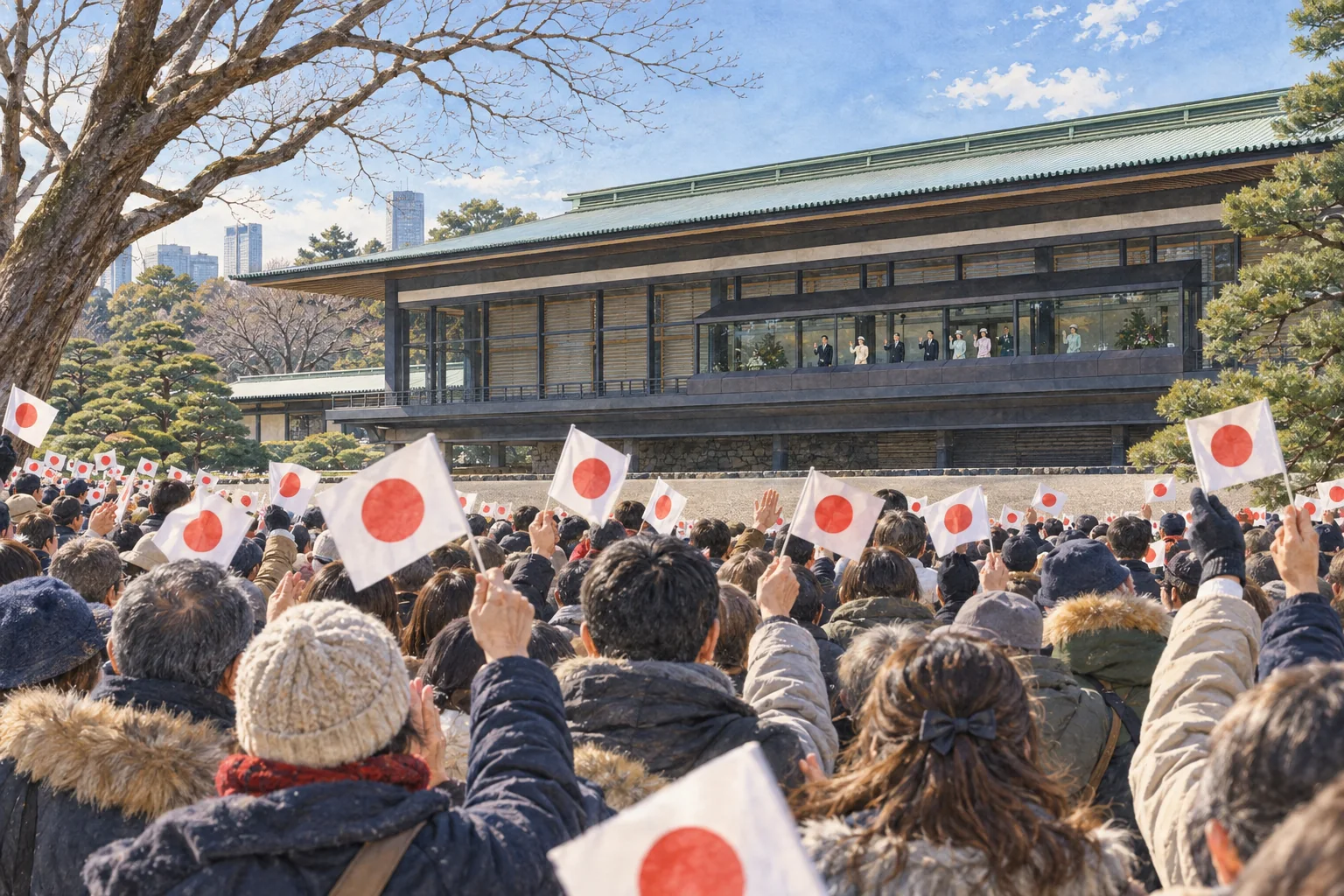
So a Japanese person in their fifties has lived through three different dates for the same holiday. What happens on the day is a public greeting at the imperial palace. Part of the grounds, normally closed, is opened, and the emperor and members of the family appear on a balcony behind glass and speak briefly to the crowd, several times through the morning.
Anyone can attend, including foreign visitors, and it is free, though there are security checks and it is very crowded. The same thing happens on January 2nd for the New Year. It is worth saying plainly that the emperor's role under the postwar constitution is defined as a symbol with no powers of government, which is the part most often misunderstood abroad.
天皇誕生日てんのうたんじょうびtenno tanjobithe Emperor's Birthday, a holiday whose date changes with the reign
日本でただひとつ、代替わりで日付が変わる祝日。いまは2月23日。
壱一言で言うとIn one line
天皇誕生日とは、代が替わるたびに日付も変わる、在位中の天皇の誕生日の祝日です。
弐30秒で説明するIn 30 seconds
天皇誕生日は国民の祝日で、いまは2月23日です。日付が一人の人物に結びついた唯一の日本の祝日で、在位している天皇に従って動きます。前の代は12月23日、その前は4月29日でした。当日は皇居の一部が開放され、天皇と皇族がベランダに立って集まった人に応えます。
参スピーチ・英作文As a short speech
天皇誕生日は日本の国民の祝日で、日程上の規定以外の理由で日付が動く唯一の祝日です。在位している天皇に従います。いまは2月23日。前の代は12月23日で、その前は4月29日、いまの昭和の日です。ですから50代の日本人は、同じ祝日の日付を三つ経験していることになります。
当日に行われるのは、皇居での一般参賀です。ふだんは入れない一部が開放され、天皇と皇族がガラス越しのベランダに立ち、集まった人に短く言葉を述べます。午前中に何度か行われます。誰でも参加でき、外国から来た方も入れますし、無料です。
ただし手荷物検査があり、大変混みます。同じことが1月2日の新年にも行われます。ひとつはっきり言っておきたいのは、戦後の憲法で天皇は象徴と定められ、国政に関する権能を持たないことです。海外でもっとも誤解されているのはここです。
こう聞かれたらQuestions people actually ask
QCan foreigners attend the greeting at the palace?
AYes. It is open to anyone, with no ticket and no fee, though bags are checked and the queue is long. Leave large bags behind if you can, and go early.
一般参賀には外国人も行けますか。できます。誰でも参加でき、券も料金も要りません。ただし手荷物検査があり、列は長いです。大きな荷物はできるだけ持たずに、早めに行ってください。
QDoes the emperor have political power?
ANo. The constitution defines the emperor as the symbol of the state and of the unity of the people, with no powers relating to government. Acts of state are performed on the advice and approval of the cabinet.
天皇に政治の権限はあるのですか。ありません。憲法は天皇を日本国と国民統合の象徴と定め、国政に関する権能を有しないとしています。国事行為は内閣の助言と承認により行われます。
QWhat happened to the old dates?
AApril 29th became Greenery Day and then Showa Day. December 23rd stopped being a holiday when the previous emperor abdicated in 2019, and it is now an ordinary working day.
もとの日付はどうなったのですか。4月29日はみどりの日になり、のちに昭和の日になりました。12月23日は、2019年の前の天皇の退位にともなって祝日ではなくなり、いまは平日です。
誤解されやすいA common misunderstanding
MYTHThe Japanese emperor rules the country.日本の天皇が国を治めていると思われがちです。
FACTThe postwar constitution defines the emperor as a symbol with no powers of government. Acts of state are carried out on the advice and approval of the cabinet.戦後の憲法は天皇を象徴と定め、国政に関する権能を持たないとしています。国事行為は内閣の助言と承認によって行われます。
そのまま使えるフレーズPhrases you can use
- The date changes when a new emperor takes the throne.代が替わると、日付も変わります。
- It's February 23rd now. It used to be December 23rd.いまは2月23日です。以前は12月23日でした。
- Part of the palace grounds opens to the public that day.その日は皇居の一部が開放されます。
- Anyone can go, including visitors from abroad.外国から来た方を含め、誰でも行けます。
- The emperor is a symbol and has no role in government.天皇は象徴であって、国政には関わりません。
豆知識Background
天皇誕生日は在位する天皇の誕生日に置かれるため、代替わりで日付が変わる。令和では2月23日、平成では12月23日、昭和では4月29日だった。旧来の日付は祝日として残る場合と残らない場合があり、4月29日はみどりの日を経て昭和の日となった一方、12月23日は祝日ではなくなった。当日は皇居で一般参賀が行われ、長和殿のベランダに天皇と皇族が立つ。新年の一般参賀は1月2日に行われる。日本国憲法第1条は天皇を日本国および日本国民統合の象徴と定め、第4条で国政に関する権能を有しないとしている。
出典日本文化ナビ(原田英語.com)「天皇誕生日を英語で説明する(tenno tanjobi)」https://www.haradaeigo.com/japanese-culture/en/tenno-tanjobi
- 文
- 日本文化ナビ編集部(原田英語.com)— 英文・和訳・解説はすべて独自に作成
- イラスト
- 日本文化ナビ オリジナル
- 発行
- 原田英語.com https://www.haradaeigo.com/
- 印刷日
- 2026.10.17
© 2026 Harada Eigo (原田英語.com). Text and illustration: Japan Culture Navi.
ページはこちら