天狗
壱In one line一言で言うと
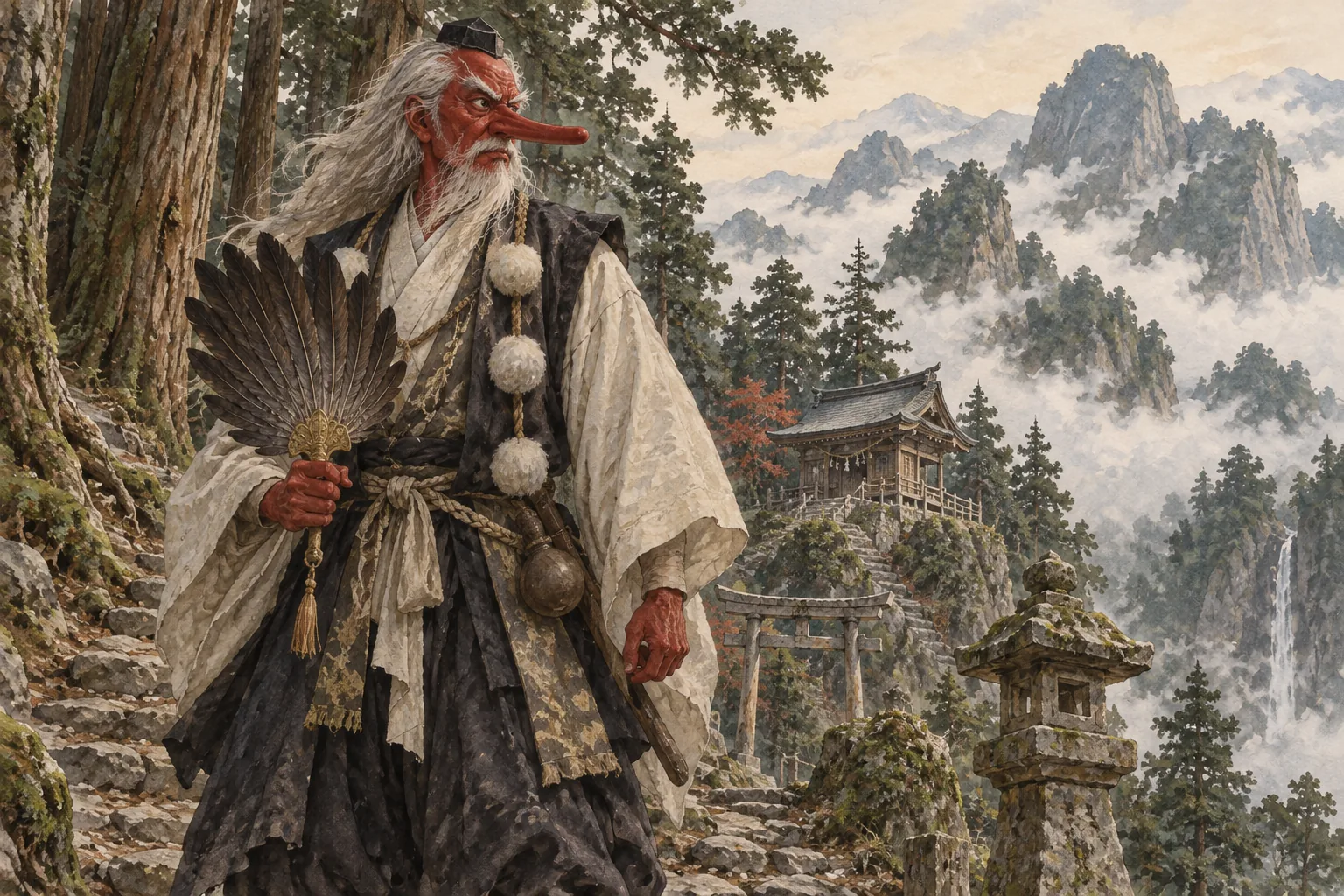
A tengu is a mountain spirit with a red face and a long nose, both feared and respected.
弐In 30 seconds30秒で説明する
Tengu are mountain spirits usually shown with a red face, a very long nose and the clothes of a mountain ascetic. Older versions have a crow's beak instead of a nose. They were feared as beings that led travelers astray and abducted children, but they are also credited with teaching swordsmanship. The phrase to become a tengu means to get big-headed.
参As a short speechスピーチ・英作文
Tengu are spirits of the mountains, and they are a classic example of a Japanese supernatural being that is neither clearly good nor clearly evil. The familiar image is a being with a bright red face, a very long straight nose, feathered wings and the robes of a mountain ascetic, carrying a fan of feathers.
An older form, the karasu tengu, has a crow's beak instead. In tales they punish the arrogant, lead travelers in circles until they are lost, and occasionally carry off children who wander too far up a valley, which sounds much less like folklore and much more like a warning to keep away from the mountains.
At the same time they are teachers: the young warrior Minamoto no Yoshitsune is said to have learned swordsmanship from a tengu on Mount Kurama, north of Kyoto. The long nose gave Japanese a useful idiom. To say someone has become a tengu is to say their nose has grown, meaning they are full of themselves.
天狗てんぐtengulong-nosed mountain spirits
「天狗になる」は、いい気になるという意味。鼻が伸びるから。
壱一言で言うとIn one line
天狗とは、赤い顔と長い鼻を持つ山の妖怪で、恐れられると同時に敬われてもきました。
弐30秒で説明するIn 30 seconds
天狗は山の妖怪で、赤い顔と非常に長い鼻、山伏の装束で描かれるのがふつうです。古い姿では鼻ではなく烏のくちばしを持ちます。旅人を迷わせ、子どもをさらう存在として恐れられた一方、剣術を授けたとも語られます。「天狗になる」は、うぬぼれるという意味の言い回しです。
参スピーチ・英作文As a short speech
天狗は山の霊で、善とも悪とも言い切れない日本の妖怪の代表格です。よく知られた姿は、真っ赤な顔、まっすぐな長い鼻、羽根の翼、山伏の装束で、羽団扇を持っています。より古い形の烏天狗は、鼻ではなく烏のくちばしを持ちます。
物語の中では、思い上がった者を懲らしめ、旅人を同じ場所に巡らせて迷わせ、谷の奥へ入りすぎた子どもをさらっていきます。こうして並べると、伝説というより、山に近づくなという戒めに聞こえてきます。同時に天狗は師でもあります。
若き日の源義経は、京都の北の鞍馬山で天狗に剣術を習ったと語られます。長い鼻は日本語に便利な言い回しを残しました。誰かが天狗になったと言えば、鼻が伸びた、つまり思い上がっているという意味です。
こう聞かれたらQuestions people actually ask
QAre tengu demons or gods?
ANeither exactly. They began in Buddhist writing as beings of arrogance, then absorbed traits of mountain ascetics, and in some places they are enshrined and prayed to. A mountain shrine may treat the local tengu as a protective deity.
天狗は妖怪ですか、神ですか。どちらとも言い切れません。仏教の文献では慢心の存在として現れ、のちに山伏の性格を取り込み、地域によっては社に祀られ祈られています。山の神社が土地の天狗を守り神として扱うこともあります。
QWhy the long nose?
AThe beak came first. The straight long nose became standard later, and one common explanation links it to masks used in performance and to the image of the arrogant, which fits the idiom about a swollen nose meaning pride.
どうして鼻が長いのですか。先にあったのはくちばしです。まっすぐな長い鼻が標準になったのは後のことで、よく言われる説明は、芸能で使われた面や、思い上がった者の姿と結びつけるものです。鼻が伸びることが高慢を表す言い回しとも合っています。
そのまま使えるフレーズPhrases you can use
- A tengu is a mountain spirit, not quite a demon.天狗は山の妖怪で、悪魔とは少し違います。
- The long nose means arrogance.長い鼻は思い上がりを表します。
- Older ones have a crow's beak.古い姿は烏のくちばしを持ちます。
- Some mountains enshrine them as protectors.山によっては守り神として祀られています。
豆知識Background
「天狗」の語はもともと中国で流星を指したものが日本に入り、山の霊の名になったとされます。修験道の山伏と姿が重なり、山の信仰と結びつきました。「天狗になる」のほか、「天狗の隠れ蓑」「木の葉天狗」といった言い回しも残っています。京都の鞍馬山、東京の高尾山など、天狗の伝承で知られる山は各地にあり、神社に大きな天狗の面が掲げられていることもあります。祭りで天狗の面をつけて行列の先頭を歩く役は、道を清める意味を持つとされます。
出典日本文化ナビ(原田英語.com)「天狗を英語で説明する(tengu)」https://www.haradaeigo.com/japanese-culture/en/tengu
- 文
- 日本文化ナビ編集部(原田英語.com)— 英文・和訳・解説はすべて独自に作成
- イラスト
- 日本文化ナビ オリジナル
- 発行
- 原田英語.com https://www.haradaeigo.com/
- 印刷日
- 2026.10.17
© 2026 Harada Eigo (原田英語.com). Text and illustration: Japan Culture Navi.
ページはこちら