仏像の見分け方
壱In one line一言で言うと
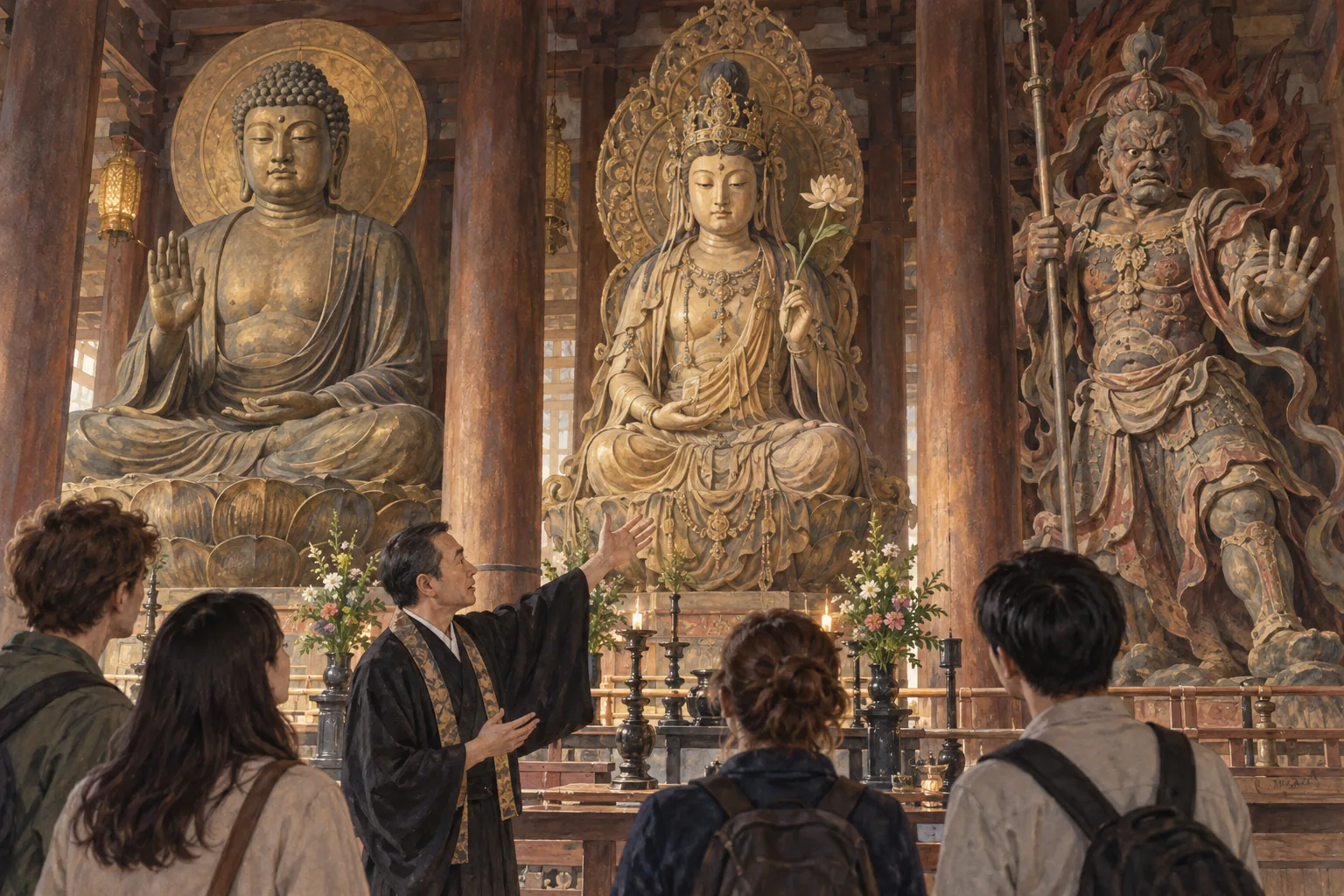
Butsuzo no miwakekata, or telling Buddhist statues apart, is sorting them into four ranks by clothing and face.
弐In 30 seconds30秒で説明する
Japanese Buddhist statues come in four ranks. A nyorai is an awakened Buddha, wearing one plain robe and no ornaments. A bosatsu is still on the way and wears a crown and jewelry. A myoo has an angry face and stands in flames. A ten is a guardian, often armored, often stamping on a demon. Knowing those four covers most of what you will see.
参As a short speechスピーチ・英作文
There is a simple trick to reading Buddhist statues, and it works almost everywhere. Look at what the figure is wearing. A nyorai has reached awakening and needs nothing, so it wears a single plain robe, has no jewelry, and has tightly curled hair with a bump on the crown of the head; the great bronze Buddhas are of this rank.
A bosatsu has postponed awakening to help others and is still shown as a prince, with a crown, necklaces and bracelets; Kannon is the one you meet most often. A myoo looks furious, with bared teeth, weapons and a wall of flame behind, and the anger is directed at the obstacles in your path rather than at you.
A ten is a guardian taken into Buddhism from older Indian religion, usually armored, and the two muscular figures at a temple gate are of this rank. After that you can start on the hand positions, which name the particular Buddha.
仏像の見分け方ぶつぞうのみわけかたbutsuzo no miwakekatathe four ranks of Buddhist image and how to read them
装身具があるかないか。それだけで階級がわかる。
壱一言で言うとIn one line
仏像の見分け方とは、衣と顔つきから仏像を四つの階級に分けて見分けることです。
弐30秒で説明するIn 30 seconds
日本の仏像は四つの階級に分かれます。如来は悟りを開いた仏で、一枚の衣だけをまとい、装身具を着けません。菩薩は修行の途中で、冠と瓔珞を着けます。明王は怒りの相で炎を背にします。天は守護の神で、甲冑をまとい、邪鬼を踏んでいることも多くあります。この四つを知れば、目にするもののほとんどは見分けられます。
参スピーチ・英作文As a short speech
仏像を読み解くには、簡単な手がかりがあります。ほとんどの場合これで足ります。何を着ているかを見てください。如来は悟りを開いていて、何も要りません。ですから衣は一枚きり、装身具は着けず、髪は細かく巻き、頭の上が盛り上がっています。
大きな銅の仏はこの位です。菩薩は悟りを先に延ばして人を助ける立場で、王子の姿で表されます。冠をかぶり、首飾りや腕輪を着けます。いちばんよく出会うのは観音です。明王は激しい怒りの顔で、牙をむき、武器を持ち、背に炎を負います。
その怒りは、あなたではなく、あなたの道をふさぐものに向いています。天は、古いインドの宗教から仏教に入った守護の神で、多くは甲冑姿です。寺の門に立つ二体の筋骨の像もこの位です。ここまでわかったら、次は印相を見ていきます。手の形が、どの仏かを教えてくれます。
こう聞かれたらQuestions people actually ask
QWhy does Jizo look like a monk, not a prince?
AJizo is a bosatsu but is shown as a traveling monk on purpose, with a shaved head and a staff, because the point of the figure is that it walks the world helping people rather than waiting in a temple.
お地蔵さんはどうして王子ではなく僧の姿なのですか。地蔵は菩薩ですが、あえて旅の僧の姿で表されます。頭を丸め、錫杖を持つのは、寺で待つのではなく、歩いて人を助けるという性格を示すためです。
QWhat are the two angry figures at the gate?
ANio, guardian kings of the ten rank. One has an open mouth and one a closed mouth, said to be sounding the first and last letters of the Sanskrit alphabet, and together they stand for everything from beginning to end.
門に立っている二体の像は何ですか。仁王で、天の位に入る門の守護者です。一体は口を開き、一体は閉じています。梵語の最初の音と最後の音を発しているとされ、二体で初めから終わりまでのすべてを表すと言われます。
QCan I photograph them?
AUsually not inside a hall. Many temples allow photography of the grounds and the gate guardians but not of the main image, and some images are only shown a few days a year. Look for the signs and ask if unsure.
写真を撮ってもよいですか。堂内はたいてい撮影できません。境内や門の像は許され、本尊は不可という寺が多くあります。年に数日しか公開しない像もあります。掲示を見て、わからなければたずねてください。
そのまま使えるフレーズPhrases you can use
- No jewelry means it is a Buddha.装身具がなければ如来です。
- The crown means it is a bosatsu.冠があれば菩薩です。
- The angry one is protecting you.怒った顔の像は守る側です。
- The hand position has a meaning.手の形には意味があります。
- Photography is not allowed in the hall.堂内は撮影できません。
豆知識Background
仏像は、如来、菩薩、明王、天の四つに大きく分かれます。如来は装身具を持たず、螺髪と肉髻が特徴です。菩薩は冠と瓔珞を着けた王子の姿で表されますが、地蔵菩薩は例外的に僧形で、錫杖と宝珠を持ちます。明王は密教とともに広まった姿で、不動明王が代表です。天はインドの神々が仏教に取り込まれたもので、四天王や仁王がこれにあたります。手の形である印相も見分けの手がかりで、阿弥陀如来は指で輪を作る来迎印などを結びます。
出典日本文化ナビ(原田英語.com)「仏像の見分け方を英語で説明する(butsuzo no miwakekata)」https://www.haradaeigo.com/japanese-culture/en/telling-buddhist-statues-apart
- 文
- 日本文化ナビ編集部(原田英語.com)— 英文・和訳・解説はすべて独自に作成
- イラスト
- 日本文化ナビ オリジナル
- 発行
- 原田英語.com https://www.haradaeigo.com/
- 印刷日
- 2026.10.17
© 2026 Harada Eigo (原田英語.com). Text and illustration: Japan Culture Navi.
ページはこちら