玉串
壱In one line一言で言うと
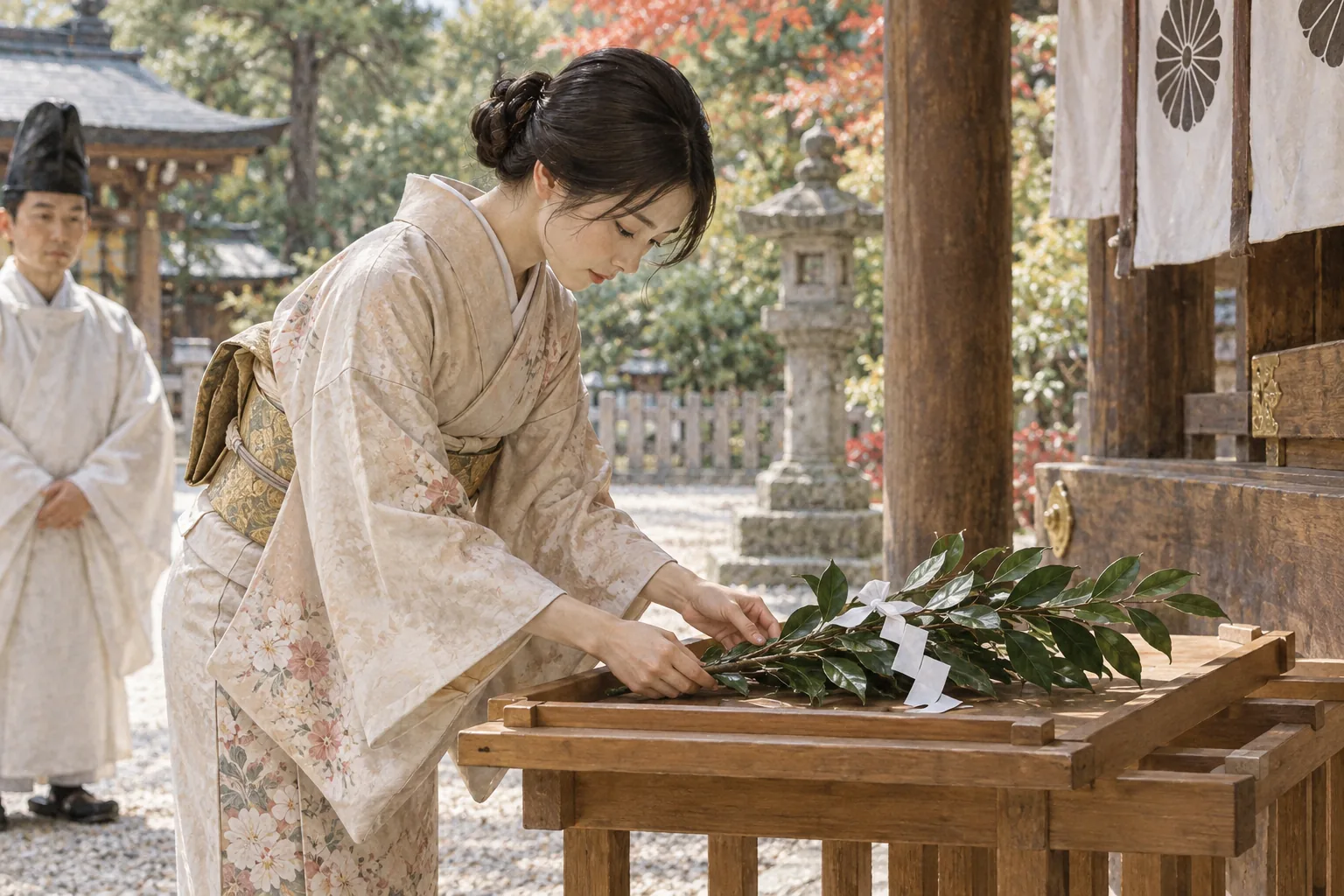
A tamagushi is a sprig of sacred evergreen that worshippers offer at a Shinto ceremony.
弐In 30 seconds30秒で説明する
At a formal Shinto rite, each participant is handed a sprig of sakaki, an evergreen, with paper streamers attached. You turn it clockwise so the cut end points toward the altar, place it on the stand, then bow twice, clap twice and bow once. It stands in for the person making the offering.
参As a short speechスピーチ・英作文
At weddings, ground-breaking ceremonies, company rites and Shinto funerals, there is a moment when each participant walks forward to offer a tamagushi. It is a sprig of sakaki, an evergreen used in Shinto, with folded paper streamers tied to it.
The procedure is fixed and short, which is reassuring once you know it. Receive it with the right hand on the stem, left hand supporting the leaves, and hold it level. Step to the stand, bow slightly, then turn the sprig clockwise until the cut end faces the altar, and place it down.
Step back half a pace, bow deeply twice, clap twice, bow deeply once more, then bow lightly to the priest and return. At a funeral the claps are made without sound. The meaning is that the sprig carries your feeling to the deity, standing in for you, which is why the cut end, the end you held, is turned toward the altar.
玉串たまぐしtamagushithe evergreen sprig offered at a rite
榊の枝を時計回りに回して供える。手順さえ知れば緊張しない。
壱一言で言うとIn one line
玉串とは、神事で参列者が神前に供える榊の枝のことです。
弐30秒で説明するIn 30 seconds
正式な神事では、参列者一人ひとりに紙垂をつけた榊の枝が手渡されます。時計回りに回して、切り口を神前に向け、案の上に置き、二拝二拍手一拝をします。玉串は、供える本人の代わりを務めるものです。
参スピーチ・英作文As a short speech
結婚式、地鎮祭、会社の神事、神式の葬儀では、参列者が一人ずつ前へ進んで玉串を供える場面があります。玉串は神道で用いられる常緑樹である榊の枝に、折った紙垂を結んだものです。
手順は決まっていて短く、知ってさえいれば気が楽になります。右手で枝の根元を持ち、左手で葉のほうを支え、水平に保って受け取ります。案の前に進んで軽く一礼し、枝を時計回りに回して切り口を神前に向け、置きます。
半歩下がり、深く二度拝し、二度手を打ち、もう一度深く拝し、神職に軽く一礼して戻ります。葬儀では手を打つとき音を立てません。意味は、この枝が自分に代わって気持ちを神に運ぶということです。だからこそ、自分が持っていた切り口の側を神前に向けるのです。
こう聞かれたらQuestions people actually ask
QWhich way do I turn it?
AClockwise, until the cut end points away from you toward the altar. Take it slowly; the priest or the person before you will show the pace, and nobody is judging the angle.
玉串はどちら向きに回すのですか。時計回りです。切り口が自分から離れて神前を向くまで回します。ゆっくりで大丈夫です。神職や前の人が速さを示してくれますし、角度を見ている人はいません。
QWhat if I do it wrong?
ANothing happens. Priests routinely guide guests through it, and at weddings most of the room is unsure too. Sincerity of manner matters more than precision.
やり方をまちがえたらどうなりますか。何も起きません。神職は参列者を手順に沿って案内することに慣れていますし、結婚式では会場の多くの人も自信がありません。正確さより、丁寧な態度のほうが大事です。
QWhy is it called tamagushi-ryo on an envelope?
ABecause money given for a Shinto rite is presented as the equivalent of the offering. At a Shinto funeral the envelope is labeled tamagushi-ryo rather than the Buddhist wording.
のし袋に玉串料と書いてあるのはなぜですか。神事に納めるお金が、供えものに代わるものとして扱われるからです。神式の葬儀では、仏式の表書きではなく御玉串料と書きます。
そのまま使えるフレーズPhrases you can use
- Please come forward one at a time.お一人ずつお進みください。
- Turn it clockwise.時計回りに回してください。
- Two bows, two claps, one bow.二拝二拍手一拝です。
- At a funeral, clap silently.葬儀では音を立てずに手を合わせます。
- Hold it level with both hands.両手で水平に持ってください。
豆知識Background
玉串は榊の枝に紙垂や木綿をつけたもので、神前に供えることで祈る心を表します。榊は常緑樹で、神域と人の世を分ける木として神棚にも供えられます。玉串を供える作法は二拝二拍手一拝が基本ですが、神式の葬儀では音を立てない忍び手を用います。神社に納める金銭を御玉串料と呼ぶのは、玉串に代わるものという考えによります。同じ場面で初穂料という言い方をすることもあります。
出典日本文化ナビ(原田英語.com)「玉串を英語で説明する(tamagushi)」https://www.haradaeigo.com/japanese-culture/en/tamagushi
- 文
- 日本文化ナビ編集部(原田英語.com)— 英文・和訳・解説はすべて独自に作成
- イラスト
- 日本文化ナビ オリジナル
- 発行
- 原田英語.com https://www.haradaeigo.com/
- 印刷日
- 2026.10.17
© 2026 Harada Eigo (原田英語.com). Text and illustration: Japan Culture Navi.
ページはこちら