高山
壱In one line一言で言うと
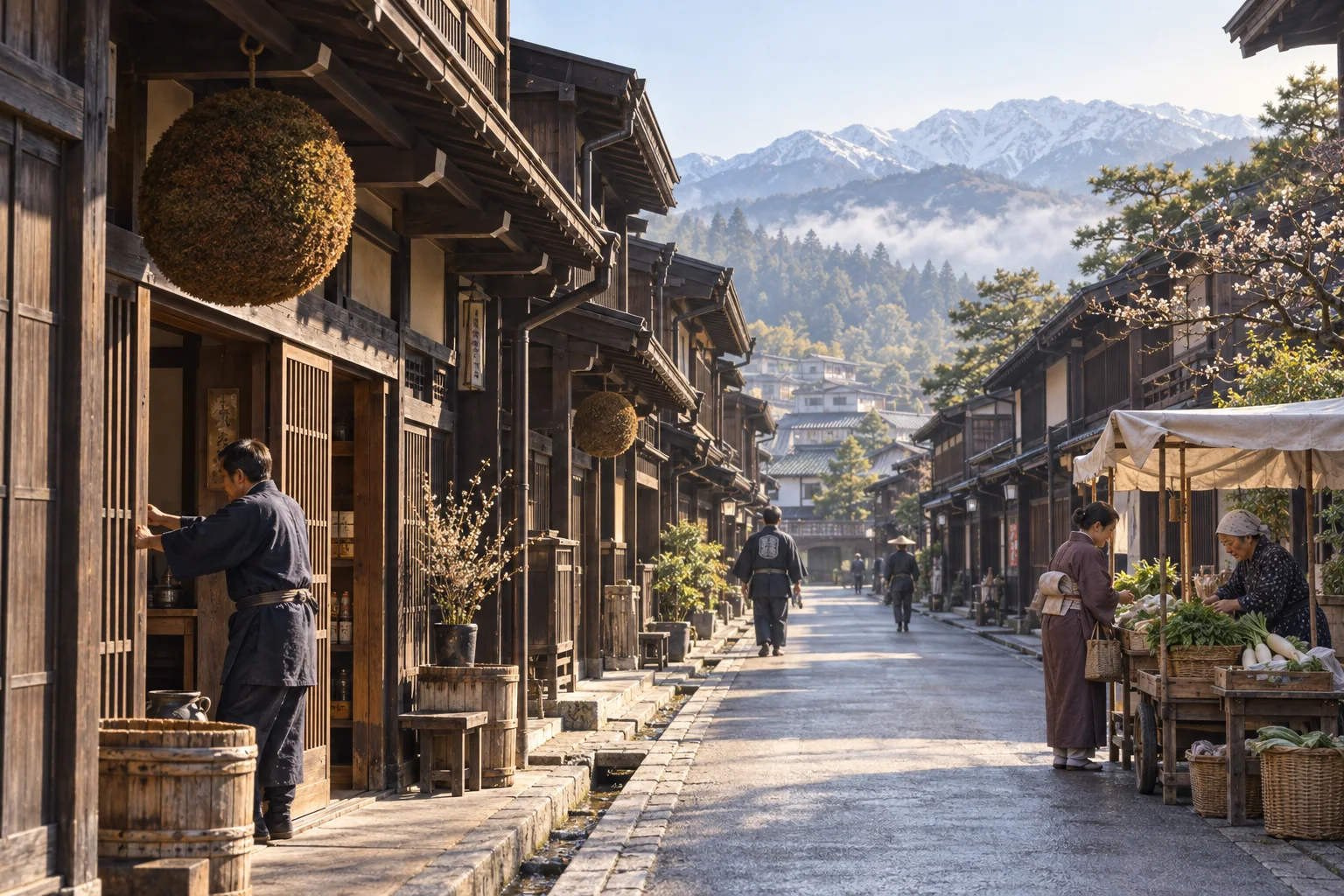
Takayama is a mountain town in Gifu whose Edo-period merchant streets survived intact.
弐In 30 seconds30秒で説明する
Takayama sits in a basin in the mountains of Gifu, in the old province of Hida. Three narrow streets of dark wooden merchant houses from the Edo period are still standing and still in use, as shops and sake breweries. The town is also known for its spring and autumn festivals, in which tall carved floats are pulled through those streets.
参As a short speechスピーチ・英作文
Takayama is a town of about eighty thousand people in a mountain basin in Gifu prefecture, and the reason to go is that it still looks like itself. Three streets of Edo-period merchant houses survive, dark wood, low eaves, latticed fronts, and they are not a museum: they are shops, sake breweries and houses where people live.
The region was so remote and so rich in timber that the shogunate took it under direct rule rather than leave it to a local lord, and in ancient times the carpenters of Hida were sent to build in the capital as a form of tax.
That tradition shows in the festival floats, which are wooden, carved, lacquered, and carry mechanical puppets that perform on strings. The festivals are held in April and October, and the float event was added to the UNESCO intangible heritage list in 2016. Winter here is deep snow. Go for the morning market and the local beef.
高山たかやまTakayamathe mountain town in Gifu with preserved merchant streets and festival floats
山に囲まれて戦火を免れた町。江戸の商家の通りがそのまま残る。
壱一言で言うとIn one line
高山は岐阜の山あいの町で、江戸時代の商家の通りがそのまま残っています。
弐30秒で説明するIn 30 seconds
高山は岐阜の山に囲まれた盆地にあり、古くは飛騨と呼ばれた地域です。江戸時代の黒い木造の商家が並ぶ細い通りが三筋、いまも建ち、店や酒蔵として使われています。春と秋の祭りでも知られ、彫りの入った背の高い屋台がその通りを進みます。
参スピーチ・英作文As a short speech
高山は岐阜の山あいの盆地にある人口8万ほどの町で、行く理由は、町がいまも町の顔をしていることです。江戸時代の商家の通りが三筋残っています。黒い木、低い軒、格子。しかも博物館ではありません。
店であり、酒蔵であり、人が住む家です。この地方は奥深く、材木に恵まれていたため、幕府は大名に任せず直接治めました。古代には、飛騨の大工が税のかわりに都の造営へ送られていました。その伝統は祭りの屋台に表れています。
木彫りと漆で仕上げられ、糸で動くからくり人形を載せています。祭りは4月と10月で、この屋台行事は2016年にユネスコの無形文化遺産に加わりました。冬は雪が深い。朝市と飛騨牛を目当てに行ってください。
こう聞かれたらQuestions people actually ask
QWhy did the old streets survive when most towns lost theirs?
ATakayama is deep in the mountains, was not industrialized, and was not bombed in the war. It also decided early to protect the district rather than redevelop it.
ほかの町が失った古い町並みが、どうしてここには残ったのですか。山の奥にあり、工業化もされず、戦争で空襲も受けなかったからです。加えて、早い時期に再開発ではなく町並みを守る道を選びました。
QWhat is in the festival floats?
ASeveral carry karakuri, mechanical puppets worked by people below with strings and levers, that perform a short story. Some of the mechanisms go back to the eighteenth and nineteenth centuries, and they are still operated by hand.
祭りの屋台には何が載っているのですか。からくり人形を載せた屋台があります。下にいる人が糸と仕掛けで動かし、短い物語を演じます。18〜19世紀にさかのぼる機構もあり、いまも手で動かされています。
QIs there anything to eat that's specific to here?
AHida beef, grilled simply. Also hoba miso, where miso with vegetables is cooked on a dried magnolia leaf over a small burner at your table.
ここならではの食べ物はありますか。飛騨牛を、手をかけすぎずに焼いたもの。それから朴葉味噌で、朴の葉の上に味噌と具をのせ、卓上の小さな火で焼いて食べます。
そのまま使えるフレーズPhrases you can use
- These streets are from the Edo period, and still in use.この通りは江戸時代のもので、いまも使われています。
- The shogunate ruled this area directly, for the timber.この地方は材木のために幕府が直接治めていました。
- The festival floats carry mechanical puppets.祭りの屋台には、からくり人形が載っています。
- The festivals are in April and October.祭りは4月と10月です。
- Try the local beef, and hoba miso.飛騨牛と朴葉味噌を試してみてください。
豆知識Background
飛騨は良材の産地で、江戸幕府は元禄5年(1692年)にこの地を天領として直接支配に置いた。古代には、税のかわりに大工を都へ送る「飛騨工(ひだのたくみ)」の制度があった。高山祭は春の山王祭(日枝神社、4月14・15日)と秋の八幡祭(桜山八幡宮、10月9・10日)の総称で、春秋あわせて23台の屋台が出る。2016年12月、全国の「山・鉾・屋台行事」の一つとしてユネスコ無形文化遺産に記載された。「古い町並み」と呼ばれる三町の一帯は国の重要伝統的建造物群保存地区である。
出典日本文化ナビ(原田英語.com)「高山を英語で説明する(Takayama)」https://www.haradaeigo.com/japanese-culture/en/takayama
- 文
- 日本文化ナビ編集部(原田英語.com)— 英文・和訳・解説はすべて独自に作成
- イラスト
- 日本文化ナビ オリジナル
- 発行
- 原田英語.com https://www.haradaeigo.com/
- 印刷日
- 2026.10.17
© 2026 Harada Eigo (原田英語.com). Text and illustration: Japan Culture Navi.
ページはこちら