待機児童
壱In one line一言で言うと
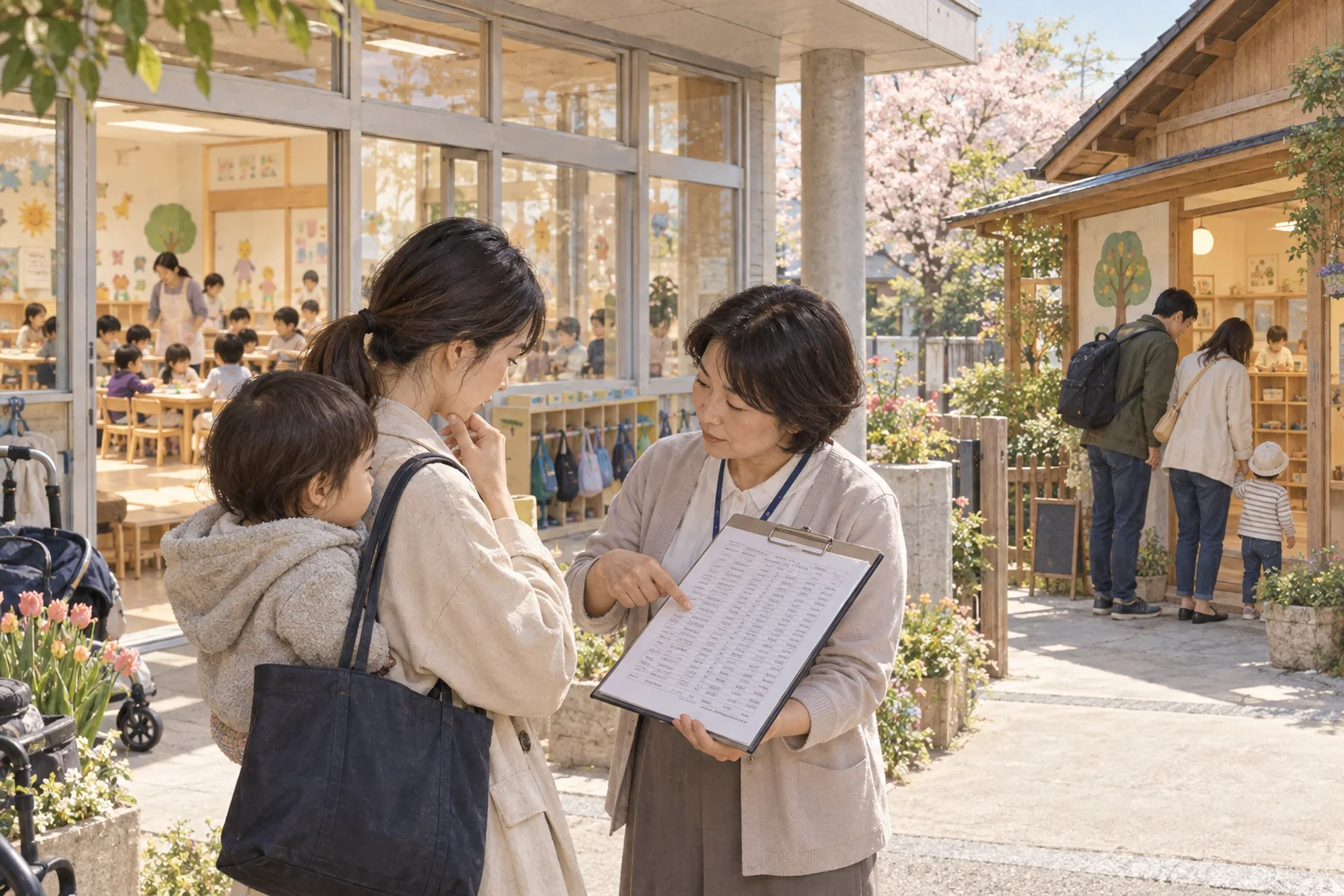
Taiki jido, or wait-listed children, are children who cannot get a licensed daycare place, long a barrier to mothers working.
弐In 30 seconds30秒で説明する
In Japan, licensed daycare places are allocated by the municipality on a points system, and for years demand in cities far exceeded supply. Parents unable to get a place could not return to work, and because leave and childcare fall mostly on mothers, it became a women's employment issue. Cities built capacity through the 2010s and the national waiting-list figure has fallen sharply, though shortages remain in particular wards and age groups.
参As a short speechスピーチ・英作文
Taiki jido literally means waiting children, and it refers to children who have applied for a licensed daycare place and not been given one. The system matters here: licensed nurseries are allocated by the municipality using a points score based on how much both parents work, family circumstances and so on, and in the cities demand ran far ahead of places for most of the 2000s and 2010s.
The consequence was concrete. Parental leave in Japan is generous on paper, but if you cannot get a nursery place when the leave ends, someone has to stop working, and in practice that someone is almost always the mother. Parents began applying while still pregnant, and a whole vocabulary grew up around the search.
The situation has genuinely improved: municipalities added capacity through the 2010s and the national figure has fallen to a small fraction of its peak. But the average hides the problem — shortages persist in particular wards, and especially for children under three, where staffing ratios make places expensive to provide.
待機児童たいきじどうtaiki jidochildren on the waiting list for daycare
保育園に入れず、母親が仕事に戻れない。この十年で数は大きく減った。
壱一言で言うとIn one line
待機児童とは、認可保育所に申し込んでも入れない子どものことで、長く母親が仕事に戻る妨げとなってきた問題です。
弐30秒で説明するIn 30 seconds
日本では、認可保育所の入所は市区町村が点数で決めます。都市部では長いあいだ、希望が定員を大きく上回っていました。入れなければ親は仕事に戻れず、育休も育児も母親に偏るため、女性の就労の問題になりました。2010年代を通じて自治体が定員を増やし、全国の待機児童数は大きく減りましたが、特定の区や年齢では不足が残っています。
参スピーチ・英作文As a short speech
待機児童とは、文字どおり待っている子どものことで、認可保育所に申し込んで入れなかった子どもを指します。仕組みが肝心です。認可保育所の入所は市区町村が決め、両親がどれだけ働いているか、家庭の事情はどうか、といった条件を点数にして順位をつけます。
都市部では2000年代から2010年代の大半にわたって、希望が定員を大きく上回っていました。結果ははっきりしていました。日本の育児休業は制度としては手厚いのですが、休業が明けるときに保育所に入れなければ、誰かが働くのをやめるしかありません。そして実際には、そのほとんどが母親でした。
妊娠中から申し込む人が出て、その活動を指す言葉まで生まれます。状況は本当に良くなりました。自治体が2010年代を通じて定員を増やし、全国の数字は最も多かったころのごく一部にまで減っています。ただ、平均は問題を隠します。特定の区では不足が続き、とりわけ三歳未満では、職員の配置基準のために席を用意する費用が高くつきます。
こう聞かれたらQuestions people actually ask
QWhy not just go to a private nursery?
AYou can, and many do, but unlicensed places cost considerably more and vary in quality. The licensed system is subsidized, which is why everyone wants in.
認可外に預ければよいのではないですか。預けられますし、そうする人も多いです。ただ、認可外は費用がかなり高く、質にも幅があります。認可は公費が入っているので、みなそこを希望します。
QHow are places decided?
ABy a points score set by each municipality, weighing both parents' working hours, single parenthood, siblings already enrolled and other circumstances. Higher scores get placed first.
入所はどう決まるのですか。市区町村ごとの点数で決まります。両親の就労時間、ひとり親かどうか、きょうだいがすでに通っているかなどを点にします。点の高い順に決まります。
QHas it been solved?
ANationally the number is far lower than at its peak, but it is uneven. Some wards still have waiting lists, particularly for children under three, and falling births are now part of the picture too.
解決したのですか。全国の数字はかつてよりはるかに少なくなりましたが、地域差があります。いまも待機の出る区はあり、特に三歳未満で残っています。出生数の減少も、この図の一部になってきました。
誤解されやすいA common misunderstanding
MYTHJapan has no childcare because mothers are expected to stay home.日本に保育が乏しいのは、母親が家にいるべきとされているからだ、と思われがちです。
FACTLicensed childcare is subsidized and heavily oversubscribed. The bottleneck has been supply and staffing costs, not a policy that mothers should stay home.認可保育には公費が入っており、希望が定員を大きく超えてきました。詰まっていたのは供給と人件費であって、母親は家にいるべきだという方針ではありません。
そのまま使えるフレーズPhrases you can use
- It means children who can't get a daycare place.保育所に入れない子どものことです。
- Places are decided by the city on a points system.入所は自治体が点数で決めます。
- If you can't get in, someone has to stop working.入れなければ、誰かが働くのをやめることになります。
- The numbers have dropped a lot in the last ten years.この十年で数は大きく減りました。
- Children under three are still the hardest to place.三歳未満は、いまも入りにくいです。
豆知識Background
厚生労働省の集計では、待機児童数は2017年の26,081人をピークに減少し、2024年には2,567人と調査開始以来最少となった。ただし、認可外に通っている、求職活動を休止しているなどの理由で集計に含まれない「隠れ待機児童」の存在が指摘されている。保育所を探す活動は「保活」と呼ばれ、妊娠中から見学を始める例もある。0〜2歳児は保育士一人あたりの子どもの数が少なく定められているため、定員を増やす費用が大きい。
出典日本文化ナビ(原田英語.com)「待機児童を英語で説明する(taiki jido)」https://www.haradaeigo.com/japanese-culture/en/taiki-jido
- 文
- 日本文化ナビ編集部(原田英語.com)— 英文・和訳・解説はすべて独自に作成
- イラスト
- 日本文化ナビ オリジナル
- 発行
- 原田英語.com https://www.haradaeigo.com/
- 印刷日
- 2026.10.17
© 2026 Harada Eigo (原田英語.com). Text and illustration: Japan Culture Navi.
ページはこちら