食べ放題
壱In one line一言で言うと
Tabehodai is an all-you-can-eat meal, almost always with a strict time limit, common at yakiniku, sushi and buffet restaurants.
弐In 30 seconds30秒で説明する
Tabehodai means you pay a set price to order as much food as you want, but it almost always comes with a time limit, typically 60 to 120 minutes, and sometimes a rule against leaving food unfinished. It is especially common at yakiniku grill restaurants and sushi chains. The buffet-style version, where dishes are laid out and you serve yourself, is usually called baikingu, a Japanese word borrowed from the 1958 Vikings film rather than from Scandinavia directly.
参As a short speechスピーチ・英作文
Tabehodai, all-you-can-eat, is not quite what the phrase suggests to a first-time visitor, because in Japan it is almost never truly unlimited in time. A set fee buys ordering rights for a fixed window, usually somewhere between sixty and one hundred twenty minutes, and many restaurants post a rule against leftover food, sometimes with a small penalty charge if you order more than you finish, precisely because wasting food after paying for unlimited access became a common complaint.
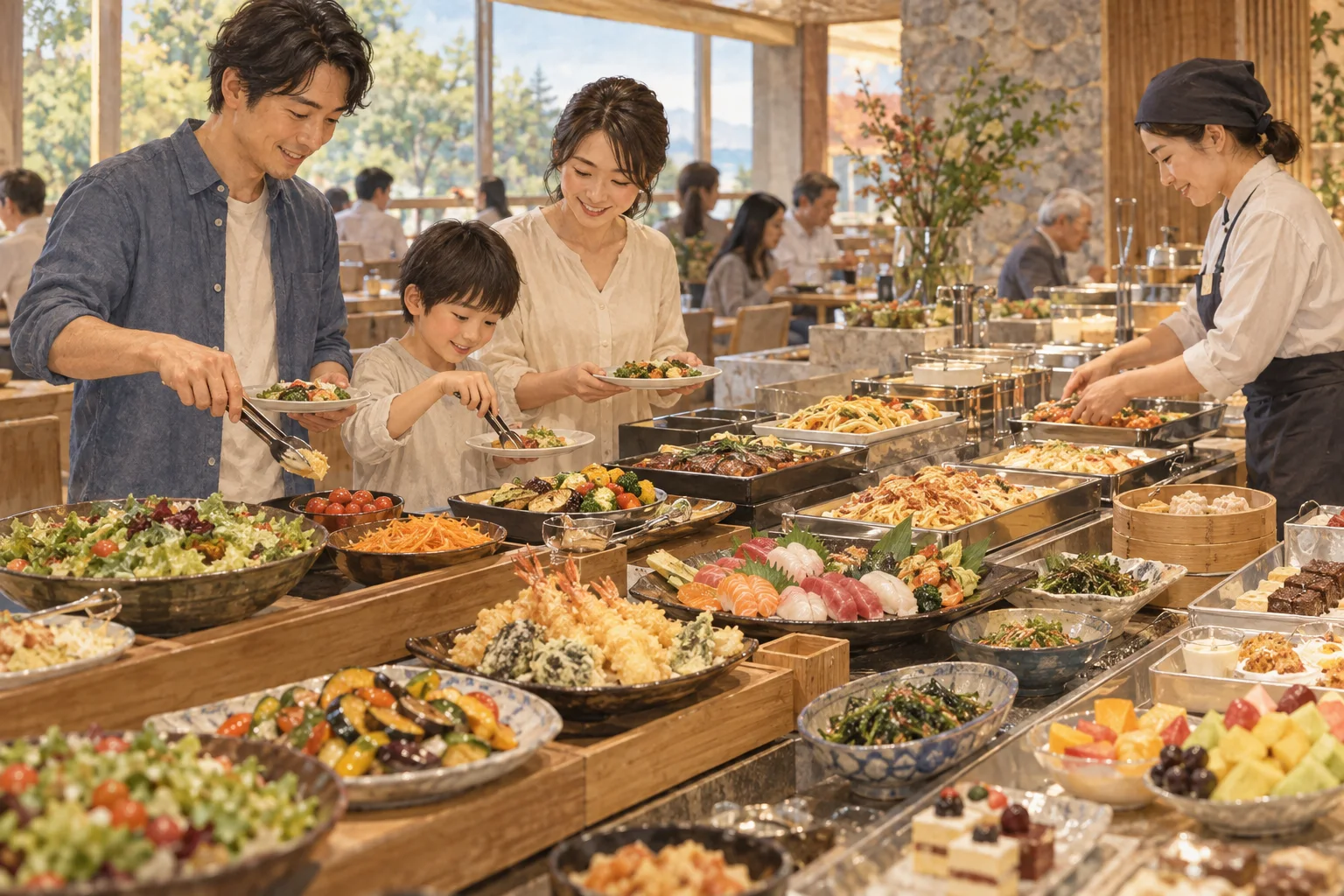
It shows up most often at yakiniku grill restaurants and revolving or counter sushi chains, where customers order continuously from a tablet or menu rather than walking to a buffet table. The self-serve buffet version, food laid out for you to take yourself, is a separate word, baikingu, and its origin is a good trivia point: the Imperial Hotel in Tokyo opened what is often called Japan's first buffet-style restaurant in 1958, but instead of naming it after the Scandinavian smorgasbord it was modeled on, the hotel chose the catchier word baikingu, Viking, apparently inspired by a Hollywood film of that name playing nearby at the time.
食べ放題たべほうだいtabehodaian all-you-can-eat meal with a time limit
食べ放題は無制限ではない。たいてい90分、時間との勝負でもある。
壱一言で言うとIn one line
食べ放題とは、たいてい厳しい時間制限のある食べ放題の食事のことで、焼肉や寿司、バイキングの店でよく見られます。
弐30秒で説明するIn 30 seconds
食べ放題とは、決まった料金を払えば好きなだけ注文できる仕組みですが、たいてい60分から120分ほどの時間制限があり、店によっては食べ残しを禁じる決まりもあります。焼肉店や寿司のチェーン店でとくによく見られます。料理を並べて自分で取り分けるビュッフェ形式は、ふつう「バイキング」と呼ばれ、この語は北欧から直接来たのではなく、1958年公開の映画『バイキング』から取られたとされます。
参スピーチ・英作文As a short speech
食べ放題は、初めて訪れる人がその言葉から想像するものとは少し違います。日本ではほとんどの場合、時間まで無制限というわけではないからです。決まった料金を払うと、たいてい六十分から百二十分ほどの決められた時間内に注文する権利が得られ、多くの店では食べ残しを禁じる決まりを掲げ、食べきれない量を注文した場合には小さな罰金を取ることもあります。
これは、無制限のはずのものにお金を払ったあとで食べ物を無駄にすることが、よくある不満の種になってきたためです。とくに多いのが焼肉店や、回転寿司やカウンター式の寿司チェーンで、客はビュッフェ台まで歩いていくのではなく、タブレットやメニューから次々に注文します。
料理を並べて自分で取り分けるビュッフェ形式のほうは、バイキングという別の言葉で呼ばれ、その由来は豆知識として面白いものです。東京の帝国ホテルが1958年、日本初とされるビュッフェ形式のレストランを開き、手本にした北欧のスモーガスボードにちなんだ名前ではなく、当時近くで上映されていた同名の映画にちなんで、より覚えやすい「バイキング」という語を選んだとされます。
こう聞かれたらQuestions people actually ask
QIs there really a time limit?
AAlmost always, yes — commonly 60, 90 or 120 minutes, sometimes called last-order time. It's posted when you're seated, and the staff will usually give a reminder as the end approaches.
本当に時間制限があるのですか。ほぼ必ずあります。60分、90分、120分といった長さが多く、ラストオーダーの時間として案内されます。席に着いたときに知らされ、終わりが近づくとスタッフが声をかけてくれることも多いです。
QWhat happens if I don't finish everything I ordered?
ASome restaurants charge a small penalty fee for unfinished food, and most at least ask you not to leave any, since the point of the pricing is unlimited eating, not unlimited waste. It's polite to order in smaller rounds rather than everything at once.
注文したものを食べきれなかったらどうなりますか。店によっては、食べ残した分に少額の罰金を取りますし、多くの店が少なくとも残さないよう求めています。この料金は無制限に食べてよいという意味であって、無駄にしてよいという意味ではないからです。一度に大量に頼まず、少しずつ何度も注文するのがマナーです。
QWhat's the difference between tabehodai and baikingu?
ATabehodai describes the pricing system — pay once, eat as much as you order within the time limit — and applies to ordering from a menu. Baikingu specifically means a self-serve buffet where dishes are laid out for you to take yourself.
食べ放題とバイキングはどう違うのですか。食べ放題は料金の仕組みを指す言葉で、一度払えば時間内に注文した分だけ食べられるというもので、メニューから注文する形にも使われます。バイキングは、料理が並べられていて自分で取り分ける形式を特に指す言葉です。
そのまま使えるフレーズPhrases you can use
- We have ninety minutes for the all-you-can-eat course.食べ放題は90分です。
- Please don't order more than you can finish.食べきれる分だけ注文してください。
- There's a fee for leftover food.食べ残しには料金がかかります。
- This is a buffet, not a set menu course.これはバイキング形式で、コースメニューではありません。
- Last order is in ten minutes.ラストオーダーは10分後です。
豆知識Background
「バイキング」という呼び名は、1958年に帝国ホテルが日本初とされるビュッフェ形式レストランを開業した際につけた名称に由来するとされる。手本にしたのは北欧のスモーガスボードだったが、なじみのないその名の代わりに、当時近くの映画館で上映されていた映画『バイキング』にちなんで名付けたと伝えられている。食べ放題は、90分や120分といった時間制限付きで提供されることがほとんどで、焼肉店や寿司チェーンを中心に広まった。食べ残しに追加料金を科す店が増えたのは、食品ロスへの意識の高まりを背景にしているとされる。
出典日本文化ナビ(原田英語.com)「食べ放題を英語で説明する(tabehodai)」https://www.haradaeigo.com/japanese-culture/en/tabehodai
- 文
- 日本文化ナビ編集部(原田英語.com)— 英文・和訳・解説はすべて独自に作成
- イラスト
- 日本文化ナビ オリジナル
- 発行
- 原田英語.com https://www.haradaeigo.com/
- 印刷日
- 2026.10.17
© 2026 Harada Eigo (原田英語.com). Text and illustration: Japan Culture Navi.
ページはこちら