春闘
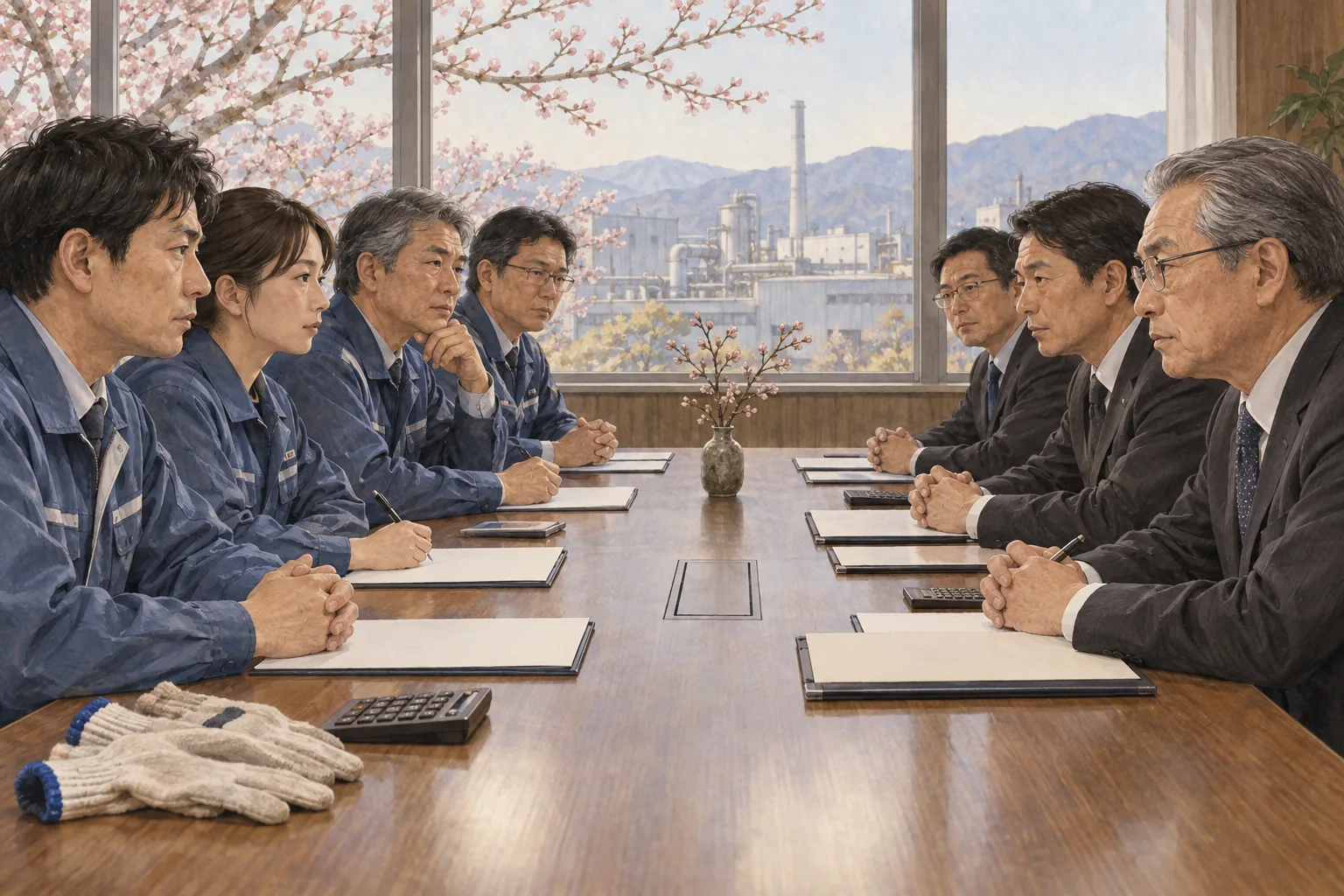
壱In one line一言で言うと
Shunto is the annual spring round in which unions across Japan negotiate pay at the same time.
弐In 30 seconds30秒で説明する
Every spring, Japanese unions time their wage negotiations together so that settlements at large companies set a benchmark for everyone else. Talks run from February, answers come in March, and the average increase is reported in the news. It is one of the main ways wages move across the whole economy.
参As a short speechスピーチ・英作文
Shunto is the annual spring wage round, and it is a genuinely unusual institution. Rather than each union bargaining whenever its contract expires, Japanese unions concentrate their negotiations into the same weeks every year.
Demands are submitted in February, major manufacturers answer in mid-March, and those settlements become a reference point that smaller firms, and many non-unionized companies, follow when setting their own increases. The results are reported as a national average, and in recent years the government has openly pressed companies to raise pay, which is a reversal of the older pattern.
Two limits are worth stating. Union membership covers fewer than one in five employees, so many workers are affected only indirectly, and the benchmark comes from large firms while most Japanese people work at small ones. Even so, if you want to know why Japanese pay rises arrive in April, this is the answer.
春闘しゅんとうshuntothe spring wage round
毎年春、労使が一斉に賃金を決める日本独特の仕組み。
壱一言で言うとIn one line
春闘とは、全国の労働組合が同じ時期にそろって賃上げを交渉する、春の年中行事です。
弐30秒で説明するIn 30 seconds
毎年春、日本の労働組合は賃金交渉の時期をそろえます。大企業の妥結額がほかの企業の目安になるからです。交渉は二月から始まり、三月に回答が出され、平均の引き上げ幅が報じられます。経済全体の賃金が動く主な仕組みの一つです。
参スピーチ・英作文As a short speech
春闘は毎年春の賃金交渉で、本当に珍しい仕組みです。各組合が自分の協約の切れる時期に交渉するのではなく、日本の組合は毎年同じ数週間に交渉を集中させます。
二月に要求を出し、三月なかばに大手の製造業が回答し、その妥結額が、より小さな企業や、組合のない多くの会社が自社の引き上げを決めるときの目安になります。結果は全国平均として報じられ、近年は政府が公然と企業に賃上げを促していて、これは以前とは逆の構図です。
限界も書いておく必要があります。組合に入っている人は雇用者の五分の一にも届かず、多くの働き手には間接的にしか影響しません。目安になるのは大企業ですが、日本人の多くは小さな会社で働いています。それでも、日本で賃上げが四月に来るのはなぜかと問われれば、答えはこれです。
こう聞かれたらQuestions people actually ask
QAre Japanese unions company-based?
AMostly yes. The basic unit is a union inside a single company covering its regular employees, and those company unions belong to industry federations, which is what makes a coordinated spring round possible.
日本の労働組合は会社ごとにあるのですか。多くはそうです。基本の単位は一つの会社の正社員でつくる企業別組合で、それが産業別の連合体に加わっています。この形だからこそ、春に足並みをそろえた交渉ができるのです。
QDo strikes happen?
ARarely now. Strikes were common in the 1960s and 1970s but have become unusual, and most rounds are settled by negotiation. A strike at a large firm is national news precisely because it is rare.
ストライキは起きるのですか。今ではまれです。1960年代から70年代にはよくありましたが珍しくなり、ほとんどは交渉で決着します。大企業のストライキが全国の報道になるのは、まさにそれが珍しいからです。
QWhat is the base-up people talk about?
ABeisu appu, or base-up, means raising the whole pay scale, as opposed to the automatic annual step people receive for another year of service. The two are counted separately, which is why reported figures can be confusing.
よく言われるベースアップとは何ですか。ベースアップとは賃金表そのものを引き上げることで、勤続が一年延びることで自動的に上がる定期昇給とは別のものです。二つは分けて数えられるため、報じられる数字は分かりにくくなりがちです。
そのまま使えるフレーズPhrases you can use
- The spring wage talks start in February.春闘は二月に始まります。
- The union submitted its demands.組合が要求を提出しました。
- Large firms answered in mid-March.大手は三月なかばに回答しました。
- The raise takes effect in April.賃上げは四月から反映されます。
- Our company has no union.うちの会社に組合はありません。
豆知識Background
春闘は1950年代半ばに始まった方式で、交渉の時期をそろえることで、組合の力を集めようとしたものです。日本の組合は企業ごとに作られる企業別組合が基本で、その上に産業別の連合体があります。厚生労働省の労働組合基礎調査によれば、組合の推定組織率は近年二割を下回っています。近年は政府が経済界に賃上げを要請する場面が続き、春闘の平均賃上げ率が経済政策の指標のように扱われることもあります。
出典日本文化ナビ(原田英語.com)「春闘を英語で説明する(shunto)」https://www.haradaeigo.com/japanese-culture/en/shunto
- 文
- 日本文化ナビ編集部(原田英語.com)— 英文・和訳・解説はすべて独自に作成
- イラスト
- 日本文化ナビ オリジナル
- 発行
- 原田英語.com https://www.haradaeigo.com/
- 印刷日
- 2026.10.17
© 2026 Harada Eigo (原田英語.com). Text and illustration: Japan Culture Navi.
ページはこちら