書院造
壱In one line一言で言うと
Shoin-zukuri is the building style that gave Japan the tatami room as we know it.
弐In 30 seconds30秒で説明する
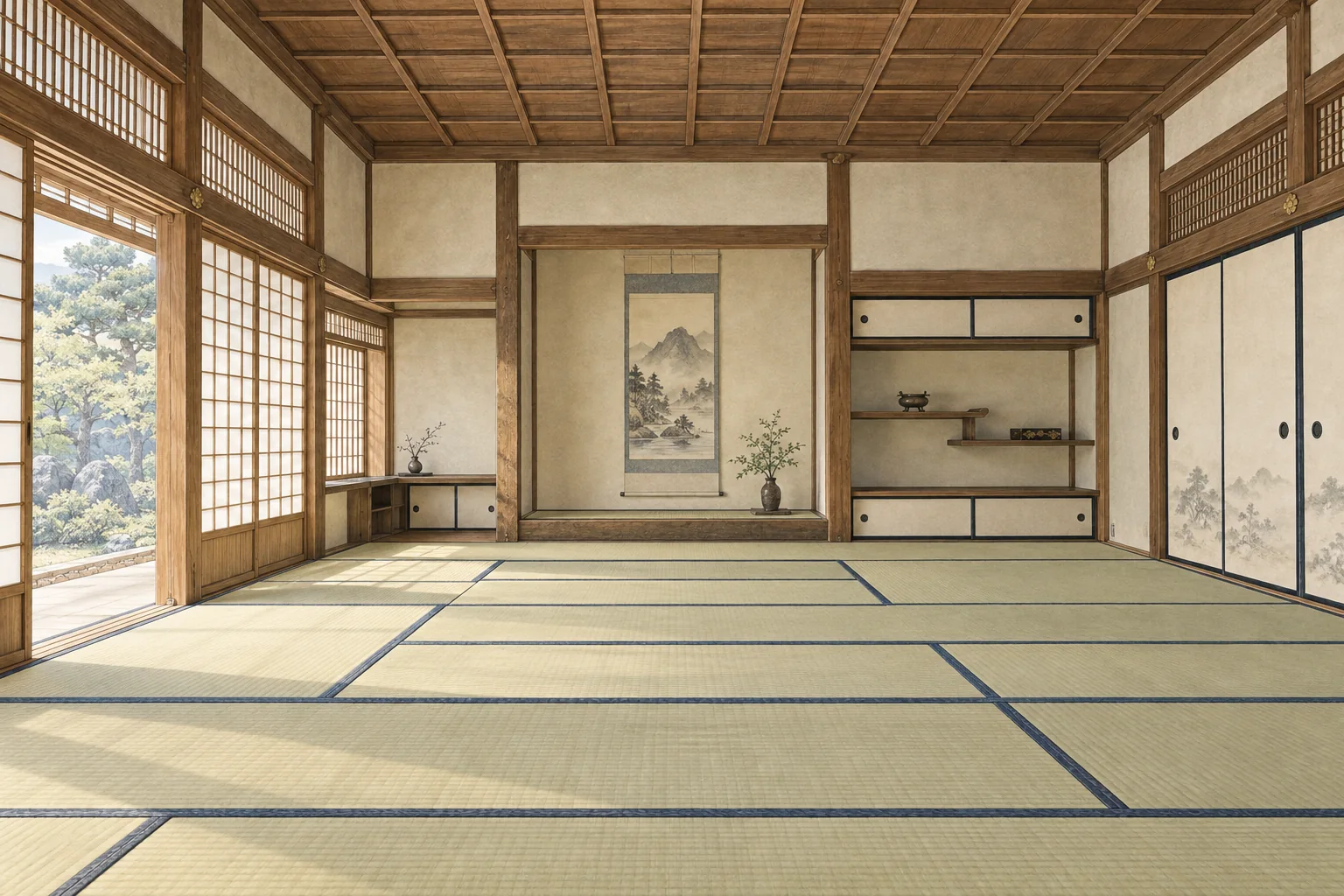
Shoin-zukuri is a style that took shape from the Muromachi period in the residences of warriors and senior priests. It fixed the features a Japanese room still has: tatami laid wall to wall, sliding paper doors, a squared ceiling, a decorative alcove and staggered shelves. Almost every traditional room a visitor sees descends from it.
参As a short speechスピーチ・英作文
If you sit in a traditional Japanese room, you are sitting in a late medieval invention. Before it, floors were bare boards and a mat was brought out for one person to sit on.
From the Muromachi period, the houses of warriors and senior priests began to lay tatami over the whole floor, to divide space with sliding screens instead of hanging curtains, and to build in a raised alcove for a scroll and staggered shelves for objects. A low writing desk set into a window bay gave the style its name.
The earliest surviving example is a small study in Kyoto dated to 1486. From there the pattern spread through samurai houses, temples and eventually ordinary homes, which is why a room in a modern apartment and a room in a castle look like versions of the same idea.
書院造しょいんづくりshoin-zukurithe room style that modern Japanese rooms come from
今の和室の形は、室町の武家の座敷から来ている。
壱一言で言うとIn one line
書院造は、今の和室のもとになった建物の様式です。
弐30秒で説明するIn 30 seconds
書院造は、室町時代から武家や高位の僧の住まいで整えられた様式です。今の和室が持つ特徴は、ここで定まりました。畳を隅まで敷き詰め、襖と障子で仕切り、天井を張り、床の間と違い棚を設けます。旅行者が目にする座敷のほとんどが、この形の子孫です。
参スピーチ・英作文As a short speech
伝統的な和室に座るとき、私たちは中世後期の発明の中にいます。それ以前の床は板張りで、畳は座る人の分だけ持ち出すものでした。
室町時代から、武家や高位の僧の住まいで、畳を床一面に敷き、垂れ布ではなく引き戸で部屋を仕切り、掛け軸のための床の間と、物を置く違い棚を作りつけるようになります。窓辺に設けた書き物用の低い台が、この様式の名の由来です。
現存する早い例は、京都にある小さな書斎で、1486年の建築とされます。この形は武家の屋敷、寺、やがて一般の家へ広がりました。今の集合住宅の和室と城の座敷が同じ考えの変奏に見えるのは、そのためです。
こう聞かれたらQuestions people actually ask
QHow is it different from the Heian style before it?
AThe aristocratic style of the Heian period had open halls with wooden floors, movable screens and mats set out where needed. Shoin-zukuri fixed the partitions, covered the whole floor with tatami, and built the decoration into the structure.
その前の平安時代の様式とはどう違うのですか。平安時代の貴族の住まいは、板の間の広い空間を、持ち運べる屏風や几帳で区切り、畳は必要なところに置くものでした。書院造は仕切りを固定し、床一面を畳にし、飾りの場所を建物に作りつけました。
QWhere can I see a good example?
AReception rooms in temples and castles are the easiest. Nijo Castle in Kyoto shows the grand version used for receiving guests, including the ranked seating the style was designed to display.
よい例はどこで見られますか。寺や城の対面の座敷がわかりやすいでしょう。京都の二条城には、客を迎えるための壮大な書院造が残り、この様式が示そうとした席次の序列も見て取れます。
QIs the tea room the same thing?
ANo, and the contrast is the point. The tea room style that followed deliberately stripped the display away: rough earth walls, irregular timbers, a low entrance that everyone has to stoop through. It was a reaction to this formality.
茶室も同じものですか。違います。むしろ対照的です。あとに現れた茶室の様式は、見せる要素をわざと削ぎ落としました。土壁、曲がった木、誰もが身をかがめて入る低い入口。書院造の格式への反発から生まれたものです。
そのまま使えるフレーズPhrases you can use
- This is the classic room style.これが典型的な書院造です。
- The whole floor is covered with tatami.床一面に畳が敷かれています。
- The alcove is for a hanging scroll.床の間は掛け軸を掛けるところです。
- The shelves are deliberately uneven.棚はわざと段違いになっています。
- Modern rooms still follow this plan.今の和室もこの形を引き継いでいます。
豆知識Background
書院造は室町時代から近世にかけて整った住宅の様式で、畳を敷き詰める、襖と障子で仕切る、床の間と違い棚を設ける、といった特徴があります。名は、窓辺に作りつけた書き物用の台である付書院に由来します。現存する早い例として、京都の慈照寺東求堂にある同仁斎が知られ、1486年の建築とされます。書院造の座敷では床の間を背にする側が上座で、上座と下座の感覚は、今の会議室や座敷にも残っています。
出典日本文化ナビ(原田英語.com)「書院造を英語で説明する(shoin-zukuri)」https://www.haradaeigo.com/japanese-culture/en/shoin-zukuri
- 文
- 日本文化ナビ編集部(原田英語.com)— 英文・和訳・解説はすべて独自に作成
- イラスト
- 日本文化ナビ オリジナル
- 発行
- 原田英語.com https://www.haradaeigo.com/
- 印刷日
- 2026.10.17
© 2026 Harada Eigo (原田英語.com). Text and illustration: Japan Culture Navi.
ページはこちら