新人研修
壱In one line一言で言うと
Shinjin kenshu, or new-hire training, is the weeks of company training new graduates in Japan get before any real work.
弐In 30 seconds30秒で説明する
Japanese companies hire new graduates as a cohort each April and put them through collective training first: business manners, phone handling, business email, exchange of name cards, and company history. Placement to a department often comes after the training, sometimes weeks later.
参As a short speechスピーチ・英作文
In Japan, new graduates join a company on the same day, usually April 1st, attend an entrance ceremony together, and then go into training as a group before doing any actual work. The content surprises people from other countries.
Alongside anything technical, there are sessions on how to bow, how to answer a telephone, how to write a business email, how to exchange name cards with both hands, and how to give a self-introduction. The logic follows from the hiring model: companies recruit for potential rather than for a specific job, so they take responsibility for teaching everything, including manners a graduate elsewhere might be assumed to have.
Training lasts from a week to several months depending on the industry, and placement into a department is often announced at the end. The cohort itself matters too: people who joined in the same year, the doki, keep that identity for their whole career and often stay in touch across departments.
新人研修しんじんけんしゅうshinjin kenshutraining for new graduates
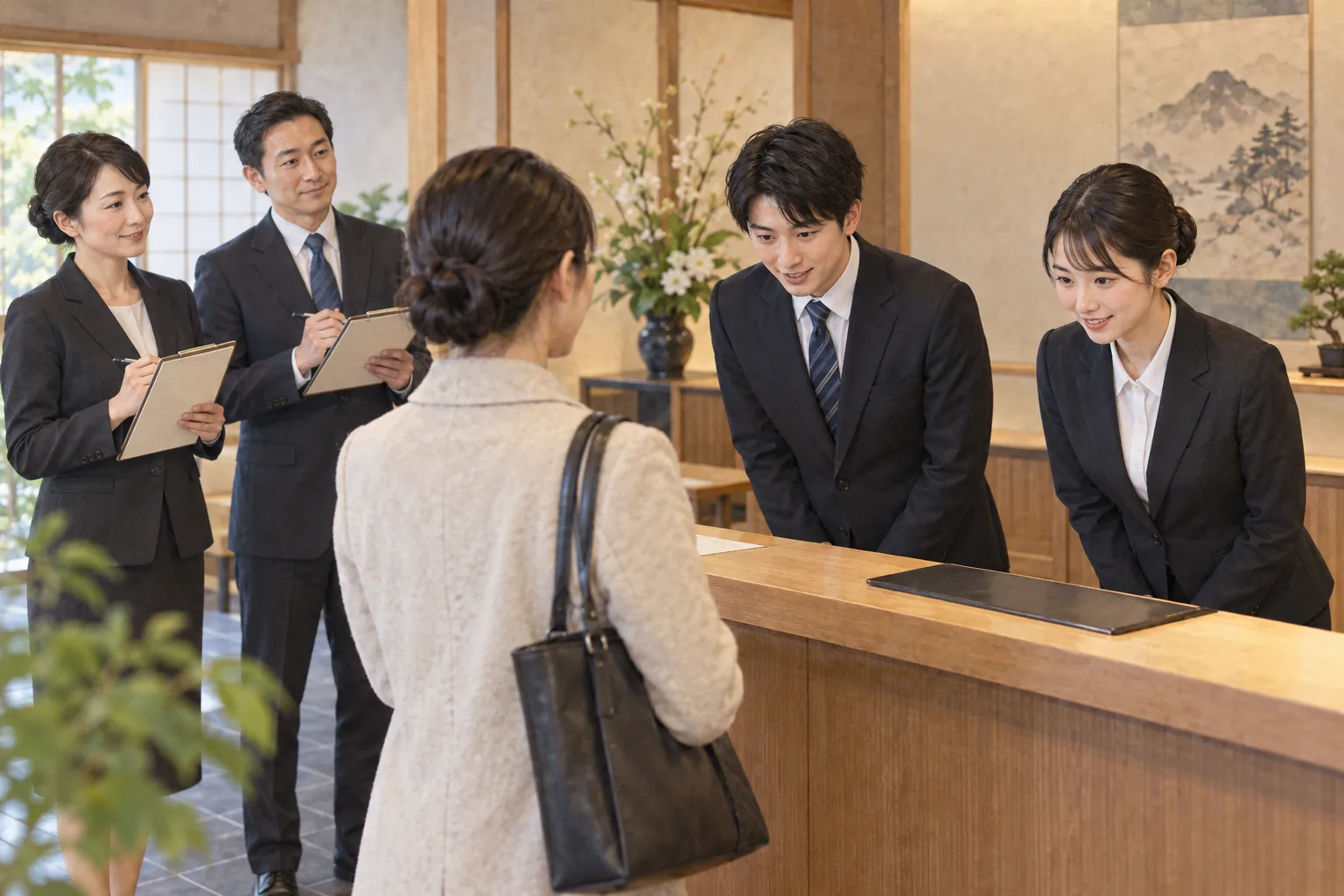
入社式のあと、全員が同じ研修を受ける。名刺交換の練習から。
壱一言で言うとIn one line
新人研修とは、日本の新卒社員が実際の仕事に就く前に受ける、何週間もの会社の研修です。
弐30秒で説明するIn 30 seconds
日本の企業は毎年四月に新卒を一括で採用し、まず集合研修を行います。ビジネスマナー、電話の応対、メールの書き方、名刺交換、会社の沿革などです。配属先が決まるのは研修のあとで、何週間も先になることもあります。
参スピーチ・英作文As a short speech
日本では、新卒の社員が同じ日に入社し、たいていは四月一日に一緒に入社式に出て、それから実際の仕事に就く前に、まとめて研修に入ります。その中身は、よその国から来た人を驚かせます。
技術的なことと並んで、お辞儀の仕方、電話の受け方、ビジネスメールの書き方、両手での名刺の交換、自己紹介の仕方といった時間があるからです。この理屈は採用の仕組みから来ています。企業は特定の職務のためではなく、見込みを見て採用するので、すべてを教える責任を引き受けます。
ほかの国なら卒業生が身につけていると前提されるような作法も含めてです。研修の期間は業種によって一週間から数か月までで、配属先はその最後に発表されることがよくあります。同期という集団そのものも重要です。同じ年に入った人たちは、その後ずっとその関係を保ち、部署が分かれても連絡を取り合います。
こう聞かれたらQuestions people actually ask
QWhy teach manners to university graduates?
ABecause companies hire for potential rather than for a defined job, and because the standards are specific: which hand takes a name card, how deep to bow, how to open a phone call. These are taught rather than assumed.
大学を出た人に、どうしてマナーを教えるのですか。企業が職務ではなく見込みを見て採用するからであり、作法の基準が具体的だからです。名刺をどちらの手で受けるか、どの角度で礼をするか、電話をどう受けるか。前提とせずに教えるのです。
QWhat is doki?
AThe cohort who joined in the same year. It is a lasting relationship, outside the reporting hierarchy, and doki often become the people you can speak frankly to years later.
同期とは何ですか。同じ年に入社した人たちのことです。長く続く関係で、指揮命令の系統の外にあり、何年も経ってから本音を話せる相手になるのは、たいてい同期です。
QDo trainees choose their department?
AThey state preferences, but the company decides, and placement can surprise people. That is consistent with the transfer system, in which the company assigns roles throughout a career.
配属先は自分で選べるのですか。希望は出しますが、決めるのは会社で、配属は本人の予想と違うこともあります。会社が働き手の役割を決めていく人事異動の仕組みと、考え方が一貫しています。
そのまま使えるフレーズPhrases you can use
- Training starts on the second.研修は二日からです。
- Receive the card with both hands.名刺は両手で受け取ってください。
- Placements are announced next month.配属は来月発表されます。
- We joined the same year.同期です。
- Answer within three rings.三コール以内に出てください。
豆知識Background
日本の新卒一括採用では、入社日が四月一日にそろえられ、入社式のあとに集合研修が行われます。研修では、挨拶、電話応対、来客対応、名刺交換、報告の仕方といったビジネスマナーが扱われ、工場や店舗での実習を組み込む企業もあります。配属は研修の終わりに発表されることが多く、希望と異なる場合もあります。同期の関係は部署を越えて長く続き、社内での相談相手になることがよくあります。
出典日本文化ナビ(原田英語.com)「新人研修を英語で説明する(shinjin kenshu)」https://www.haradaeigo.com/japanese-culture/en/shinjin-kenshu
- 文
- 日本文化ナビ編集部(原田英語.com)— 英文・和訳・解説はすべて独自に作成
- イラスト
- 日本文化ナビ オリジナル
- 発行
- 原田英語.com https://www.haradaeigo.com/
- 印刷日
- 2026.10.17
© 2026 Harada Eigo (原田英語.com). Text and illustration: Japan Culture Navi.
ページはこちら