寝殿造
壱In one line一言で言うと
Shinden-zukuri was the open, undivided mansion style the Heian nobility lived in.
弐In 30 seconds30秒で説明する
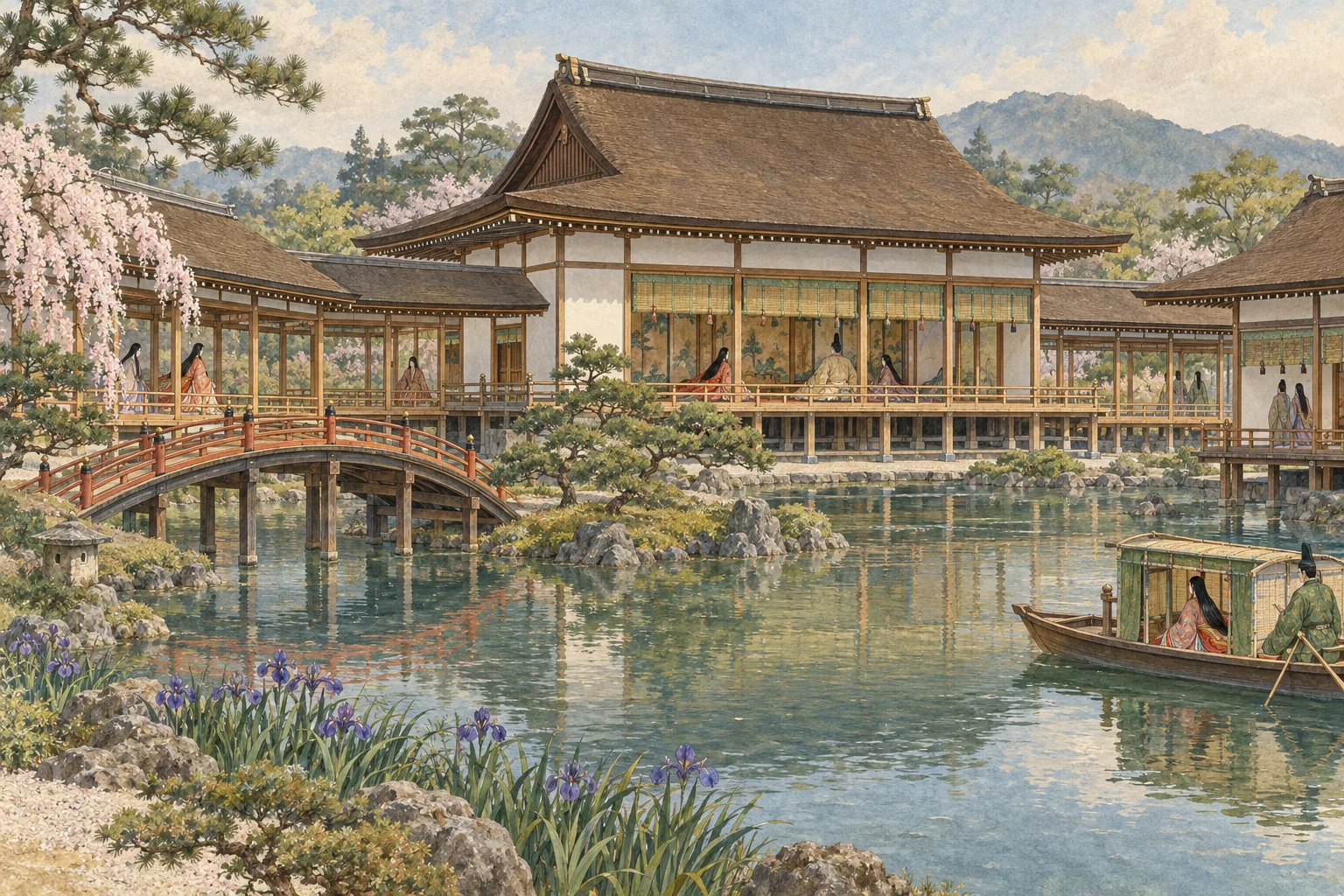
Shinden-zukuri was the residence style of Heian-period nobles. A main hall faced south onto a garden with a pond, with wings connected by roofed corridors. Inside there were almost no fixed walls: space was divided with curtains and standing screens, floors were bare boards, and mats were brought out for people to sit on. No complete example survives.
参As a short speechスピーチ・英作文
If you read The Tale of Genji and wonder what the buildings looked like, this is the answer. A Heian noble's mansion had a main hall in the center, facing south over a garden with a pond big enough for a boat. Wings stood to the east and west, joined by roofed walkways, and the whole compound sat inside an earth wall.
The striking part is the inside: there were hardly any rooms. Space was made by putting up curtain stands, folding screens and blinds, and taken down again, which is why the literature of the period is full of people overhearing each other.
Floors were plain boards, and a tatami mat was carried out and placed where someone of rank would sit. No complete building survives; what we know comes from picture scrolls, excavation and a few temple halls. The later shoin style, with fixed partitions and wall-to-wall tatami, is a direct descendant.
寝殿造しんでんづくりshinden-zukurithe palace style of the Heian aristocracy
壁のない大広間に、几帳を立てて暮らした。畳はまだ敷き詰めない。
壱一言で言うとIn one line
寝殿造とは、平安の貴族が暮らした、仕切りのない開けた屋敷の様式です。
弐30秒で説明するIn 30 seconds
寝殿造は、平安時代の貴族の住まいの様式です。南に庭と池を望む寝殿を中心に、対屋を渡殿でつなぎます。内部には固定した壁がほとんどなく、几帳や屏風で仕切りました。床は板張りで、畳は座る人の分だけ持ち出すものでした。完全な形で残る建物はありません。
参スピーチ・英作文As a short speech
源氏物語を読んで、建物はどんな姿だったのかと思ったなら、その答えがこれです。平安の貴族の屋敷は、中央に寝殿を置き、南の庭と、舟を浮かべられるほどの池に向いていました。東西には対屋があり、渡殿でつながれ、全体が築地塀で囲まれます。
驚かされるのは内部です。部屋というものがほとんどありません。几帳や屏風、御簾を立てて場所を作り、また片づけました。この時代の文学に、人の話が筒抜けになる場面が多いのはそのためです。
床は板のままで、畳は身分のある人が座るところに運んで置きました。完全な建物は残っておらず、絵巻や発掘、いくつかの寺の建物から姿を知ります。仕切りを固定し、畳を敷き詰める後の書院造は、この様式の直系の子孫です。
こう聞かれたらQuestions people actually ask
QWhere can I see one?
ANowhere complete. The Byodoin Phoenix Hall in Uji gives the closest sense of the form, and reconstructed rooms in Kyoto museums show the interior. Picture scrolls are the main evidence.
どこで見られますか。そのまま残っている建物はありません。形をいちばん近く感じられるのは宇治の平等院鳳凰堂で、内部の様子は京都の博物館の復元展示で見られます。手がかりの中心は絵巻です。
QHow did they stay warm?
ABadly. With no walls and wide openings, the halls were cold, and people wore layer on layer of clothing and sat near charcoal braziers. The layered court robes are often said to be partly a response to the architecture.
冬はどうしていたのですか。うまくいっていませんでした。壁がなく開口部が広いため、寝殿は寒く、人々は衣を重ね、火鉢のそばに座りました。十二単のような重ね着は、この建物への対応でもあったとよく言われます。
QSo when did tatami cover the whole floor?
AFrom the Muromachi period, in the shoin style. In the Heian period a mat marked a seat and therefore a rank, and even the pattern of its cloth edging showed who was allowed to sit on it.
畳を敷き詰めるようになったのはいつですか。室町時代の書院造からです。平安時代の畳は座る場所、つまり身分を示すもので、縁の布の柄によって、誰が座れるかまで決まっていました。
そのまま使えるフレーズPhrases you can use
- There were almost no interior walls.中に壁はほとんどありませんでした。
- The hall faces south onto a pond.寝殿は南の池に向いています。
- Screens were put up to divide the space.几帳や屏風で仕切りました。
- A mat was brought out for each person.畳は人ごとに運んで置きました。
- Nothing complete has survived.完全な形では残っていません。
豆知識Background
寝殿造は、中央の寝殿の南に庭と池を配し、東西の対屋を渡殿でつなぐ、平安貴族の住宅様式です。内部は仕切りが少なく、几帳、屏風、御簾で場所を区切りました。床は板張りで、畳は必要なところに置くものでした。完全な遺構はなく、源氏物語絵巻などの絵画資料、発掘、寺院建築から復元されています。畳を敷き詰め、襖と障子で部屋を固定する書院造は、この様式から発展したものです。庭の池は舟遊びにも使われ、後の日本庭園の池泉の源流とされます。
出典日本文化ナビ(原田英語.com)「寝殿造を英語で説明する(shinden-zukuri)」https://www.haradaeigo.com/japanese-culture/en/shinden-zukuri
- 文
- 日本文化ナビ編集部(原田英語.com)— 英文・和訳・解説はすべて独自に作成
- イラスト
- 日本文化ナビ オリジナル
- 発行
- 原田英語.com https://www.haradaeigo.com/
- 印刷日
- 2026.10.17
© 2026 Harada Eigo (原田英語.com). Text and illustration: Japan Culture Navi.
ページはこちら