ろくろ首
壱In one line一言で言うと
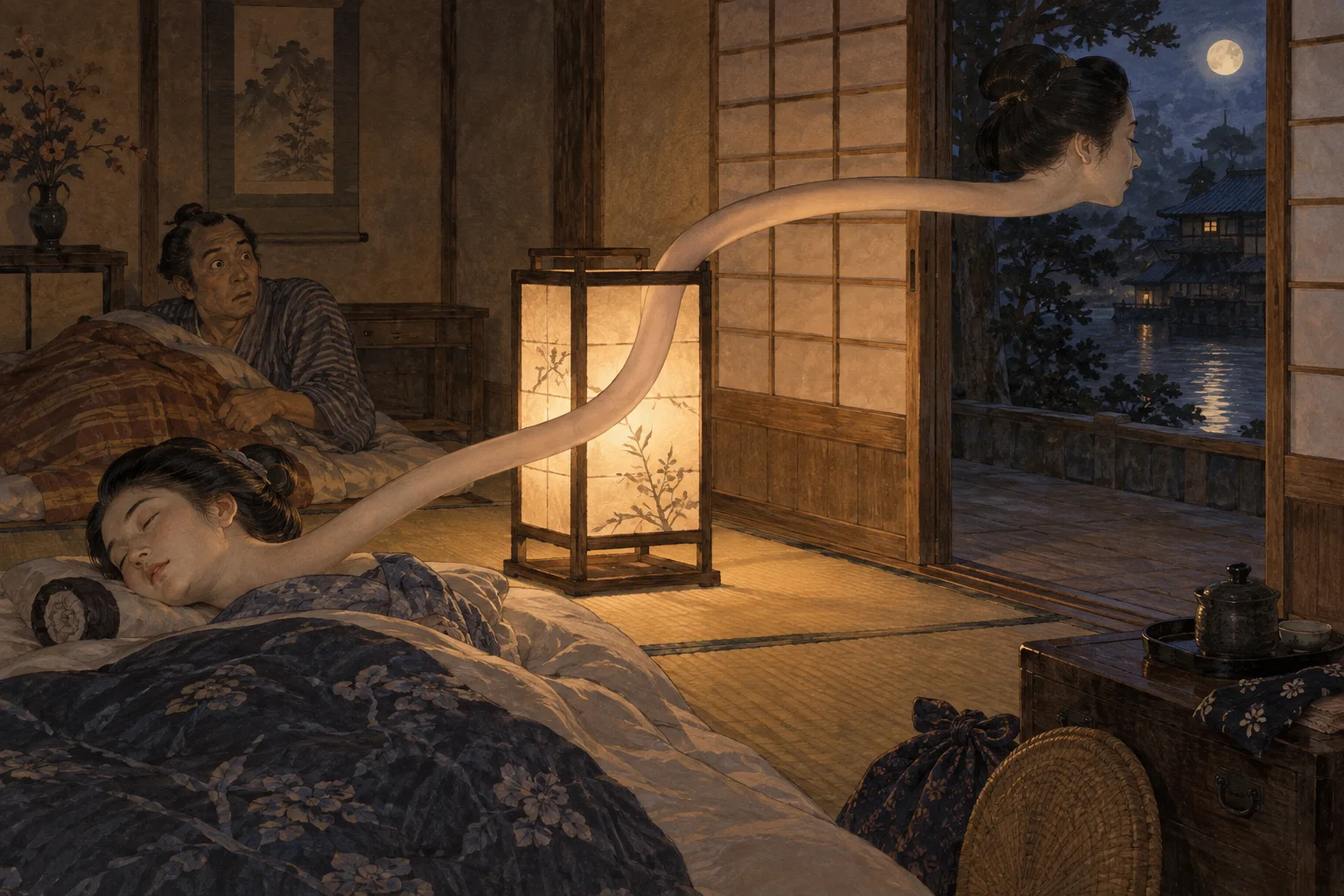
Rokurokubi is a yokai whose neck stretches unnaturally long, or whose head detaches and flies off while the body sleeps.
弐In 30 seconds30秒で説明する
Rokurokubi comes in two distinct forms in Japanese folklore. In the more common type, a person's neck silently stretches to an enormous length at night, letting the head peek over walls or reach high places, then returns to normal by morning as if nothing happened. In a rarer, more disturbing version, sometimes called nukekubi, the head actually detaches from the sleeping body and flies around alone, hunting insects or small animals, and reattaching itself before dawn is essential; if the body is moved while the head is away, the person may die. Both types were usually said to look completely ordinary by day.
参As a short speechスピーチ・英作文
Rokurokubi is one of the stranger entries in Japanese yokai folklore, partly because it actually covers two different creatures under one name. The classic, more widely told version has a person's neck stretch silently to an enormous, almost snake-like length while they sleep, letting the head peer over walls or into locked rooms before snapping back to normal by morning, with the person themselves having no memory of it.
A darker, rarer variant, often distinguished as nukekubi, skips the stretching entirely: the head detaches completely from the body at night and drifts around on its own, sometimes hunting insects or attacking people, and the story insists the head must reunite with its body before sunrise or the person dies. Both versions share the same unsettling detail, that the person looks completely ordinary during the day and often has no idea what happens to them at night, and that is what gives the stories their particular unease.
ろくろ首ろくろくびrokurokubia yokai whose neck stretches or whose head detaches at night
首が伸びるか、寝ている間に頭だけ抜け出るか。二つの型がある。
壱一言で言うとIn one line
ろくろ首とは、首が異様に伸びる、あるいは寝ている間に頭だけ体を離れて飛び回るとされる妖怪です。
弐30秒で説明するIn 30 seconds
ろくろ首は日本の民話で二つのはっきり違う型があります。より一般的な型では、夜になると人の首が音もなく異様な長さまで伸び、その頭が壁の隙間からのぞいたり高い場所に届いたりし、朝には何事もなかったかのように元に戻ります。まれで、より不気味なもう一つの型は抜け首とも呼ばれ、寝ている体から頭が本当に離れ、一人で飛び回って虫や小動物を狙うとされ、夜明け前に体に戻ることが欠かせません。頭が離れている間に体を動かされると死んでしまうこともあるとされます。どちらの型も、昼間は普通の人と変わらない姿をしているとされていました。
参スピーチ・英作文As a short speech
ろくろ首は日本の妖怪民話の中でも特に奇妙な存在で、その理由の一つは、一つの名前のもとに実は二種類の異なる化け物がまとめられていることです。より広く語られる古典的な型では、寝ている間に人の首が音もなくほとんど蛇のように異様な長さまで伸び、その頭が壁を越えたり鍵のかかった部屋をのぞいたりしたあと、朝には元通りに戻り、本人はそのことをまったく覚えていないとされます。
抜け首と区別して呼ばれることもある、より不気味でまれな型では、伸びるのではなく、夜のうちに頭が体から完全に離れて一人で漂い、時には虫を狙ったり人を襲ったりし、日の出前に体に戻らなければ死んでしまうと物語は言います。どちらの型にも共通する不気味な点は、本人が昼間はまったく普通に見え、夜に自分の身に何が起きているかをまったく知らないことが多いという点で、それがこの話に独特の気味悪さを与えています。
こう聞かれたらQuestions people actually ask
QIs rokurokubi the stretching neck one or the flying head one?
ABoth fall under the name, but they're often treated as distinct: the stretching-neck type is usually just called rokurokubi, while the detaching-head type is more specifically called nukekubi.
ろくろ首は首が伸びるほうですか、頭が飛ぶほうですか。どちらもろくろ首という名前に含まれますが、別のものとして扱われることも多いです。首が伸びる型は単にろくろ首と呼ばれ、頭が離れる型はより具体的に抜け首と呼ばれます。
QWhere does the name rokurokubi come from?
AIt likely comes from rokuro, the word for a potter's wheel or a well's pulley mechanism, both of which involve something turning or extending, though the exact origin isn't fully settled.
ろくろ首という名前はどこから来ているのですか。陶芸のろくろや井戸の滑車を指す「轆轤」という言葉から来ているとされ、どちらも何かが回ったり伸びたりする道具ですが、正確な由来ははっきり定まっていません。
QAre there stories about people being rokurokubi without knowing it?
AYes, a common story pattern has an ordinary person discover, often by accident, that they transform at night, which they had no memory or awareness of until someone else witnessed it.
自分がろくろ首だと知らずに暮らしている、という話もありますか。あります。よくある話の型では、ふつうの人が偶然のきっかけで、自分が夜に変化していたことに気づきます。誰かに目撃されるまで、本人にはその記憶も自覚もなかったとされます。
そのまま使えるフレーズPhrases you can use
- In the story, her neck stretched silently while she slept.物語では、彼女が眠っている間に首が音もなく伸びました。
- That's the flying-head type, not the stretching-neck type.それは頭が飛ぶ型で、首が伸びる型ではありません。
- The head has to return before sunrise, or else.頭は日の出前に戻らなければ、大変なことになります。
- By day, they look completely ordinary.昼間は完全に普通の人に見えます。
- Rokurokubi shows up a lot in Edo-period picture books.ろくろ首は江戸時代の絵本によく登場します。
豆知識Background
ろくろ首には大きく二つの型があるとされる。一つは首そのものが伸びる型、もう一つは頭が体から抜け出て飛び回る「抜け首」型で、後者については、中国の「飛頭蛮」の話との関わりも指摘される。名前の由来は、陶芸で使う「轆轤」や井戸の滑車装置など、回転したり伸び縮みしたりする道具から来ているとされるが、諸説あり定まっていない。江戸時代の見世物興行や草双紙にも取り上げられ、正体を知らずに暮らす当人が周囲の目撃で発覚するという筋書きが定番になっている。
出典日本文化ナビ(原田英語.com)「ろくろ首を英語で説明する(rokurokubi)」https://www.haradaeigo.com/japanese-culture/en/rokurokubi
- 文
- 日本文化ナビ編集部(原田英語.com)— 英文・和訳・解説はすべて独自に作成
- イラスト
- 日本文化ナビ オリジナル
- 発行
- 原田英語.com https://www.haradaeigo.com/
- 印刷日
- 2026.10.17
© 2026 Harada Eigo (原田英語.com). Text and illustration: Japan Culture Navi.
ページはこちら