礼に始まり礼に終わる
壱In one line一言で言うと
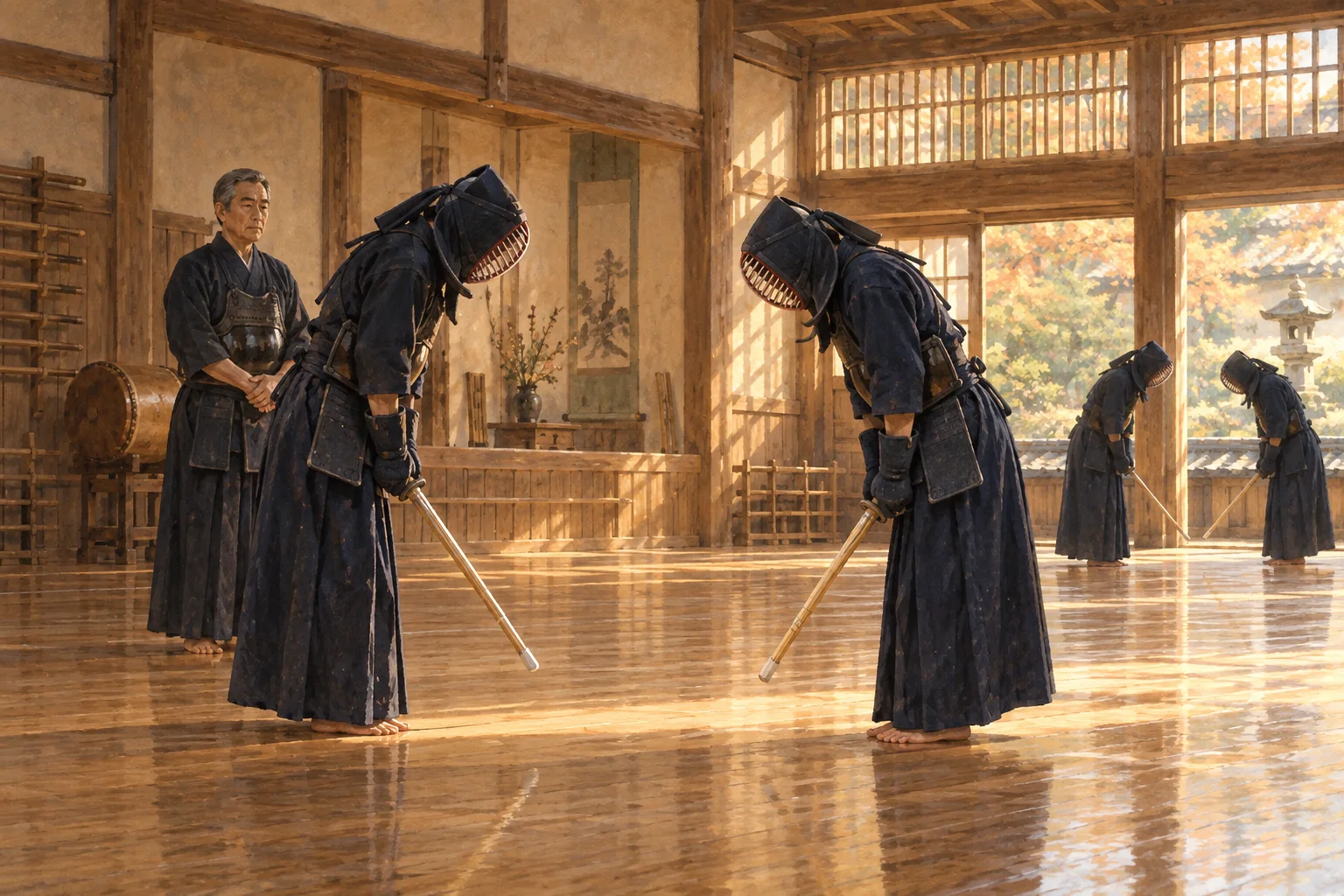
Rei ni hajimari rei ni owaru, or starting and ending with a bow, is a rule of Japanese martial arts.
弐In 30 seconds30秒で説明する
Every Japanese martial art opens and closes with formal bows: to the training hall, to the teacher and to the opponent. Celebrating a win openly is discouraged, and in judo an excessive celebration can be penalized. The reasoning is that the opponent made the match possible, so the moment of victory is also the moment to acknowledge them.
参As a short speechスピーチ・英作文
If you want one sentence that explains Japanese martial arts, it is this: it begins with a bow and ends with a bow. Before training, everyone bows to the hall itself, then to the teacher, then to their partner. After a match, win or lose, both competitors bow to each other and walk off.
What surprises people most is what does not happen. Ideally, there is no punching the air and no shouting at the crowd. In judo, an excessive celebration can actually be penalized. The reasoning is straightforward.
Without the opponent there is no match, so the person who just lost is the reason you were able to compete at all. Respect is not something added on top of the sport for politeness. It is understood as part of the discipline itself, and a competitor who wins without it is considered to have missed the point.
礼に始まり礼に終わるれいにはじまりれいにおわるrei ni hajimari rei ni owaruit begins with a bow and ends with a bow
日本の武道を一文で説明するなら、この言葉。勝った側も、本来はガッツポーズをしない。
壱一言で言うとIn one line
礼に始まり礼に終わるとは、礼で始めて礼で終えるという、日本の武道の決まりです。
弐30秒で説明するIn 30 seconds
日本の武道はどれも、正式な礼で始まり礼で終わります。道場に、師に、そして相手に。勝ちを露骨に喜ぶことは戒められ、柔道では過度の喜びの表現が反則になることもあります。理由は、相手がいてこそ試合が成立したのだから、勝った瞬間は同時に相手を敬う瞬間でもある、ということです。
参スピーチ・英作文As a short speech
日本の武道を一文で説明するなら、これです。「礼に始まり礼に終わる」。稽古の前に、まず道場そのものに礼をし、次に師に、そして相手に礼をします。試合のあとは、勝っても負けても互いに礼をして下がります。いちばん驚かれるのは、起きないことのほうです。
本来は、拳を突き上げることも、観客に叫ぶこともしません。柔道では、過度の喜びの表現が反則になることさえあります。理由は単純です。相手がいなければ試合は成立しないのだから、たった今負けた人こそが、自分が戦えた理由なのです。
礼儀は、競技に礼儀正しさとして上から足されたものではありません。稽古そのものの一部と理解されており、それを欠いたまま勝った競技者は、大事なところを取り落としたと見なされます。
こう聞かれたらQuestions people actually ask
QCan you really be penalized for celebrating?
AIn judo, yes. Excessive celebration is treated as disrespect toward the opponent, and referees have penalized it. In other arts it is discouraged by custom rather than by rule.
喜びを表すと本当に罰せられるのですか。柔道では実際にあります。過度の喜びの表現は相手への敬意を欠くとされ、審判が罰した例があります。他の武道では規則というより慣習として戒められます。
QWho or what are they bowing to at the start?
AUsually to the shomen, the front of the hall, which may hold a small shrine, a portrait of the founder or simply be the place of honor. Then to the instructor, then to each other.
始めに誰に、あるいは何に向かって礼をしているのですか。ふつうは正面で、神棚や流祖の写真が掲げられていることも、単に上座であることもあります。次に指導者へ、そして互いに礼をします。
QDoes this apply outside martial arts?
AThe phrase is used well beyond the dojo, in school clubs and in ordinary work life, as a way of saying that how you begin and end something matters as much as what you do in between.
武道以外でも同じですか。道場の外でも使われます。学校の部活でも仕事でも、始め方と終わり方が中身と同じくらい大事だ、という意味で用いられます。
そのまま使えるフレーズPhrases you can use
- It begins with a bow and ends with a bow.礼に始まり礼に終わります。
- You bow to the hall, the teacher and your partner.道場に、先生に、相手に礼をします。
- Celebrating a win too openly is frowned on.勝ちを露骨に喜ぶのは、よしとされません。
- Without an opponent there is no match.相手がいなければ、試合は成り立ちません。
- The respect is part of the discipline, not decoration.礼儀は飾りではなく、稽古の一部です。
豆知識Background
「礼に始まり礼に終わる」は特定の武道の規則というより、日本の武道全般に共有される言い回しである。全日本柔道連盟の指導要領でも礼法が重視され、試合場への出入りの際の礼が定められている。国際大会でも勝利後の派手なガッツポーズが議論になったことがあり、国際柔道連盟の規定では、相手への敬意を欠くふるまいは処分の対象になりうる。高校野球で試合後に両チームが整列して礼をし、負けたチームが甲子園の土を持ち帰る光景も、同じ感覚の延長として語られることが多い。
出典日本文化ナビ(原田英語.com)「礼に始まり礼に終わるを英語で説明する(rei ni hajimari rei ni owaru)」https://www.haradaeigo.com/japanese-culture/en/rei-ni-hajimari-rei-ni-owaru
- 文
- 日本文化ナビ編集部(原田英語.com)— 英文・和訳・解説はすべて独自に作成
- イラスト
- 日本文化ナビ オリジナル
- 発行
- 原田英語.com https://www.haradaeigo.com/
- 印刷日
- 2026.10.17
© 2026 Harada Eigo (原田英語.com). Text and illustration: Japan Culture Navi.
ページはこちら