お疲れさま
壱In one line一言で言うと
Otsukaresama is what you say to acknowledge that someone has been working, and it has no real English equivalent.
弐In 30 seconds30秒で説明する
Otsukaresama literally means something like "you must be tired," but it works as hello, goodbye, well done and thank you, all inside a workplace. You say it passing a colleague in the hallway, at the end of a meeting, and when leaving the office. It is one of the most used phrases in Japanese working life, and nobody is actually commenting on how tired you look.
参As a short speechスピーチ・英作文
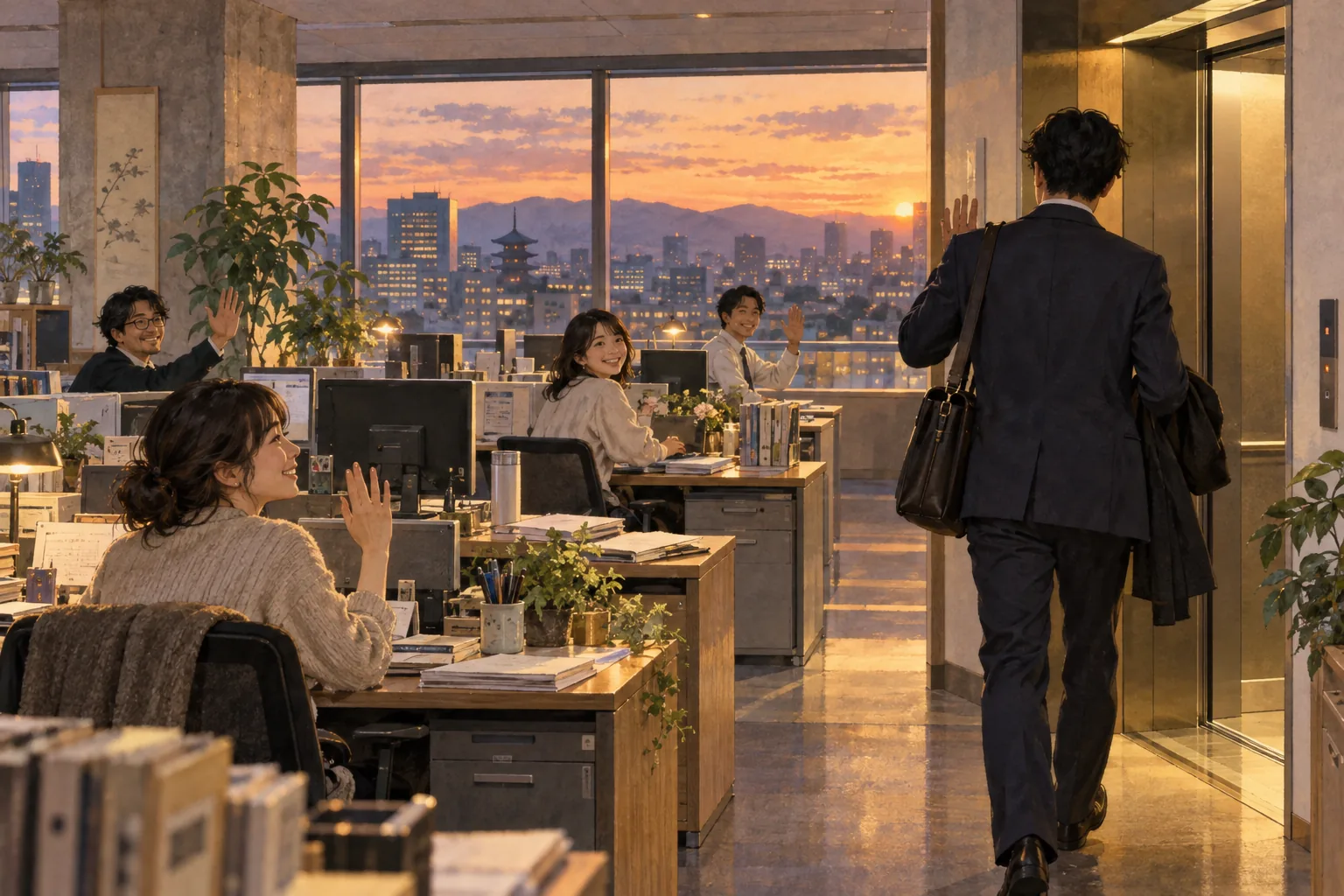
If you work in Japan, one of the words you will say most often is otsukaresama. Literally it means something like "you are tired," but that is not how it functions. You say it when you pass a colleague in the hallway, when a meeting ends, when someone finishes a presentation, when you answer an internal phone call, and when you leave for the day.
It covers hello, goodbye, well done and thank you, all at once. There is a convention about which version to use. To someone senior you say otsukaresama desu; the shorter gokurosama is generally used downward, to someone junior, so saying it to your boss is usually considered rude.
What I find interesting is what the word assumes. It does not thank you for a result. It acknowledges that you put in effort, whatever came of it, and that alone is treated as worth saying out loud.
お疲れさまおつかれさまotsukaresamathe all-purpose word for acknowledging someone's work
「お疲れさま」に英訳はない。goodbye でも thank you でもない、あの言葉。
壱一言で言うとIn one line
お疲れさまは、相手が働いていたことを認めて言う言葉で、英語にぴったりの対応語はありません。
弐30秒で説明するIn 30 seconds
お疲れさまは直訳すると「お疲れでしょう」ですが、職場では挨拶にも、別れにも、ねぎらいにも、感謝にもなります。廊下ですれ違うときにも、会議の終わりにも、退社するときにも言います。日本の職場でもっともよく使われる言葉の一つで、実際に疲れて見えるかどうかを言っているわけではありません。
参スピーチ・英作文As a short speech
日本で働くと、いちばん多く口にする言葉の一つがお疲れさまです。直訳すれば「疲れているでしょう」ですが、実際にはそういう意味では使われていません。廊下で同僚とすれ違うとき、会議が終わるとき、誰かが発表を終えたとき、社内の電話に出るとき、そして帰るときに言います。
こんにちは・さようなら・よくやった・ありがとうを、一語でまかないます。使い分けの習わしもあります。目上には「お疲れさまです」。短い「ご苦労さま」は一般に目下に向けて使うので、上司に言うと失礼だとされます。
面白いと思うのは、この言葉が前提にしていることです。結果に対して礼を言っていません。どうなったかにかかわらず、労力をかけたことを認めている。それだけで、口に出す価値があるとされているのです。
こう聞かれたらQuestions people actually ask
QWhat's the difference from gokurosama?
ADirection. Gokurosama goes downward, from a senior to a junior, and using it on your boss sounds condescending. Otsukaresama is safe in almost every situation.
ご苦労さまとはどう違うのですか。向きです。ご苦労さまは上から下へ、目上から目下に使う言葉で、上司に使うと見下した響きになります。お疲れさまはほぼどんな場面でも安全です。
QCan I say it outside work?
AYes. After a sports practice, after a long drive, after a group finishes anything. It has spread well beyond offices, and students say it constantly.
仕事以外でも使えますか。使えます。部活の練習のあと、長距離運転のあと、何かをやり終えたあと。職場をはるかに超えて広がっており、学生も日常的に言います。
QHow do I translate it in an email?
AUsually you do not translate it; you replace it. "Thanks for your work on this" or "Hope you're doing well" fills the same slot. A literal translation about tiredness sounds strange in English.
メールではどう訳せばいいですか。訳すのではなく置き換えます。Thanks for your work on this や Hope you're doing well が同じ位置に入ります。疲れについての直訳は、英語では奇妙に響きます。
誤解されやすいA common misunderstanding
MYTHOtsukaresama means Japanese workers are always exhausted.お疲れさまは日本の労働者が常に疲れきっていることの表れだと思われがちです。
FACTIt is a fixed greeting, not a description. People say it at nine in the morning to someone who has just arrived.これは決まった挨拶であって描写ではありません。朝9時に、今来たばかりの人にも言います。
そのまま使えるフレーズPhrases you can use
- It works as hello, goodbye and well done at once.挨拶にも別れにもねぎらいにもなる言葉です。
- You say it to anyone who has been working.働いていた人になら、誰にでも言います。
- Don't say gokurosama to your boss.上司に「ご苦労さま」は言いません。
- There's no direct translation in English.英語に直接の訳語はありません。
- It thanks you for the effort, not the result.結果ではなく、労力に対する言葉です。
豆知識Background
「お疲れさま」と「ご苦労さま」の使い分けは、目上に「ご苦労さま」を使うと失礼とされるのが一般的なマナー解説だが、この区別が広く言われるようになったのは戦後、とくに1970年代以降のビジネスマナー書の普及によるという指摘がある。歴史的には目上への「ご苦労」の用例もあり、絶対的な規則ではない。現代ではメールの冒頭に「お疲れさまです」を置くのがほぼ定型となっており、社外向けの「いつもお世話になっております」と対になる社内用の挨拶として機能している。学生が部活やアルバイトで日常的に使うことから、社会に出る前に身につく数少ない敬語のひとつでもある。
出典日本文化ナビ(原田英語.com)「お疲れさまを英語で説明する(otsukaresama)」https://www.haradaeigo.com/japanese-culture/en/otsukaresama
- 文
- 日本文化ナビ編集部(原田英語.com)— 英文・和訳・解説はすべて独自に作成
- イラスト
- 日本文化ナビ オリジナル
- 発行
- 原田英語.com https://www.haradaeigo.com/
- 印刷日
- 2026.10.17
© 2026 Harada Eigo (原田英語.com). Text and illustration: Japan Culture Navi.
ページはこちら