お酌
壱In one line一言で言うと
Oshaku means pouring drinks for others rather than for yourself, and letting them pour for you.
弐In 30 seconds30秒で説明する
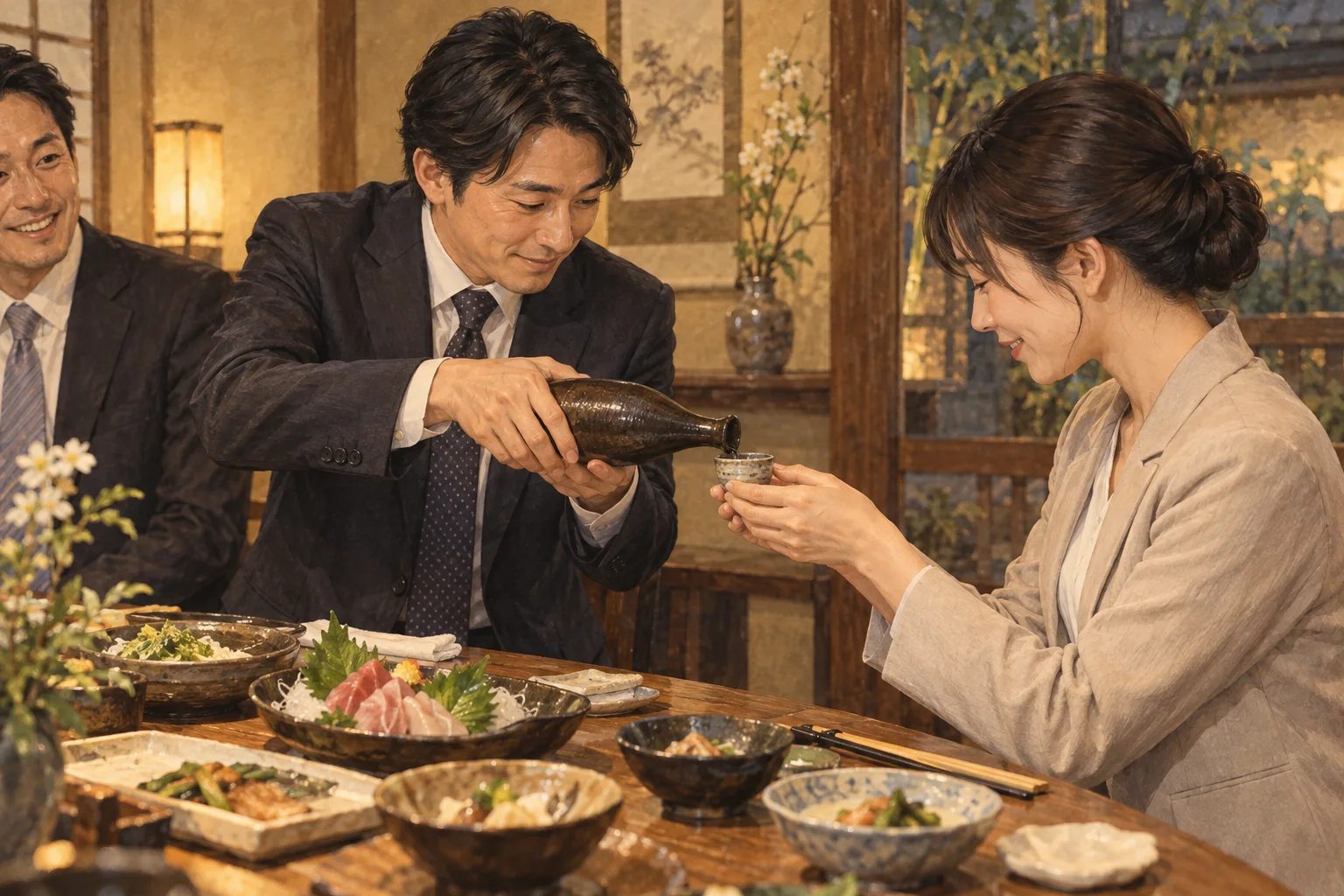
At a traditional Japanese table you usually do not fill your own glass. You watch whether the people near you are running low, pour for them, and they do the same for you. Hold the bottle with both hands, lift your glass with both hands when receiving, and to decline, cover the glass lightly with your hand.
参As a short speechスピーチ・英作文
At a Japanese meal with drinks, filling your own glass is traditionally avoided. The pattern is that you keep an eye on the glasses near you, and when one is getting low you pick up the bottle and pour, holding it with both hands, with the label facing up. The other person lifts their glass slightly, with both hands, to receive it.
Then at some point someone notices yours and does the same, which is how you get a drink. It looks like etiquette for its own sake, but it has a function: it keeps everyone paying attention to everyone else, and it gives a junior person something useful to do at a table full of seniors.
Two practical points. If you have had enough, do not empty your glass, because an empty glass is an invitation; leave it full. And to decline a pour, put your hand lightly over the rim and say you are fine, which is understood immediately and causes no offense.
お酌おしゃくoshakupouring for each other
自分の分を自分で注ぐと、周りが気まずくなる。人に注ぎ、注いでもらう。
壱一言で言うとIn one line
お酌とは、自分ではなく人に注ぎ、自分は注いでもらうという飲み方の作法です。
弐30秒で説明するIn 30 seconds
日本の伝統的な席では、ふつう自分のグラスに自分で注ぎません。近くの人のグラスが減っていないか気を配って注ぎ、相手も同じようにしてくれます。瓶は両手で持ち、注いでもらうときはグラスを両手で持ち上げます。断るときは、グラスに軽く手を添えます。
参スピーチ・英作文As a short speech
酒のある日本の食事の席で、伝統的に避けられてきたのは、自分で自分のグラスを満たすことです。やり方はこうです。近くの人のグラスに目を配り、減ってきたら瓶を取って注ぐ。瓶は両手で持ち、ラベルを上に向けます。相手はグラスを少し持ち上げ、両手で受けます。
そのうち誰かが自分のグラスに気づいて同じようにしてくれる。それが飲み物を手に入れる道筋です。作法のための作法に見えますが、働きがあります。全員が互いに気を配り続ける形になり、目上の人ばかりの席で若い人に役に立つことを与えてくれます。
実際の注意を二つ。もう十分なら、グラスを空にしないでください。空のグラスは注いでくれという合図です。満たしたままにしておきます。そして断るときは、グラスの縁に軽く手をかざして結構ですと言えば、すぐに通じますし、失礼にもなりません。
こう聞かれたらQuestions people actually ask
QWhat if I don't drink alcohol?
ASay so early and order something else; oolong tea and non-alcoholic beer are standard and nobody blinks. The pouring custom applies to whatever you are drinking, so you still pour for others and they pour for you.
お酒を飲まない場合はどうすればいいですか。早めにそう言って別のものを頼んでください。烏龍茶やノンアルコールのビールは定番で、誰も気にしません。注ぎ合う習慣は飲んでいるものが何であれ同じなので、あなたも人に注ぎ、注いでもらいます。
QDo I have to pour for my boss?
AIn a traditional company setting a junior person is expected to notice and pour, though this has relaxed considerably and forcing drinks on someone is now treated as harassment with its own name. Pouring once early is enough to show you understand.
上司にお酌をしなければいけませんか。格式を重んじる会社の席では、若い人が気づいて注ぐことが期待されます。ただしこれはかなり緩みましたし、飲むことを強いることは今では専用の呼び名があるハラスメントとして扱われます。最初に一度注げば、分かっていることは十分に伝わります。
そのまま使えるフレーズPhrases you can use
- Let me pour you one.お注ぎします。
- Don't fill your own glass.自分では注がないでください。
- I'm fine, thank you.もう結構です。
- Leave it full if you've had enough.もう十分なら、満たしたままにしておきます。
豆知識Background
瓶のラベルを上に向けて注ぐのは、何を注いでいるかを相手に示すためとされます。日本酒では徳利を両手で持ち、猪口を持ち上げて受けます。「手酌」は自分で注ぐことで、席によっては寂しい行為とされましたが、今は気にしない場も増えました。飲酒を強要する行為はアルコールハラスメントと呼ばれ、大学や企業が防止を呼びかけています。最初の一杯を全員そろえて乾杯するまでは飲まない、という習慣も一般的です。
出典日本文化ナビ(原田英語.com)「お酌を英語で説明する(oshaku)」https://www.haradaeigo.com/japanese-culture/en/oshaku
- 文
- 日本文化ナビ編集部(原田英語.com)— 英文・和訳・解説はすべて独自に作成
- イラスト
- 日本文化ナビ オリジナル
- 発行
- 原田英語.com https://www.haradaeigo.com/
- 印刷日
- 2026.10.17
© 2026 Harada Eigo (原田英語.com). Text and illustration: Japan Culture Navi.
ページはこちら