おもてなし
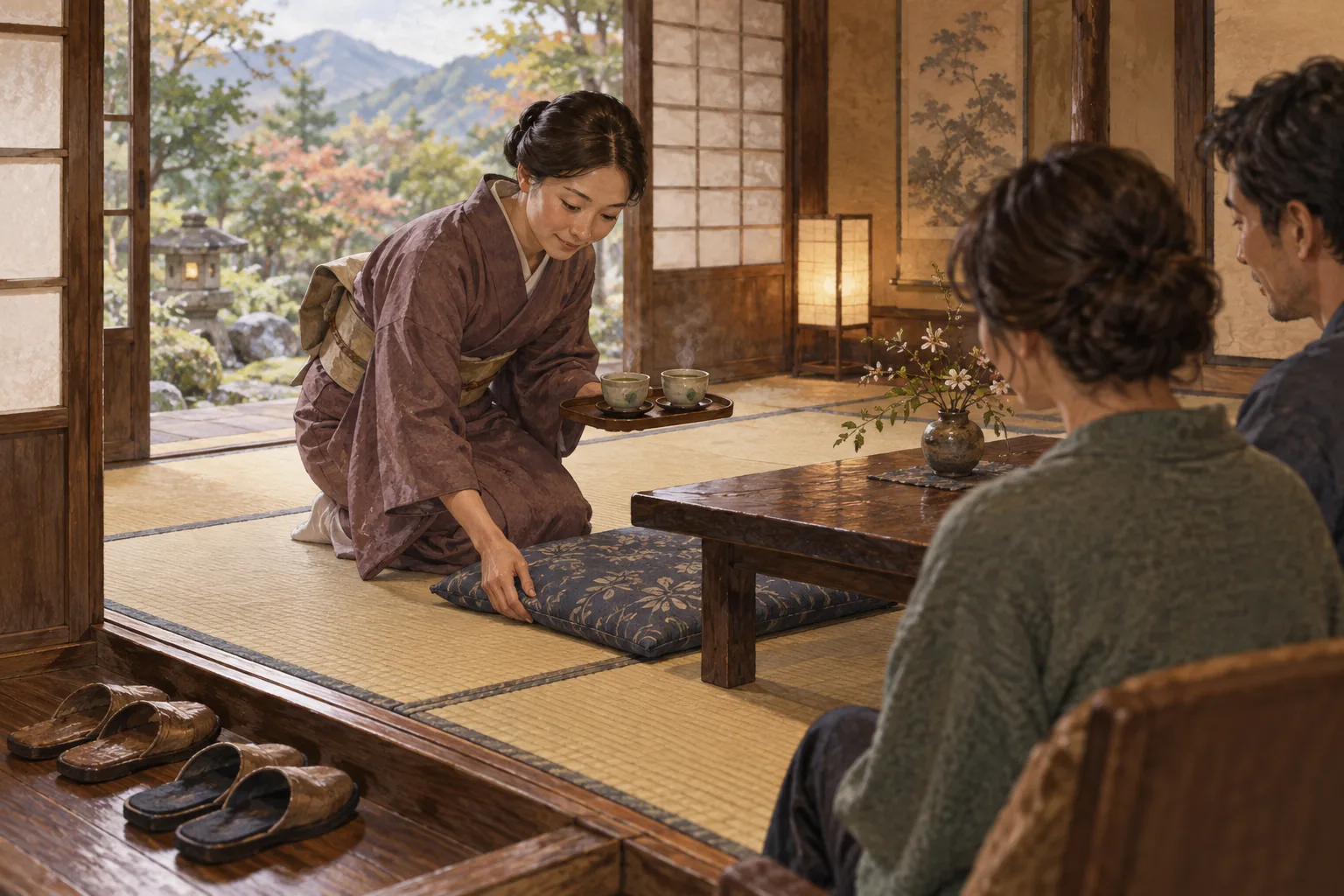
壱In one line一言で言うと
Omotenashi is hospitality that anticipates what you need before you ask.
弐In 30 seconds30秒で説明する
Omotenashi is the Japanese approach to hospitality. The idea is to prepare for a guest so thoroughly that they never have to ask for anything, and to do it without expecting anything in return. That last part matters: there is no tipping in Japan, so the care you receive is not payment for a tip. It shows up in small things, like a hot towel arriving before you sit down.
参As a short speechスピーチ・英作文
Omotenashi is the Japanese word for hospitality, but it is not quite the same as the English word. The idea is to prepare everything in advance so that the guest never needs to ask. A restaurant brings a hot towel before you sit down.
At a ryokan, a Japanese-style inn, the staff turn your shoes to face the door while you are inside. Nobody announces that they have done this, and nobody expects to be thanked for it. There is no tipping in Japan, so none of this is done for extra money.
A popular explanation, possibly just wordplay, links the word to omote-ura nashi, meaning to treat someone with nothing hidden behind your back. Whether that origin is exact or not, it describes the feeling well: care that is given freely, and quietly.
おもてなしおもてなしomotenashiJapanese hospitality
「日本のサービスはすごい」で終わらせない。チップがない国の接客、という切り口が効く。
壱一言で言うとIn one line
おもてなしとは、言われる前に相手の求めているものを察して用意する接客のことです。
弐30秒で説明するIn 30 seconds
おもてなしは、日本流のもてなし方です。客が何も頼まなくてよいように徹底して準備し、見返りを期待せずにそれを行う、という考え方です。この最後の部分が重要で、日本にチップの習慣はないため、受けた気配りはチップへの対価ではありません。席につく前におしぼりが出てくるような、小さなところに表れます。
参スピーチ・英作文As a short speech
おもてなしは日本語の「もてなし」ですが、英語の hospitality と完全に同じではありません。客が何も頼まなくて済むよう、すべてを前もって用意しておく、という考え方です。飲食店では席につく前におしぼりが出ます。
旅館では、部屋にいるあいだに靴の向きが直されています。誰もそれをしたと言いませんし、礼を期待してもいません。日本にチップの習慣はないので、これらは追加の金銭のためではありません。
この言葉を「表裏なし」、つまり裏に何も隠さずに人と向き合うことと結びつける説明もよく聞かれます。語呂合わせにすぎないとも言われます。語源が正確かどうかはともかく、その感じはよく表しています。静かに、見返りなく差し出される気配りです。
こう聞かれたらQuestions people actually ask
QIsn't this just good customer service?
AThe difference is that it does not depend on payment. Staff in a convenience store and staff in a luxury hotel work to the same basic standard, and neither is hoping for a tip. It is treated as the standard, not as an extra.
これは良い接客というだけのことではありませんか。違いは、支払いに左右されない点です。コンビニの店員も高級ホテルの従業員も同じ基本の水準で接客し、どちらもチップを期待していません。追加のサービスではなく、当たり前の基準とされています。
QWhy can't I tip? I want to say thank you.
AMoney would suggest the service was a transaction, which is the opposite of the idea. Saying thank you clearly, and taking your trash with you, is how people here say it. Some staff will chase you down the street to return the money.
どうしてチップを渡せないのですか。感謝を伝えたいのですが。お金を渡すと、その気配りが取引だったことになってしまい、考え方と逆になります。はっきり感謝を伝え、ごみを持ち帰ること。それが日本での伝え方です。返そうと道まで追いかけてくる店員もいます。
QDoes it ever go too far?
AYes, and Japanese people say so too. The pressure to anticipate everything can be exhausting for workers, and there is an ongoing problem with customers who treat it as license to be rude. There is even a word for that now.
行き過ぎることはありませんか。行き過ぎることもありますし、日本人自身もそう言っています。すべてを先回りする圧力は働く側には重く、それを盾に横柄に振る舞う客の問題もあります。今ではそれを指す言葉(カスハラ)もあります。
誤解されやすいA common misunderstanding
MYTHOmotenashi means Japanese service is always perfect and always cheerful.おもてなしがあるから日本のサービスは常に完璧で愛想がよいと思われがちです。
FACTIt is an ideal, not a description of every shop in the country. Plenty of service in Japan is ordinary, and the pressure to deliver it has real costs for the people doing the work.これは理想であって全国すべての店の描写ではありません。ふつうの接客もたくさんありますし、それを求められる側の負担という現実もあります。
そのまま使えるフレーズPhrases you can use
- There's no tipping in Japan — the service is already included.日本にチップはありません。サービス込みの料金です。
- They try to notice what you need before you ask.頼まれる前に気づこうとするんです。
- It's expected everywhere, not just in expensive places.高級な店だけでなく、どこでも同じです。
- Saying thank you is more than enough.ありがとうと伝えれば十分です。
- The hot towel comes before you even order.注文の前におしぼりが出てきます。
豆知識Background
「おもてなし」が世界に知られたのは、2013年の国際オリンピック委員会総会での東京招致プレゼンテーションだった。語源には「もてなす(持て成す)」=客を心をこめて扱う、という説と、「表なし」=裏表がない、という説があり、後者は語呂合わせの俗説とも言われる。日本にチップの習慣がない理由については、店の格式や値段にサービスが含まれているという考え方、そして金銭を渡すことが相手の労を値踏みする失礼にあたるという感覚が指摘される。一方で近年は「カスタマーハラスメント(カスハラ)」が社会問題化し、客の側にも節度を求める動きが広がっている。
出典日本文化ナビ(原田英語.com)「おもてなしを英語で説明する(omotenashi)」https://www.haradaeigo.com/japanese-culture/en/omotenashi
- 文
- 日本文化ナビ編集部(原田英語.com)— 英文・和訳・解説はすべて独自に作成
- イラスト
- 日本文化ナビ オリジナル
- 発行
- 原田英語.com https://www.haradaeigo.com/
- 印刷日
- 2026.10.17
© 2026 Harada Eigo (原田英語.com). Text and illustration: Japan Culture Navi.
ページはこちら