おみくじ
壱In one line一言で言うと
Omikuji are paper fortunes drawn at shrines and temples, ranked from excellent luck to very bad luck.
弐In 30 seconds30秒で説明する
An omikuji is a fortune slip drawn at a shrine or temple, usually for one to three hundred yen. You shake a box, take the numbered stick or slip, and receive a paper with an overall rank and short readings on health, study, travel, love and business. A bad result is usually tied to a rack or a tree and left behind.
参As a short speechスピーチ・英作文
Omikuji are paper fortunes you draw at a shrine or a temple. You put a coin in, shake a metal box until a numbered stick comes out of a small hole, tell the attendant the number, and get a slip of paper.
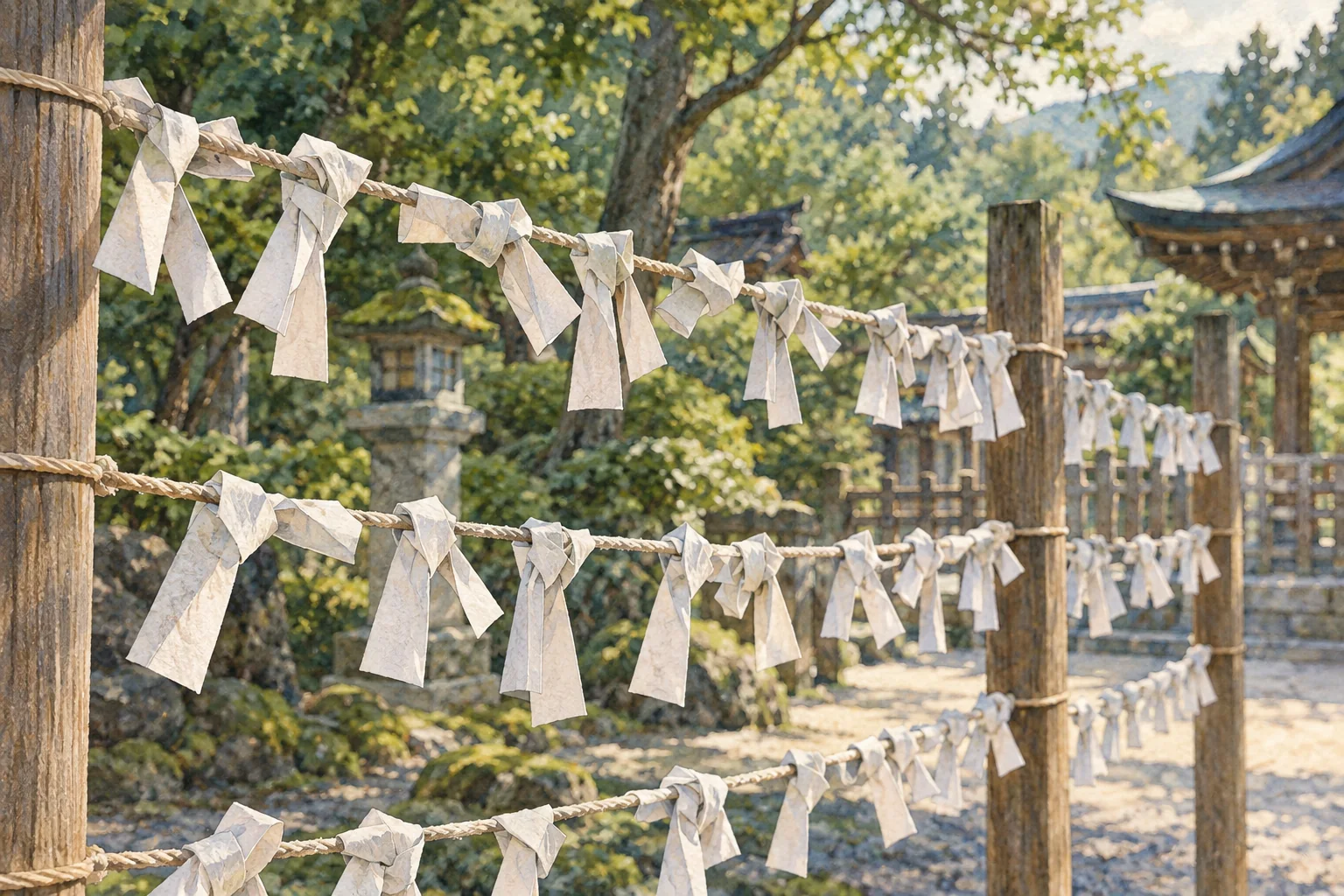
At the top is an overall grade, running from excellent luck down through middling and small luck to bad luck and very bad luck, and below that are a few lines each on health, work, study, love, a lost item and travel. The convention is that if the result is bad you fold it and tie it to a rack or a pine branch provided for the purpose, leaving the bad luck at the shrine, and if it is good you keep it in your wallet.
Many shrines now ask you to use the rack rather than the trees, because tying paper to living branches damages them. Do not treat the grade at the top as the whole message. Many Japanese people, especially older ones, will tell you the small text matters more.
おみくじおみくじomikujifortune slips at shrines
凶なら結んで帰り、吉なら持ち帰る。そう言われることが多い。
壱一言で言うとIn one line
おみくじとは神社や寺で引く紙の運勢で、大吉から大凶まで段階があります。
弐30秒で説明するIn 30 seconds
おみくじは神社や寺で引く運勢の紙で、たいてい百円から三百円ほどです。箱を振って番号の棒か紙を取り、全体の運勢と、健康、学業、旅行、恋愛、商売などについての短い言葉が書かれた紙を受け取ります。悪い結果は、たいてい所定の場所や木に結んで置いていきます。
参スピーチ・英作文As a short speech
おみくじは神社や寺で引く紙の運勢です。硬貨を入れ、金属の箱を振って小さな穴から番号のついた棒を出し、その番号を係の人に伝えて紙をもらいます。上のほうに全体の運勢があり、大吉から中吉、小吉と下って凶、大凶まで並びます。
その下に、健康、仕事、学業、恋愛、失せ物、旅立ちについて数行ずつ書かれています。慣習として、結果が悪ければ折って、そのために用意された結び所か松の枝に結び、悪い運をその場に置いていきます。よければ財布に入れて持ち帰ります。
近ごろは、生きた枝に紙を結ぶと木を傷めるため、木ではなく結び所を使うよう頼む神社が増えています。上の運勢だけを全体の答えだと思わないでください。年配の人ほど、小さな文字のほうが大事だと言います。
こう聞かれたらQuestions people actually ask
QWhat do I do if I get a bad one?
ATie it to the rack provided at the shrine, using your non-dominant hand if you want to follow the fuller version of the custom. The idea is that you leave the misfortune there. You are also free to keep it as a warning to heed.
悪いものを引いたらどうすればいいですか。境内の結び所に結んでください。作法を細かく守るなら、利き手でないほうの手で結びます。悪い運をその場に置いていく、という考え方です。戒めとして持ち帰ってもかまいません。
QCan I draw again if I don't like the result?
ANothing stops you, but it is generally considered to miss the point. The usual advice is to read the detail, act on it, and draw again on a different visit rather than immediately.
気に入らなければ、引き直してもいいのですか。妨げるものはありませんが、ふつうは趣旨に外れると考えられています。よく言われるのは、細かい文言を読み、それに沿って行動し、引き直すなら日を改めて、ということです。
QAre they available in English?
AAt many well-visited shrines, yes, often with the Japanese and an English translation side by side. Some also offer them in Chinese and Korean. Ask at the counter where the charms are sold.
英語のものもありますか。参拝者の多い神社では用意されていることが多く、日本語と英語が並んだ形がよくあります。中国語や韓国語のあるところもあります。お守りを授ける窓口で尋ねてください。
そのまま使えるフレーズPhrases you can use
- Shake the box until a stick comes out.棒が出るまで箱を振ってください。
- Tie a bad one to the rack over there.悪いものはあちらの結び所に結んでください。
- Read the small text, not just the grade.運勢だけでなく細かい文も読んでください。
- You can keep a good one in your wallet.よいものは財布に入れておけます。
豆知識Background
おみくじの起源は、平安時代の僧である良源に由来する籤にさかのぼるという説があり、今も寺のおみくじには漢詩が添えられたものが多くあります。運勢の段階の数や名称は寺社ごとに異なり、大吉から大凶まで七段階、十二段階など一定していません。凶が出る割合が高いことで知られる寺社もあり、京都の伏見稲荷大社のように独自の段階を持つところもあります。近年は木を傷めないよう結び所を設ける社が増え、動物の形をした容器に入った授与品も人気です。
出典日本文化ナビ(原田英語.com)「おみくじを英語で説明する(omikuji)」https://www.haradaeigo.com/japanese-culture/en/omikuji
- 文
- 日本文化ナビ編集部(原田英語.com)— 英文・和訳・解説はすべて独自に作成
- イラスト
- 日本文化ナビ オリジナル
- 発行
- 原田英語.com https://www.haradaeigo.com/
- 印刷日
- 2026.10.17
© 2026 Harada Eigo (原田英語.com). Text and illustration: Japan Culture Navi.
ページはこちら