お邪魔します
壱In one line一言で言うと
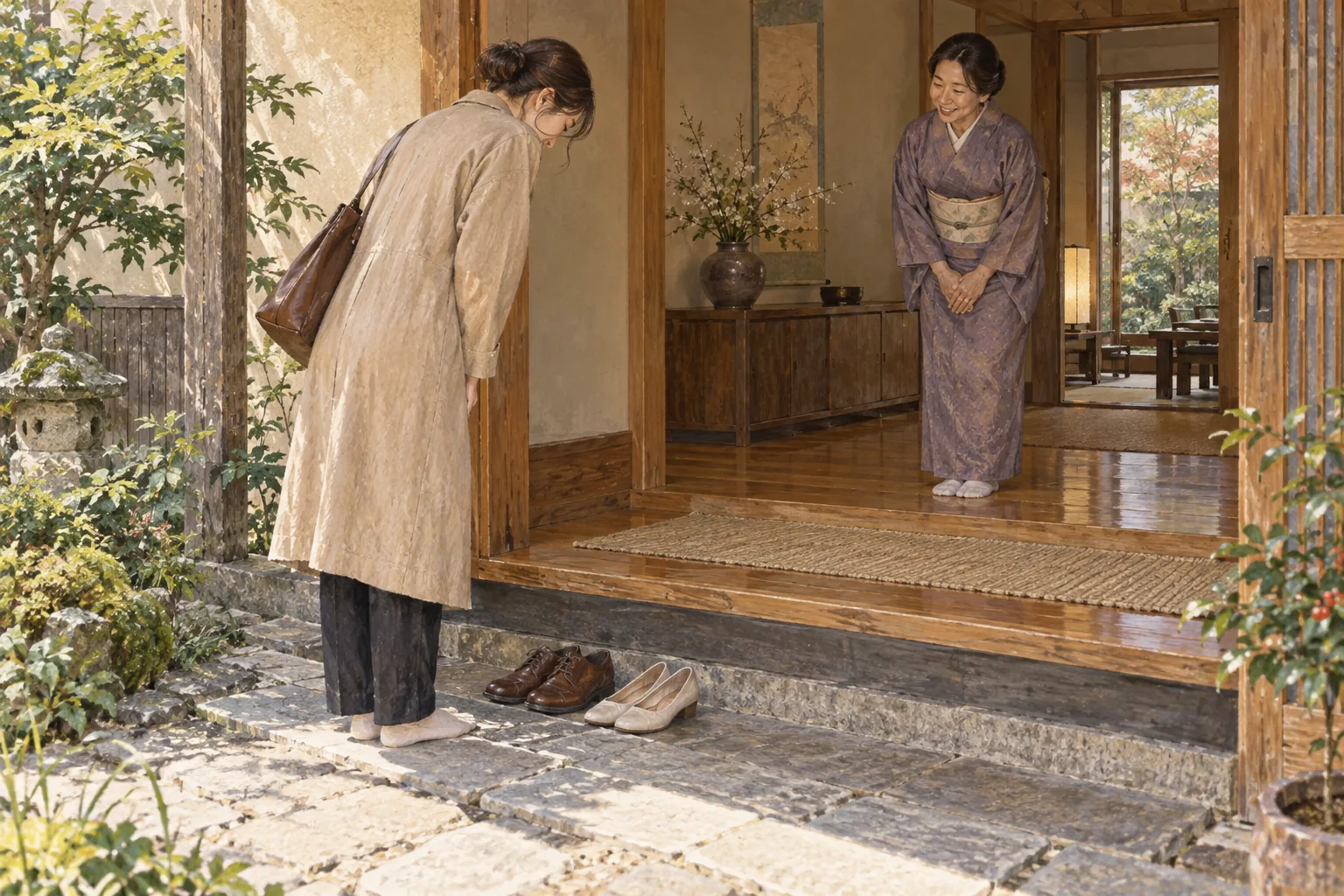
Ojama shimasu is said when entering someone's home, and it literally means "I am going to be a nuisance."
弐In 30 seconds30秒で説明する
When you step into someone's home in Japan, you say ojama shimasu. The literal meaning is that you are about to intrude or get in the way. On leaving you say ojama shimashita, the past tense: I have intruded. It is not an apology in any real sense; it is the fixed greeting for crossing into someone else's space.
参As a short speechスピーチ・英作文
There is a phrase you must know before visiting a Japanese home. As you step up from the entrance, you say ojama shimasu. Translated literally it means I am going to be a nuisance, or I am about to get in your way. When you leave, you change it to the past tense and say ojama shimashita, meaning I have been a nuisance.
To English ears this sounds strangely self-deprecating, as though the guest is apologizing for existing. It is not an apology. It is the standard formula for crossing a boundary into space that belongs to someone else, and the host will answer with douzo, please, or with a phrase inviting you up.
You may also hear it when someone steps into another person's office or workspace, though at work shitsurei shimasu is more common. If you learn two phrases before visiting someone here, make it this one and itadakimasu.
お邪魔しますおじゃましますojama shimasuwhat you say when entering someone's home
「お邪魔します」は直訳すると「迷惑をかけます」。入る側が先に謝る文化。
壱一言で言うとIn one line
お邪魔しますは人の家に入るときに言う言葉で、直訳すれば「迷惑をかけます」です。
弐30秒で説明するIn 30 seconds
日本で人の家に上がるとき、「お邪魔します」と言います。直訳すれば、これから邪魔をします、という意味です。帰るときは過去形で「お邪魔しました」。実際の謝罪ではなく、他人の空間に入るときの決まった挨拶です。
参スピーチ・英作文As a short speech
日本の家を訪ねる前に知っておくべき言葉があります。玄関から上がるとき、「お邪魔します」と言います。直訳すれば、これから迷惑をかけます、あるいは邪魔をします、という意味です。帰るときは過去形にして「お邪魔しました」と言います。
英語圏の耳には、客が存在すること自体を詫びているように、奇妙にへりくだって聞こえます。これは謝罪ではありません。他人に属する空間へ境界を越えて入るときの、標準的な型なのです。
家の人は「どうぞ」と返すか、上がるよう促す言葉で応じます。人の執務室や仕事場に入るときに使われることもありますが、職場では「失礼します」のほうが一般的です。訪問の前に二つだけ覚えるなら、これと「いただきます」にしてください。
こう聞かれたらQuestions people actually ask
QDo I have to say it if I'm invited?
AYes, and being invited is exactly when you say it. It is not asking permission; you say it as you step up, after the host has already told you to come in.
招かれた側でも言うものですか。招かれているときにこそ言います。許可を求める言葉ではなく、家の人が「どうぞ」と言ったあと、上がりながら言います。
QWhat does the host say back?
ADouzo, meaning please go ahead, or agatte kudasai, please come up. Some will say irasshai, a welcome. You do not need to respond further.
迎える側は何と返すのですか。「どうぞ」または「上がってください」。「いらっしゃい」と迎える人もいます。それ以上返す必要はありません。
QIs it only for homes?
ANo. You can use it entering someone's office, a room where others are working, or a shop's back area, anywhere the space clearly belongs to someone else. In business settings, shitsurei shimasu is more common.
家に入るときだけの言葉ですか。家だけではありません。人の執務室、誰かが作業している部屋、店の奥に入るときにも使います。その空間が明らかに誰かのものである場所なら使えます。ただ仕事の場では「失礼します」のほうがよく使われます。
そのまま使えるフレーズPhrases you can use
- Excuse me for intruding.お邪魔します。
- Thank you for having me.お邪魔しました。
- Please, come on up.どうぞ、上がってください。
- You say it as you step up, not at the door.ドアの前ではなく、上がるときに言います。
- The past tense version is for leaving.帰るときは過去形にします。
豆知識Background
「邪魔」はもともと仏教語で、修行を妨げる魔のことを指した。そこから「妨げになるもの」の意味に広がった。「お邪魔します」は入る側が自分を低く置く表現で、日本語の挨拶に多い「相手の負担を先に認める」型の一つ。同じ型に「お世話になります」「お手数をおかけします」がある。電話で相手の会社に取り次ぎを頼むときに使う「お忙しいところ恐れ入ります」も同系統。なお、家に上がらず玄関先で用件を済ませる場合は「お邪魔します」ではなく「失礼します」を使うことが多い。
出典日本文化ナビ(原田英語.com)「お邪魔しますを英語で説明する(ojama shimasu)」https://www.haradaeigo.com/japanese-culture/en/ojama-shimasu
- 文
- 日本文化ナビ編集部(原田英語.com)— 英文・和訳・解説はすべて独自に作成
- イラスト
- 日本文化ナビ オリジナル
- 発行
- 原田英語.com https://www.haradaeigo.com/
- 印刷日
- 2026.10.17
© 2026 Harada Eigo (原田英語.com). Text and illustration: Japan Culture Navi.
ページはこちら