日直
壱In one line一言で言うと
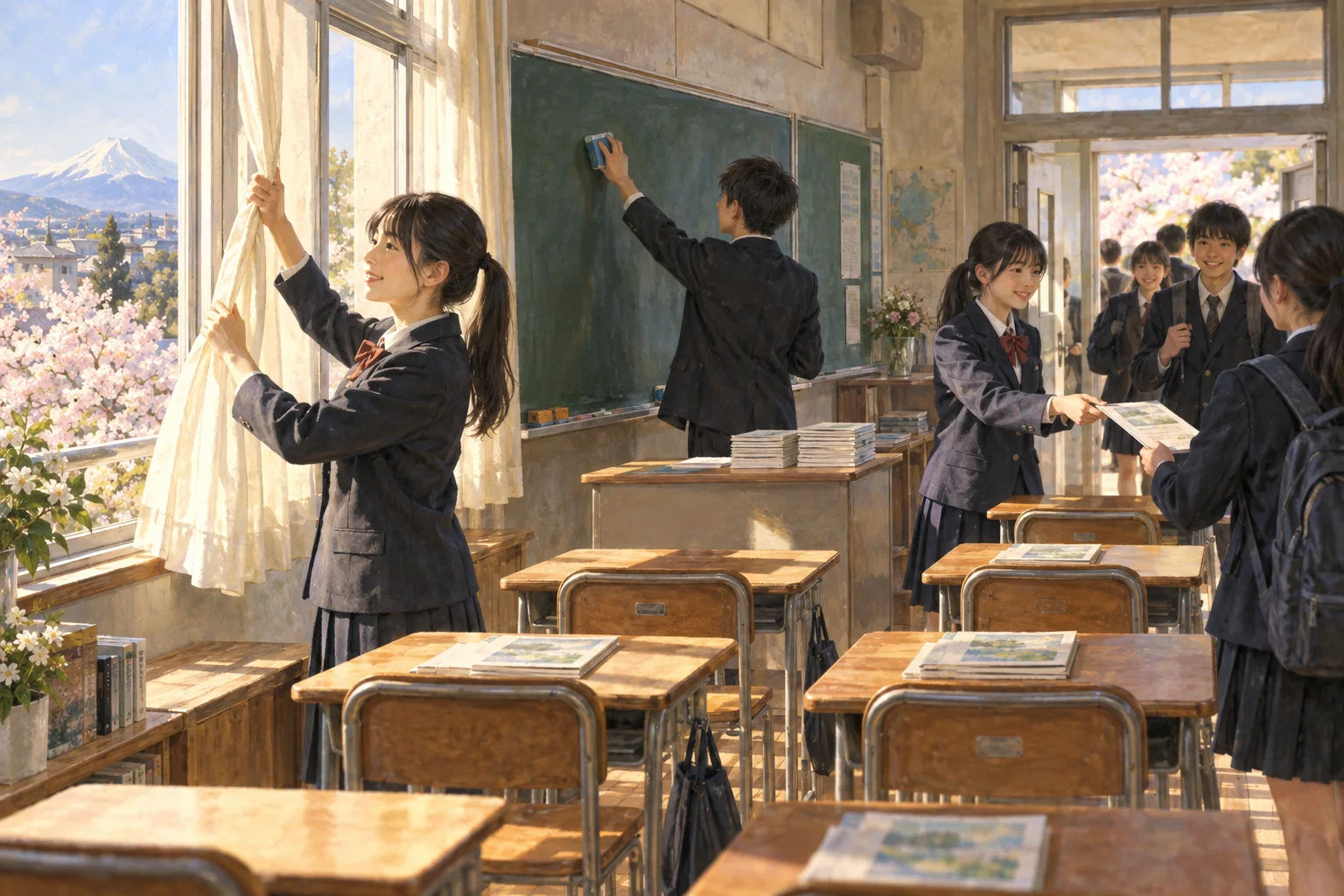
Nitchoku is the daily rotation in which one or two students take responsibility for running the classroom that day.
弐In 30 seconds30秒で説明する
Each day, one or two students in a Japanese class take the role of nitchoku. They call the class to attention at the start and end of each lesson, write the date on the board, fill in the class diary, water the plants and turn off the lights. The role rotates so that every student does it.
参As a short speechスピーチ・英作文
In a Japanese classroom, one or two students each day are the nitchoku, the students on duty. The role rotates through the class register, so everyone does it several times a year. The duties are small but real. At the start of each lesson the nitchoku calls the class to stand, bow to the teacher and sit, and does the same at the end.
They write the date and the day's schedule on the board, look after the class plants, check the room is tidy, turn off the lights, and write up the class diary at the end of the day, which the homeroom teacher reads and replies to in writing.
That diary is the part I find interesting. It is a short record of what happened and how the day felt, and because it rotates, a teacher ends up with a written account of the year from thirty different points of view.
日直にっちょくnitchokuthe student on duty for the day
毎日ひとりずつ、クラスの当番が回ってくる。号令をかけるのもその人。
壱一言で言うとIn one line
日直とは、毎日一人か二人の生徒が、その日の教室の運営を受け持つ当番のことです。
弐30秒で説明するIn 30 seconds
日本の教室では、毎日一人か二人の生徒が日直になります。授業の始めと終わりに号令をかけ、黒板に日付を書き、学級日誌をつけ、植物に水をやり、電気を消します。当番は順に回り、全員が経験します。
参スピーチ・英作文As a short speech
日本の教室では、毎日一人か二人の生徒が日直、つまりその日の当番になります。出席番号順に回るので、全員が年に何度も経験します。仕事は小さいものですが、実質があります。
授業の始めに日直が号令をかけ、起立、礼、着席とクラスを導き、終わりにも同じことをします。黒板に日付とその日の予定を書き、学級の植物の世話をし、教室が片づいているか確認し、電気を消し、一日の終わりに学級日誌を書きます。
その日誌は担任が読み、返事を書き込みます。私が面白いと思うのは、その日誌です。何があったか、その日がどんな感じだったかの短い記録で、当番が回るので、担任は三十通りの視点から書かれた一年分の記録を手にすることになります。
こう聞かれたらQuestions people actually ask
QWhat is the call at the start of a lesson?
AThe nitchoku says the equivalent of stand, bow, sit, and the class does it together. The same happens at the end. It marks the start and end of the lesson and doubles as a greeting to the teacher.
授業の始めにかける号令は何ですか。日直が「起立、礼、着席」と号令をかけ、クラスがそろって行います。授業の終わりも同じです。授業の区切りを示し、先生へのあいさつも兼ねています。
QWhat goes in the class diary?
AWhat happened that day, anything notable, and often a personal comment. The homeroom teacher writes a reply, so it works as a small one-to-one channel between each student and the teacher.
学級日誌には何を書くのですか。その日の出来事、特記事項、そしてひとこと感想を書くことが多いです。担任が返事を書くので、生徒一人と教員をつなぐ小さな通路として働きます。
QIs this the same as cleaning duty?
ANo. Cleaning is done by everyone in rotating teams. Nitchoku is a separate role for running the day, and a student can be both on the same day.
これは掃除当番と同じものですか。違います。掃除は班で交代しながら全員が行います。日直はその日の運営を受け持つ別の役で、同じ日に両方に当たることもあります。
そのまま使えるフレーズPhrases you can use
- Who's on duty today?今日の日直は誰ですか。
- Stand. Bow. Sit down.起立、礼、着席。
- The role rotates through the whole class.クラス全員に順番で回ります。
- They write the class diary at the end of the day.一日の終わりに学級日誌を書きます。
- The teacher writes a reply in it.先生が返事を書いてくれます。
豆知識Background
日直は学習指導要領上の用語ではなく、学級経営のなかで広く行われている慣行である。出席番号順に一人ずつ、あるいは男女一人ずつの二人で担当する形が多い。学級日誌は担任との往復のやりとりになり、生徒の様子をつかむ手がかりとして使われる。号令の「起立・礼・着席」は授業の区切りを示すもので、学校によっては「よろしくお願いします」「ありがとうございました」と唱和する。日直の仕事の内容は学校ごとに異なり、窓の開閉、黒板消しの清掃、給食の合図など、細かい役割が決められていることもある。
出典日本文化ナビ(原田英語.com)「日直を英語で説明する(nitchoku)」https://www.haradaeigo.com/japanese-culture/en/nitchoku
- 文
- 日本文化ナビ編集部(原田英語.com)— 英文・和訳・解説はすべて独自に作成
- イラスト
- 日本文化ナビ オリジナル
- 発行
- 原田英語.com https://www.haradaeigo.com/
- 印刷日
- 2026.10.17
© 2026 Harada Eigo (原田英語.com). Text and illustration: Japan Culture Navi.
ページはこちら