二世帯住宅
壱In one line一言で言うと
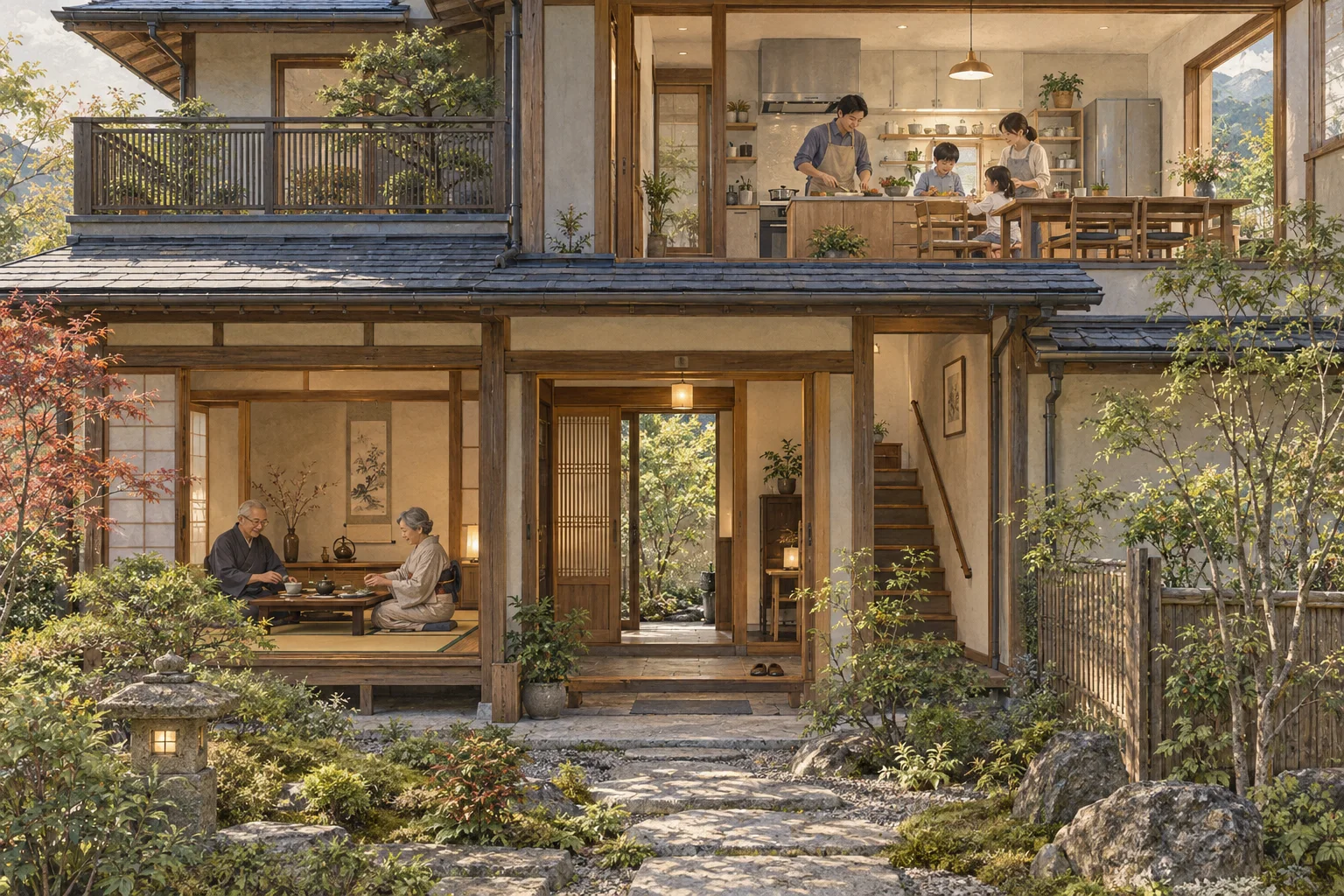
Nisetai jutaku, or a two-generation house, is a home where parents and adult children live with separate kitchens and entrances.
弐In 30 seconds30秒で説明する
A nisetai jutaku is a house designed for two households of the same family. Layouts range from sharing everything but the bedrooms to fully separate floors with their own kitchens, bathrooms and front doors. Families build them to share childcare and later care for aging parents, and to make one plot of land serve two households.
参As a short speechスピーチ・英作文
A two-generation house is a Japanese answer to two problems at once: expensive land and an aging population. The idea is a single building holding two households of the same family, usually parents and a married child. Designs vary a lot.
The shared type has one kitchen and one bathroom with separate bedrooms; the partly separated type gives each household its own kitchen; the fully separated type is effectively two homes stacked or side by side, each with its own front door, and the two sides may barely meet on a given day.
Families choose this to share childcare, to prepare for caring for parents later, and because building on land the parents already own is far cheaper than buying. The difficulties are as predictable as the benefits: differences over money, over how to raise children, and over how much privacy each side expects. Families who make it work usually separate the kitchens, whatever else they share.
二世帯住宅にせたいじゅうたくnisetai jutakua house built for two generations
親と暮らすために、玄関も台所も二つ作る家。
壱一言で言うとIn one line
二世帯住宅とは、台所や玄関を分けて、親と成人した子の世帯が一緒に暮らせるようにした家です。
弐30秒で説明するIn 30 seconds
二世帯住宅は、同じ家族の二つの世帯のために設計された家です。寝室以外をすべて共有する形から、台所も浴室も玄関も別にした完全分離の形まであります。子育てを助け合い、やがて親の介護に備えるため、そして一つの土地を二つの世帯で使うために建てられます。
参スピーチ・英作文As a short speech
二世帯住宅は、二つの問題に同時に答えようとする日本の工夫です。高い土地と、高齢化です。考え方は単純で、同じ家族の二つの世帯、多くは親と結婚した子の世帯が、一つの建物に住みます。設計の幅は広いものです。
共有型は台所も浴室も一つで寝室だけを分け、一部共有型は台所を世帯ごとに設け、完全分離型は上下か左右に並ぶ事実上二軒の家で、それぞれに玄関があり、一日顔を合わせないこともあります。こうする理由は、子育てを助け合うため、いずれ親の介護に備えるため、そして親がすでに持つ土地に建てるほうが買うよりずっと安いためです。
難しさは利点と同じくらい予想がつきます。お金のこと、子育ての考え方、どれだけ一人になりたいかの感覚の違いです。うまくいっている家族は、ほかを共有していても、たいてい台所だけは分けています。
こう聞かれたらQuestions people actually ask
QIs living with parents common in Japan?
ALess than it was. Three-generation households have declined steadily, and most young couples live separately. Building a two-generation house is a deliberate choice, often made when a parent is widowed or needs support.
日本では親と同居するのがふつうなのですか。以前より減りました。三世代の世帯は着実に減っており、若い夫婦の多くは別に暮らします。二世帯住宅を建てるのは意識的な選択で、親が一人になったときや支えが必要になったときに選ばれることが多いものです。
QWho pays for it?
AOften the parents provide the land and part of the cost while the children take the loan. Ownership is registered in shares, and getting that right matters later for inheritance and for tax.
費用は誰が出すのですか。親が土地と費用の一部を出し、子がローンを組む形が多く見られます。所有は持分で登記され、その決め方はのちの相続や税の面で重要になります。
QWhat usually causes friction?
AEveryday things: kitchen use, visitors, noise and money. Families report fewer problems when each household has its own kitchen and its own entrance, even if the building is shared.
もめるのはたいていどういうところですか。日常のことです。台所の使い方、来客、物音、お金です。建物は一つでも、世帯ごとに台所と玄関があるほうが、もめごとが少ないという声が多く聞かれます。
そのまま使えるフレーズPhrases you can use
- We built a house for two households.二世帯住宅を建てました。
- Each floor has its own kitchen.階ごとに台所があります。
- The entrances are separate.玄関は別々です。
- My parents live downstairs.両親は下の階に住んでいます。
- It helps with the children.子どもの世話が助かります。
豆知識Background
二世帯住宅という商品名の住宅は1970年代に登場し、住宅メーカーが型として売り出したことで広まりました。共有型、一部共有型、完全分離型に大きく分かれ、水回りをどこまで分けるかが満足度を左右すると言われます。土地と建物の持分をどう登記するかは、相続や不動産取得税、住宅ローン控除の扱いに関わるため、建てる前に決めておくことが勧められます。介護保険の制度が整ったあとも、同居して支えるという選択は根強く残っています。
出典日本文化ナビ(原田英語.com)「二世帯住宅を英語で説明する(nisetai jutaku)」https://www.haradaeigo.com/japanese-culture/en/nisetai-jutaku
- 文
- 日本文化ナビ編集部(原田英語.com)— 英文・和訳・解説はすべて独自に作成
- イラスト
- 日本文化ナビ オリジナル
- 発行
- 原田英語.com https://www.haradaeigo.com/
- 印刷日
- 2026.10.17
© 2026 Harada Eigo (原田英語.com). Text and illustration: Japan Culture Navi.
ページはこちら