長崎と出島
壱In one line一言で言うと
Nagasaki and Dejima are a port city and its small island, Japan's only opening to Europe for over two centuries.
弐In 30 seconds30秒で説明する
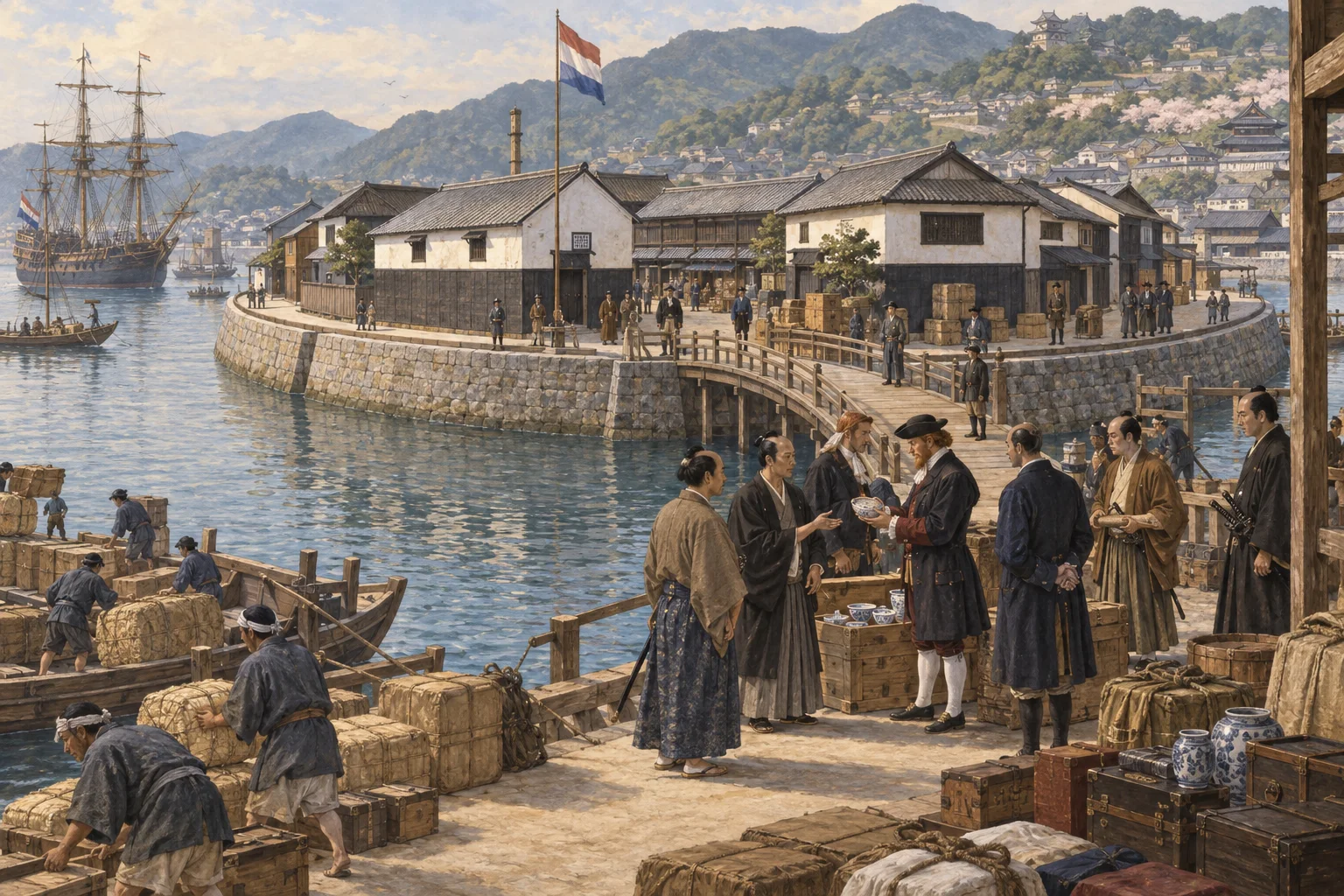
Nagasaki is a port city built on hills around a narrow harbor in western Kyushu. During the two centuries when Japan restricted foreign contact, a fan-shaped artificial island in the harbor called Dejima held the Dutch trading post, and it was the country's only direct link to Europe. Nagasaki was also the target of the second atomic bomb, on August 9th, 1945.
参As a short speechスピーチ・英作文
Nagasaki is where Japan watched the outside world from. From 1641 until the country reopened in the 1850s, the Dutch trading post stood on Dejima, a fan-shaped artificial island in the harbor, roughly the size of a couple of city blocks. That was it.
Western books, medicine, astronomy and instruments came into the country through that one gate, and a whole field of study called Dutch learning grew from it. Nagasaki also had a hidden Christian population that kept its faith for seven generations without priests, and sites linked to them became World Heritage in 2018.
And on the ninth of August 1945 the second atomic bomb was dropped here, three days after Hiroshima. By the end of that year an estimated seventy-four thousand people had died, though the figures are estimates. All three of those histories are in one small city, and you can walk between them.
長崎と出島ながさきとでじまNagasaki and Dejimathe port that was Japan's only window to Europe, and the second atomic bombing
200年以上、日本が西洋を見ていた窓は、この扇形の小さな島だけだった。
壱一言で言うとIn one line
長崎と出島とは、港町の長崎と、200年以上のあいだ日本が西洋に開いていた唯一の窓だった小島、出島のことです。
弐30秒で説明するIn 30 seconds
長崎は九州の西、細長い湾を囲む斜面に広がる港町です。日本が外国との行き来を制限していた二世紀のあいだ、湾にある扇形の人工島・出島にオランダ商館が置かれ、そこが西洋への唯一の直接の窓口でした。長崎はまた、1945年8月9日に二発目の原子爆弾が落とされた街でもあります。
参スピーチ・英作文As a short speech
長崎は、日本が外の世界を見ていた場所です。1641年から1850年代の開国まで、オランダ商館は湾の中の扇形の人工島・出島にありました。広さはせいぜい街区二つぶんほどです。それだけでした。
西洋の書物、医学、天文、器具は、その一つの門から入ってきて、そこから蘭学という学問が育ちました。長崎にはまた、司祭のいないまま七世代にわたって信仰を守り続けた潜伏キリシタンがいて、その関連遺産は2018年に世界遺産になりました。
そして1945年8月9日、広島の三日後に、二発目の原子爆弾がここに落とされました。その年の終わりまでに7万4千人ほどが亡くなったと推計されています。数字はあくまで推計です。この三つの歴史が一つの小さな街にあり、歩いて回れます。
こう聞かれたらQuestions people actually ask
QWas Japan really completely closed?
ANot completely. Trade continued with the Dutch and Chinese at Nagasaki, with Korea through Tsushima, with the Ryukyus through Satsuma, and with the Ainu in the north. What was banned was Christianity and unregulated contact.
日本は本当に完全に閉じていたのですか。完全ではありません。長崎でオランダと中国、対馬を通じて朝鮮、薩摩を通じて琉球、北ではアイヌとの交易が続いていました。禁じられたのはキリスト教と、管理されない往来です。
QCan you still see Dejima?
AYes, though the harbor around it was filled in during the Meiji period, so it is no longer an island. The buildings have been reconstructed from old plans and paintings, and the city intends to restore the water around it.
出島はいまも見られますか。見られます。ただ明治期に周囲が埋め立てられたので、いまは島ではありません。建物は古い図面や絵から復元されており、市は周りの水面を戻す計画を進めています。
QWhy Nagasaki on August 9th?
AThe primary target that day was Kokura, but cloud and smoke made it impossible to aim, so the aircraft turned to the secondary target. Weather is the reason Nagasaki was hit rather than another city.
どうして8月9日に長崎だったのですか。その日の第一目標は小倉でしたが、雲と煙で照準が定まらず、第二目標に向かいました。小倉ではなく長崎に落とされたのは、天候のためです。
誤解されやすいA common misunderstanding
MYTHJapan had no contact at all with the outside world for 250 years.250年のあいだ外国とまったく行き来がなかったと思われがちです。
FACTTrade and information kept flowing through four controlled gateways: the Dutch and Chinese at Nagasaki, Korea via Tsushima, the Ryukyus via Satsuma, and the Ainu in the north.四つの管理された窓口で交易と情報は続いていました。長崎のオランダと中国、対馬を通じた朝鮮、薩摩を通じた琉球、そして北のアイヌです。
そのまま使えるフレーズPhrases you can use
- Dejima was the only door to Europe for over 200 years.出島は200年以上、ヨーロッパへの唯一の入口でした。
- It was an artificial island, shaped like a fan.扇の形をした人工の島でした。
- Western medicine came into Japan through here.西洋医学はここから日本に入ってきました。
- The second atomic bomb was dropped here on August 9th, 1945.1945年8月9日、ここに二発目の原子爆弾が落とされました。
- Hidden Christians kept their faith here for seven generations.潜伏キリシタンは七世代にわたって信仰を守りました。
豆知識Background
出島は寛永13年(1636年)、ポルトガル人を住まわせるために築かれた扇形の人工島で、ポルトガル船の来航が禁じられたのち、寛永18年(1641年)に平戸のオランダ商館が移された。以後、安政の開国までおよそ218年、西洋に開かれた窓であり続けた。明治期の埋め立てで周囲は陸続きになったが、建物の復元が進んでいる。大浦天主堂は1864年の竣工で、現存する日本最古の教会建築とされる。2018年、「長崎と天草地方の潜伏キリシタン関連遺産」が世界文化遺産に登録された。
出典日本文化ナビ(原田英語.com)「長崎と出島を英語で説明する(Nagasaki and Dejima)」https://www.haradaeigo.com/japanese-culture/en/nagasaki-and-dejima
- 文
- 日本文化ナビ編集部(原田英語.com)— 英文・和訳・解説はすべて独自に作成
- イラスト
- 日本文化ナビ オリジナル
- 発行
- 原田英語.com https://www.haradaeigo.com/
- 印刷日
- 2026.10.17
© 2026 Harada Eigo (原田英語.com). Text and illustration: Japan Culture Navi.
ページはこちら