物干し竿
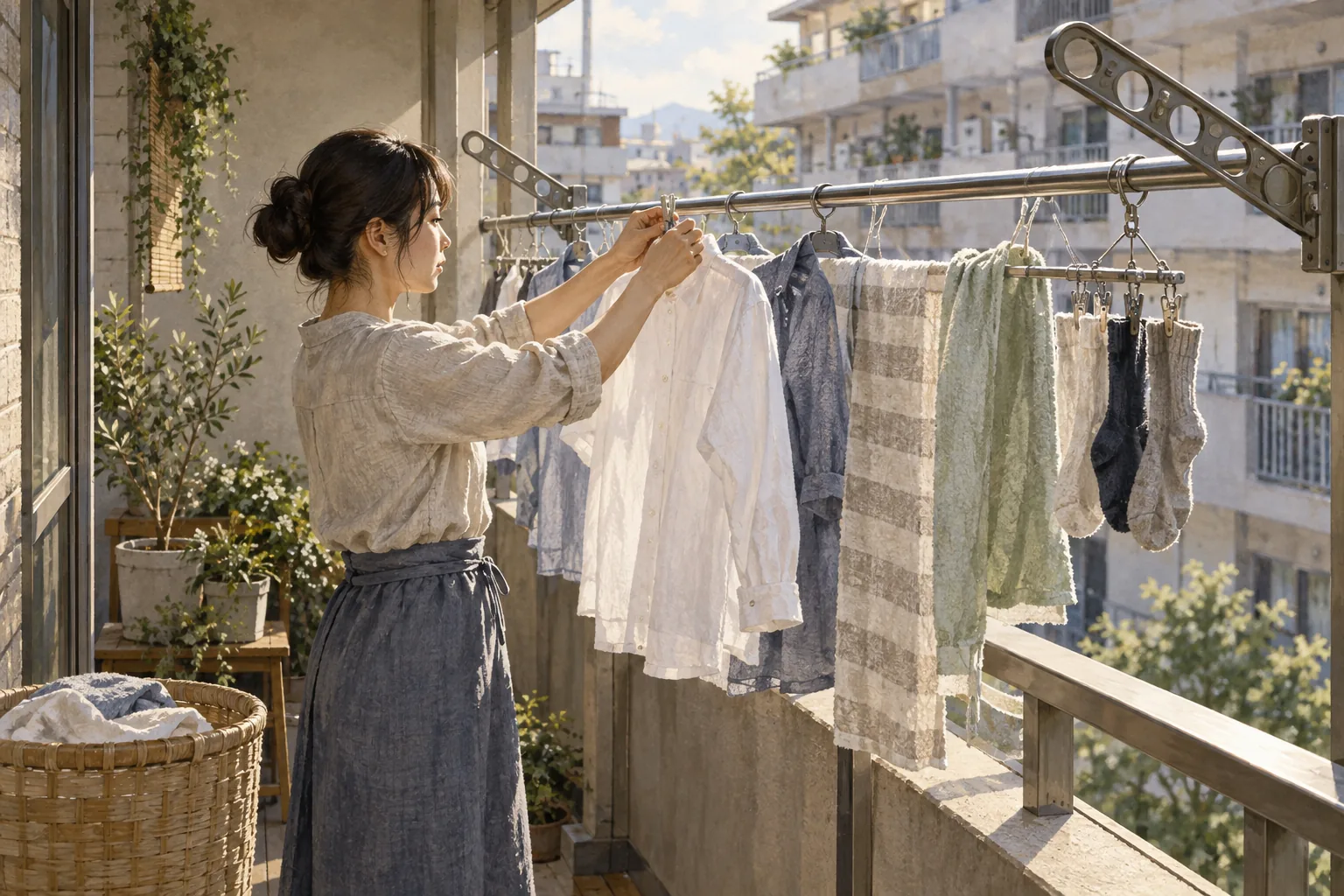
壱In one line一言で言うと
A monohoshi zao is a pole strung across a balcony that many Japanese households still use to air-dry laundry.
弐In 30 seconds30秒で説明する
Most Japanese apartment balconies have a pair of brackets holding a long pole, the monohoshi zao, from which laundry hangs on hangers or pinned to the pole directly. Clothes dryers exist but remain far less common than in North America or much of Europe, partly because of smaller living spaces and electricity costs, and partly because sun-dried laundry is genuinely preferred by many people. Balcony rules in apartment buildings often restrict what can be hung where, especially underwear, out of consideration for what neighbors below can see.
参As a short speechスピーチ・英作文
Step onto almost any apartment balcony in Japan and you will find two brackets on the wall holding a long aluminum pole, the monohoshi zao, which is where laundry actually gets dried. Clothes dryers are sold and used, but ownership rates remain much lower than in North America or northern Europe: apartments are often small, electricity is not cheap, and a lot of people simply believe sun-dried laundry smells and feels better.
Weather matters more here than it might elsewhere as a result, and Japanese weather forecasts routinely include a laundry-drying index alongside temperature and rain. Because balconies in apartment buildings are visible from below and from neighboring units, most buildings have informal or written rules about what can be hung and where; underwear is commonly kept toward the back or on an inner rack rather than the outer railing, out of consideration for privacy. On rainy or high-pollen days, an indoor version of the same pole, mounted across a room or bathroom, becomes the backup.
物干し竿ものほしざおmonohoshi zaothe laundry pole used to dry clothes outdoors
ベランダに渡した棒に洗濯物を干す。乾燥機はまだ少数派。
壱一言で言うとIn one line
物干し竿とは、ベランダに渡す棒のことで、多くの家庭は今も洗濯物をここに干して乾かします。
弐30秒で説明するIn 30 seconds
日本のマンションのベランダには、たいてい物干し竿を渡すための金具がついていて、そこにハンガーをかけたり、洗濯物を直接留めたりして干します。乾燥機もありますが、北米や欧州の多くの国ほどは普及しておらず、住まいの広さや電気代に加え、日に干した洗濯物を単純に好む人が多いことも理由です。マンションのベランダには、下の階から見える下着など、何をどこに干してよいかについてのルールが定められていることもよくあります。
参スピーチ・英作文As a short speech
日本のマンションのベランダに出れば、ほとんどどこでも壁に二つの金具があり、そこに長いアルミの棒、物干し竿が渡してあって、洗濯物は実際そこで乾かします。乾燥機も売られ使われてはいますが、所有率は北米や北欧よりずっと低いままです。
住まいが狭いことが多く、電気代も安くはなく、そして何より、日に干した洗濯物のほうが匂いも肌触りもよいと単純に感じている人が多いのです。そのぶん天気は、他の国以上に大事になり、日本の天気予報には気温や降水確率と並んで「洗濯指数」が日常的に載っています。
マンションのベランダは下の階や隣の部屋から見えるため、多くの建物には何をどこに干してよいかについての、明文化されているかどうかにかかわらないルールがあります。下着は外側の手すりではなく、奥や室内用のラックに干すのが一般的です。プライバシーへの配慮からです。雨の日や花粉の多い日には、部屋や浴室に渡す室内用の同じような棒が、代わりとして使われます。
こう聞かれたらQuestions people actually ask
QDo most Japanese people not own a dryer?
AMany households do own one, often combined with the washing machine, but usage for everyday laundry is much lower than in North America; air-drying on the balcony is still the default for most clothes.
多くの日本人は乾燥機を持っていないのですか。洗濯機と一体になったものも含め、乾燥機を持つ家庭は多くあります。ただし日常の洗濯での使用頻度は北米よりずっと低く、多くの衣類はベランダでの自然乾燥が基本です。
QWhy can't I hang laundry facing the street on some balconies?
AApartment building rules commonly restrict this for appearance and privacy, and in shared condominium buildings the balcony is often technically part of a fire escape route, which limits what can be placed there.
ベランダによっては、なぜ通り側に洗濯物を干せないのですか。見た目とプライバシーへの配慮から、マンションの規約で制限されていることがよくあります。分譲マンションでは、ベランダが避難経路の一部とされていることも多く、置けるものが限られます。
QWhat's a laundry-drying index in the weather forecast?
AIt's a daily rating, often out of 100 or on a short scale, estimating how well and how fast laundry will dry outdoors that day based on humidity, wind and sunshine, broadcast alongside temperature and rain forecasts.
天気予報の「洗濯指数」とは何ですか。湿度や風、日照をもとに、その日の屋外干しがどれくらいよく、速く乾くかを示す日々の指標で、百点満点や短い段階で表され、気温や降水確率と並んで放送されます。
そのまま使えるフレーズPhrases you can use
- I hung the laundry out on the balcony.ベランダに洗濯物を干しました。
- The laundry-drying index is good today.今日は洗濯指数がいいです。
- Please don't hang laundry facing the street.通り側に洗濯物を干さないでください。
- We use the indoor pole on rainy days.雨の日は室内干しの竿を使います。
- Sun-dried laundry just smells better.日に干した洗濯物はやっぱり匂いがいいです。
豆知識Background
日本の集合住宅のベランダには、物干し竿を渡すための金具が備え付けられていることが多く、洗濯物の乾燥は今も屋外干しが中心である。乾燥機の所有率は北米や北欧より低く、電気代や住まいの狭さに加え、天日干しを好む人が多いことが理由とされる。天気予報では気温や降水確率と並んで洗濯指数が伝えられ、その日の乾きやすさの目安になる。マンションのベランダは避難経路を兼ねることが多く、また下の階から見えるため、干せるものや場所について管理規約で定められていることも珍しくない。
出典日本文化ナビ(原田英語.com)「物干し竿を英語で説明する(monohoshi zao)」https://www.haradaeigo.com/japanese-culture/en/monohoshi-zao
- 文
- 日本文化ナビ編集部(原田英語.com)— 英文・和訳・解説はすべて独自に作成
- イラスト
- 日本文化ナビ オリジナル
- 発行
- 原田英語.com https://www.haradaeigo.com/
- 印刷日
- 2026.10.17
© 2026 Harada Eigo (原田英語.com). Text and illustration: Japan Culture Navi.
ページはこちら