味噌
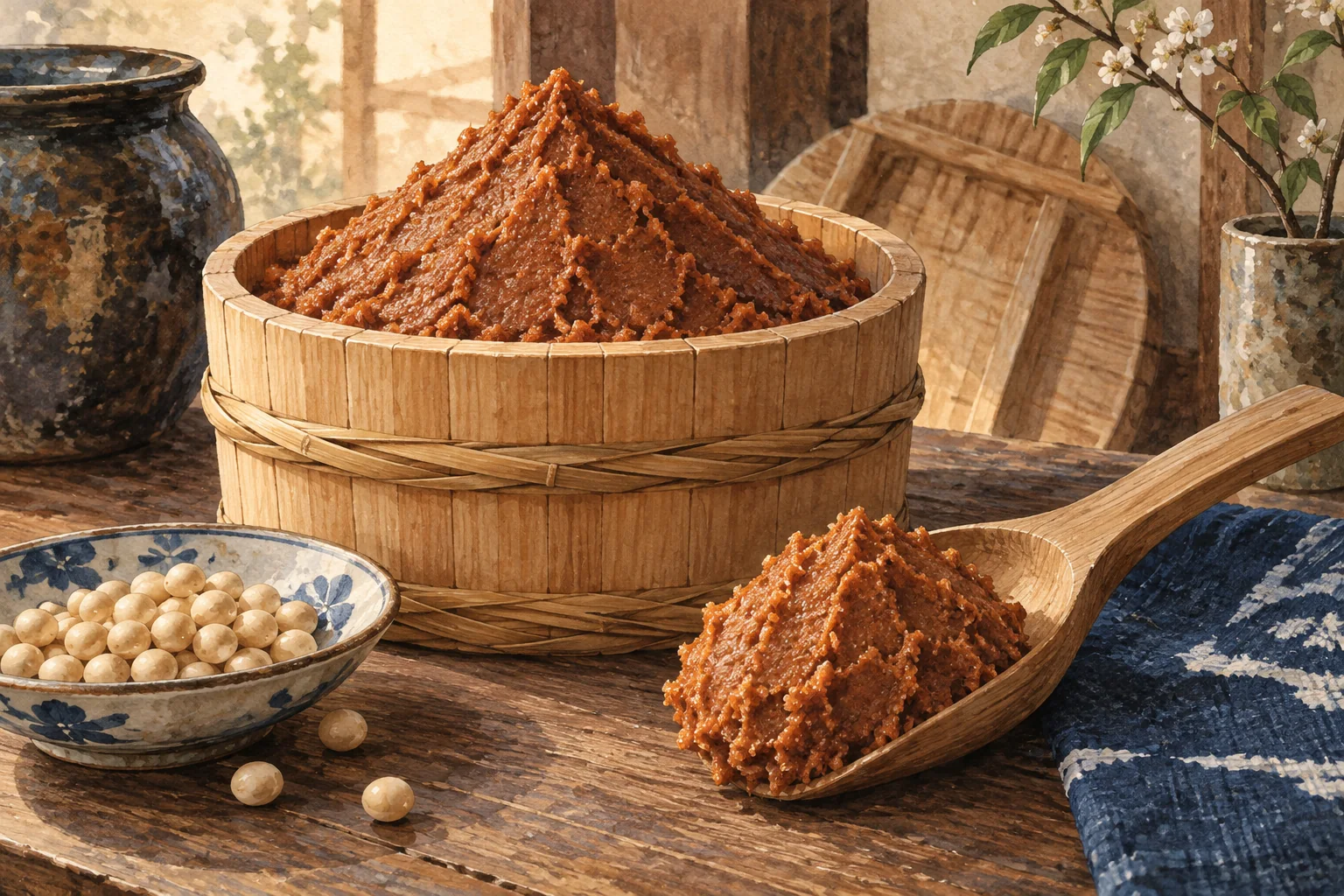
壱In one line一言で言うと
Miso is fermented soybean paste, and it comes in many regional types, not one.
弐In 30 seconds30秒で説明する
Miso is made by fermenting soybeans with salt and a mold culture called koji. The koji can be grown on rice, barley or soybeans, and the result tastes completely different depending on which is used and how long it is aged. Pale miso is younger and often sweeter, while dark red miso is aged longer and usually saltier. Every region has its own, and many households keep to the one they grew up with.
参As a short speechスピーチ・英作文
If you ask a Japanese person what miso tastes like, the honest answer is that it depends on which miso. It is soybeans fermented with salt and koji, a mold culture grown on a grain. When the koji is grown on rice you get the pale, sweeter kind common in much of the country.
Barley koji gives a rounder taste found in Kyushu. Nagoya is known for a dark, almost black miso made with soybean koji, aged for a long time and strong enough that outsiders sometimes find it startling. So miso soup in Tokyo and miso soup in Nagoya are not the same drink.
Beyond soup, it is used to marinate fish, to dress vegetables, to braise, and as a base for ramen. One practical note: do not boil it hard after adding it, because the aroma goes. You add it at the end, off the heat or just under a simmer, and that single habit is most of what separates good miso soup from flat miso soup.
味噌みそmisofermented soybean paste
一種類ではない。白も赤も麦も豆もあり、地域ごとに別物と言っていい。
壱一言で言うとIn one line
味噌とは大豆を発酵させたペーストで、一種類ではなく地域ごとにさまざまな種類があります。
弐30秒で説明するIn 30 seconds
味噌は大豆を塩と麹で発酵させて作ります。麹は米・麦・大豆のいずれかにつけて育て、どれを使うか、どれだけ寝かせるかで味がまったく変わります。色の淡い味噌は若くて甘めのものが多く、赤い味噌は長く寝かせていて塩気が強いものが多いです。地域ごとに違うものがあり、育った土地の味噌を使い続ける家庭も多くあります。
参スピーチ・英作文As a short speech
味噌はどんな味かと日本人に聞けば、正直な答えは「どの味噌か次第です」になります。大豆を塩と麹で発酵させたもので、麹は穀物につけて育てたカビです。米に麹をつければ、全国で広く使われる淡くて甘めの味噌になります。
麦の麹なら九州に多いまろやかな味になります。名古屋は大豆の麹で作った黒に近い味噌で知られ、長く寝かせてあり、他の地方の人が驚くほど濃いです。ですから東京の味噌汁と名古屋の味噌汁は、同じ飲み物ではありません。
汁物のほかにも、魚を漬ける、野菜を和える、煮込む、ラーメンの土台にする、と使い道は広いです。ひとつ実用的なことを。入れたあとに強く煮立てないでください。香りが飛びます。火を止めるか、ごく弱火にしてから入れる。この一手間が、おいしい味噌汁とそうでない味噌汁の差のほとんどです。
こう聞かれたらQuestions people actually ask
QWhich miso should I buy first?
AA medium rice-koji miso, the common pale-brown kind, is the safest starting point. It works for soup, for marinating and for dressings. Dark red miso is worth trying later, but it will dominate anything you put it in.
最初に買うなら、どの味噌がいいですか。米麹の中間的な味噌、よくある淡い茶色のものが無難です。汁物にも漬けるのにも和えるのにも使えます。赤味噌は後で試すとよいですが、何に入れても味が前に出ます。
QDoes it keep?
AYes, for months in the fridge. It darkens over time, which is normal and not spoilage. Press the surface flat and keep the container closed to slow it down.
日持ちはしますか。冷蔵庫で数か月もちます。時間がたつと色が濃くなりますが、これは自然な変化で、傷んだわけではありません。表面を平らにならし、ふたを閉めておくと進みが遅くなります。
QIs it vegetarian?
AThe miso itself usually is. The soup often is not, because the broth is typically made with bonito flakes. Ask about the dashi, not the miso, if that matters to you.
肉や魚は入っていませんか。味噌そのものはたいてい大丈夫です。汁のほうは違うことが多く、出汁に鰹節を使うためです。気にされるなら、味噌ではなく出汁について聞いてください。
誤解されやすいA common misunderstanding
MYTHMiso is one ingredient with one taste.味噌はひとつの調味料でひとつの味だと思われがちです。
FACTIt varies enormously by koji grain, salt level and aging. Pale rice miso and Nagoya's dark soybean miso are as different from each other as two separate ingredients.麹の種類、塩加減、熟成の長さで大きく変わります。淡い米味噌と名古屋の豆味噌は、別の材料といっていいほど違います。
そのまま使えるフレーズPhrases you can use
- Miso is fermented soybean paste.味噌は大豆を発酵させたものです。
- There isn't one miso — the type changes by region.味噌は一種類ではなく、地域によって違います。
- The pale one is usually sweeter, the dark red one saltier.淡いものは甘め、赤いものは塩気が強いです。
- Don't boil it after you add it — the aroma goes.入れたあとは煮立てないでください。香りが飛びます。
- The soup usually has fish stock in it, so ask if you need to know.汁には魚の出汁が入っていることが多いので、気になるなら聞いてください。
豆知識Background
味噌は、麹の原料によって米味噌、麦味噌、豆味噌に分かれる。全国で最も多いのは米味噌で、麦味噌は九州や中国地方、豆味噌は東海地方に多い。色の違いは熟成の長さとメイラード反応によるもので、長く寝かせるほど濃くなる。信州味噌、仙台味噌、西京味噌、八丁味噌などの名は産地と作り方に由来する。家庭で味噌を仕込む「手前味噌」という言葉は、自分の家の味噌を自慢することから、自慢話の意味で使われるようになった。
出典日本文化ナビ(原田英語.com)「味噌を英語で説明する(miso)」https://www.haradaeigo.com/japanese-culture/en/miso
- 文
- 日本文化ナビ編集部(原田英語.com)— 英文・和訳・解説はすべて独自に作成
- イラスト
- 日本文化ナビ オリジナル
- 発行
- 原田英語.com https://www.haradaeigo.com/
- 印刷日
- 2026.10.17
© 2026 Harada Eigo (原田英語.com). Text and illustration: Japan Culture Navi.
ページはこちら