味噌田楽
壱In one line一言で言うと
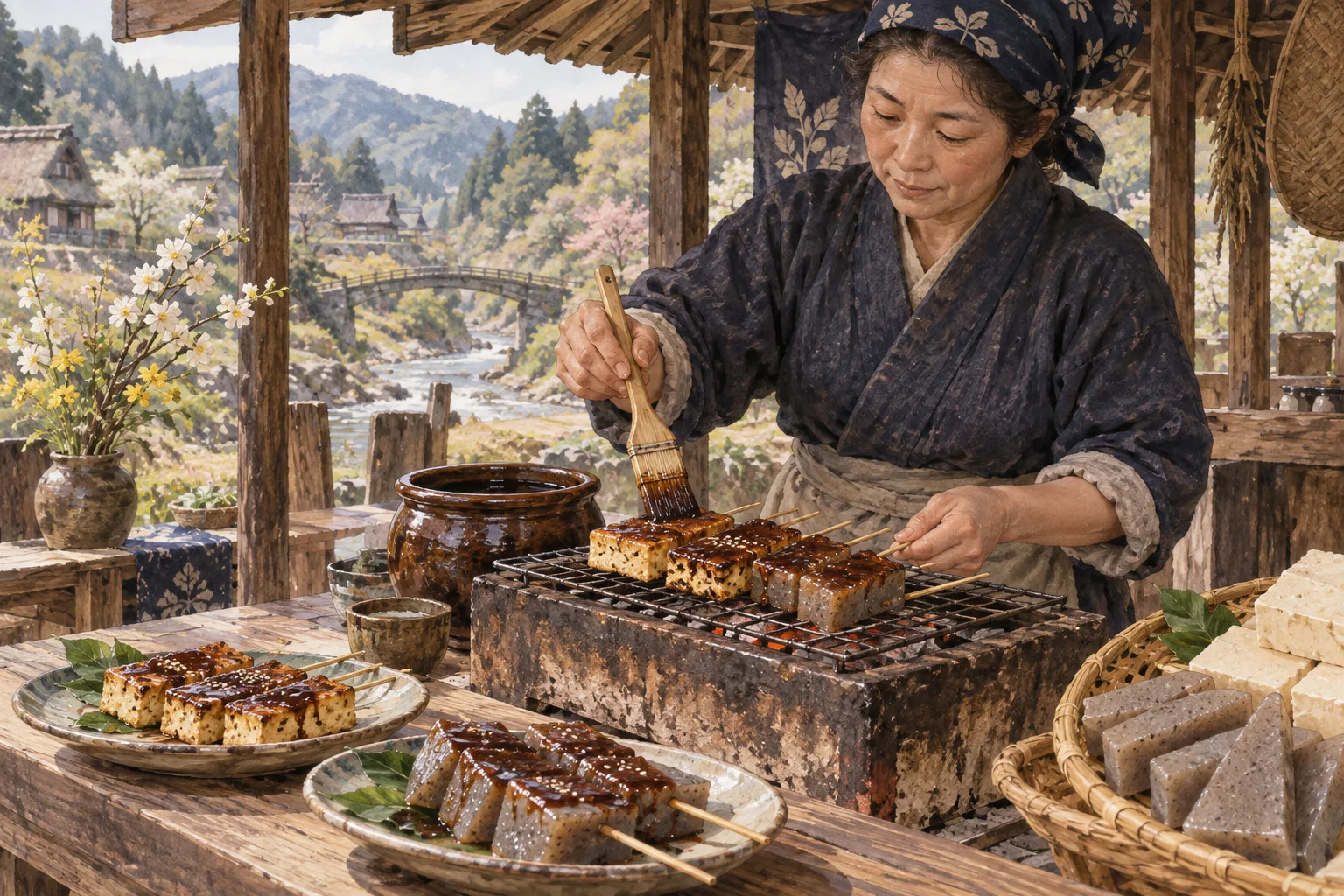
Miso dengaku is tofu, konnyaku or eggplant on skewers, coated with sweetened miso and grilled.
弐In 30 seconds30秒で説明する
A simple grilled dish: firm tofu, konnyaku, eggplant or taro is put on a flat bamboo skewer, spread with miso sweetened with sugar and mirin, and grilled until the miso browns. It is old — records go back to the medieval period — and survives at temples, in mountain towns and at festival stalls. The miso varies by region, red in the Nagoya area, paler in the west.
参As a short speechスピーチ・英作文
Miso dengaku is one of the oldest dishes you can still order casually in Japan, and it is about as simple as cooking gets. A block of firm tofu, or a slice of konnyaku, eggplant or taro, goes onto a flat bamboo skewer. A miso paste sweetened with sugar and mirin, sometimes with ground sesame or citrus peel, is spread on one side, and the whole thing is grilled until the miso blisters and browns.
That is all of it. You find it at temple restaurants, where it fits vegetarian temple cooking, at inns in mountain areas, and at festival stalls where it is handed over hot. The regional differences are in the miso: dark red and strong around Nagoya, lighter and sweeter in the west. The name is unexpected.
It is said to come from dengaku, a performing art connected with rice planting, in which performers balanced on a single stilt, a shape that a piece of white tofu on a skewer was thought to resemble. That explanation is traditional rather than proven, but it is the one people give, and it is worth telling.
味噌田楽みそでんがくmiso dengakutofu or vegetables on skewers, grilled with sweet miso
串に刺して味噌を塗り、焼く。名前は田植えの踊りから来たとされる。
壱一言で言うとIn one line
味噌田楽とは、豆腐やこんにゃく、茄子を串に刺し、甘くした味噌を塗って焼いたものです。
弐30秒で説明するIn 30 seconds
簡素な焼き物です。木綿豆腐、こんにゃく、茄子、里芋などを平たい竹串に刺し、砂糖やみりんで甘くした味噌を塗って、焦げ目がつくまで焼きます。中世から記録のある古い料理で、寺や山の町、祭りの屋台に残っています。味噌は地域で違い、名古屋あたりは赤い味噌、西は淡い味噌を使います。
参スピーチ・英作文As a short speech
味噌田楽は、いまも気軽に注文できる料理のなかで最も古い部類のもので、調理としてはこれ以上ないほど簡素です。木綿豆腐の一切れ、あるいはこんにゃく、茄子、里芋を、平たい竹串に刺します。砂糖とみりんで甘くした味噌を、ときにすり胡麻や柚子の皮を混ぜて片面に塗り、味噌が泡立って色づくまで焼く。
それだけです。精進料理に合うので寺の食事処にあり、山あいの宿にもあり、祭りの屋台では熱いまま手渡されます。地域差は味噌に出ます。名古屋あたりは濃く赤い味噌、西は淡く甘い味噌です。名前は意外なところから来ています。
田植えに結びついた芸能の田楽に由来するとされ、一本の竹馬に乗って舞う姿が、串に刺した白い豆腐に似て見えたのだ、と説明されます。証明された話ではなく言い伝えですが、みなこの説明をしますし、話す値打ちはあります。
こう聞かれたらQuestions people actually ask
QIs it vegetarian?
AUsually yes. Tofu, konnyaku and vegetables with miso contain no meat, though some sweetened miso includes fish-based dashi, so ask if that matters.
精進でも食べられますか。たいていは食べられます。豆腐やこんにゃくや野菜と味噌に肉は入りません。ただ、甘味噌に魚の出汁を使うことがあるので、気にする場合は尋ねてください。
QWhere can I try it?
ATemple town restaurants, mountain inns, old streets in Kyoto and Nara, and festival stalls. In Nagoya it is a standard item with the local red miso.
どこで食べられますか。門前の食事処、山の宿、京都や奈良の古い通り、祭りの屋台などです。名古屋では地元の赤味噌を使った定番の品になっています。
QIs oden the same thing?
AThey are related. Oden developed from dengaku when the skewered items began to be simmered in broth instead of grilled, and the name is a shortened, politer form of the same word.
おでんと同じものですか。つながりがあります。串に刺したものを焼かずに煮るようになって生まれたのがおでんで、名も田楽を略して丁寧にした言い方です。
誤解されやすいA common misunderstanding
MYTHDengaku is just tofu with miso on top.田楽は豆腐に味噌をのせただけだ、と思われがちです。
FACTThe miso is a prepared paste, sweetened and sometimes flavored with sesame or citrus, and the point is grilling it until it browns.味噌は甘みをつけ、胡麻や柚子を加えて練ったもので、焦げ目がつくまで焼くところが肝心です。
そのまま使えるフレーズPhrases you can use
- Tofu on a skewer, grilled with sweet miso.串に刺した豆腐を甘味噌で焼いたものです。
- It's one of the oldest dishes still served.いまも出される最も古い料理の一つです。
- The miso is red in Nagoya, lighter in the west.味噌は名古屋では赤く、西では淡いです。
- Oden grew out of this dish.おでんはこの料理から生まれました。
- Eat it hot, before the miso cools.味噌が冷めないうちに食べてください。
豆知識Background
田楽の名は、田植えに伴う芸能「田楽」の、一本足の高足に乗る姿に串刺しの豆腐が似ていることに由来するとされるが、確証はない。田楽は室町時代の文献にも見え、串焼きの形で食べられていたことが分かる。煮込む形に変わったものが「おでん」で、田楽に丁寧語の「お」を付けて略した呼び名である。名古屋周辺では豆味噌を用いた濃い味噌だれが使われる。
出典日本文化ナビ(原田英語.com)「味噌田楽を英語で説明する(miso dengaku)」https://www.haradaeigo.com/japanese-culture/en/miso-dengaku
- 文
- 日本文化ナビ編集部(原田英語.com)— 英文・和訳・解説はすべて独自に作成
- イラスト
- 日本文化ナビ オリジナル
- 発行
- 原田英語.com https://www.haradaeigo.com/
- 印刷日
- 2026.10.17
© 2026 Harada Eigo (原田英語.com). Text and illustration: Japan Culture Navi.
ページはこちら