松の内
壱In one line一言で言うと
Matsu no uchi is the period New Year decorations stay up, which ends on a different date depending on the region.
弐In 30 seconds30秒で説明する
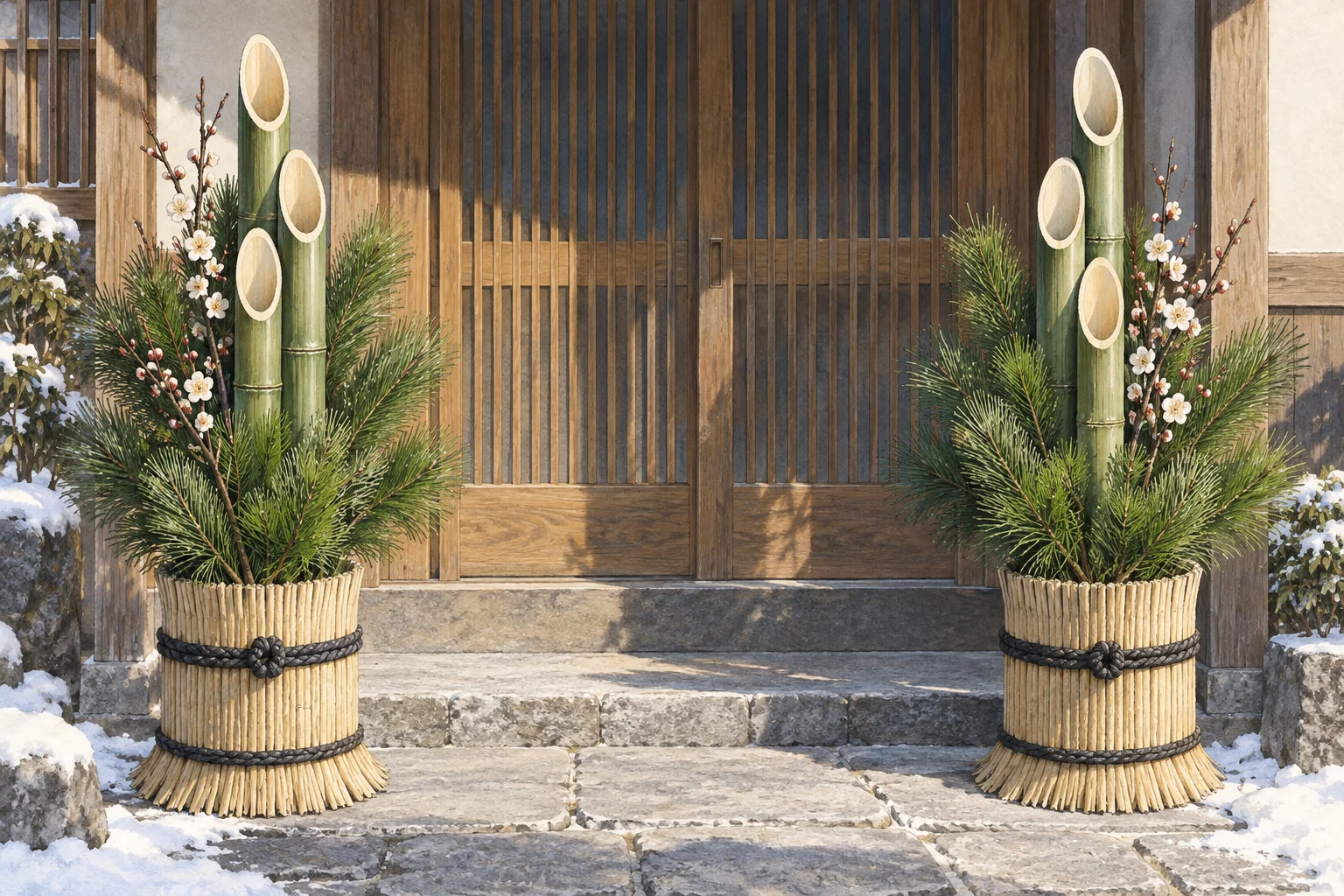
Matsu no uchi is the stretch of days when New Year decorations like the kadomatsu at the entrance are left up, because the New Year deity is thought to still be present. In the Kanto region around Tokyo it usually ends on January 7th; in Kansai and some other areas it runs to January 15th. The split is usually traced back to a decision made in Edo in the 1600s that never spread nationwide.
参As a short speechスピーチ・英作文
Matsu no uchi refers to the days when New Year decorations, especially the pine and bamboo kadomatsu at the entrance, are kept up because the New Year deity is thought to still be present in the house.
Then it varies by region, which surprises people who assume Japanese customs are uniform. Around Tokyo, matsu no uchi usually ends on January 7th, and decorations come down that evening. In Kansai and several other areas it runs to January 15th, the older, nationwide standard.
The story usually told is that in the 1660s the Edo shogunate moved the date decorations came down to the 7th, partly tied to the anniversary of a shogun's death, and Edo followed the new rule while other regions kept the old one. Kagami-mochi, the stacked rice cakes, is a separate matter and is usually broken open on January 11th, though some areas, mainly in Kansai, do it on the 15th or 20th.
松の内まつのうちmatsu no uchithe period New Year decorations stay up
門松をいつ片づけるかで、関東と関西の答えが違う。
壱一言で言うとIn one line
松の内とは正月飾りを飾っておく期間のことで、地域によって終わる日が違います。
弐30秒で説明するIn 30 seconds
松の内とは、玄関の門松などの正月飾りを飾っておく期間のことで、この間は歳神様がまだいるとされます。東京を中心とした関東ではふつう1月7日まで、関西など一部の地域では1月15日までとされます。この違いは、1600年代に江戸で出された決まりが全国には広まらなかったことにさかのぼるとされます。
参スピーチ・英作文As a short speech
松の内とは、玄関に飾る門松など正月の飾りを、歳神様がまだ家にいるとされる期間として飾っておくことです。ところがこれは地域によって違い、日本の習わしはどこも同じだと思っている人には意外に感じられます。
東京を中心とした地域では松の内はふつう1月7日までで、その晩に飾りを片づけます。関西など一部の地域では、古くからの全国共通の基準であった1月15日までとされます。
よく語られる説明では、1660年代に江戸幕府が飾りを下ろす日を7日に改め、これが将軍の忌日と関わっていたとされ、江戸はこの新しい決まりに従い、ほかの地域は古い形のまま残ったといいます。積み重ねた餅である鏡餅を開く鏡開きは別の話で、たいてい1月11日に行われますが、関西を中心に15日や20日に行う地域もあります。
こう聞かれたらQuestions people actually ask
QSo when should I take my decorations down?
AIt depends where you are. Around Tokyo, take them down the evening of January 7th; in Kansai and some other regions, wait until January 15th. When in doubt, ask a neighbor or check what the local shrine is doing.
飾りはいつ片づければよいのですか。住んでいる地域によります。東京周辺なら1月7日の晩、関西など一部の地域なら1月15日まで待ちます。迷ったら、近所の人に聞くか、地元の神社の様子を見てください。
QIs kagami-mochi taken down at the same time?
ANo, that's a separate custom called kagami-biraki, usually done on January 11th, though some areas, mainly in Kansai, wait until the 15th or 20th. The mochi is broken by hand or mallet, not cut, and eaten.
鏡餅も同じときに片づけるのですか。違います。それは鏡開きという別の習わしで、たいてい1月11日に行いますが、関西を中心に15日や20日まで待つ地域もあります。鏡餅は刃物で切らず、手や槌で割って食べます。
QWhat happens to the old decorations?
AMany people take them to a shrine's dondo-yaki fire, usually held in mid-January, where New Year decorations and old charms are burned together. Others simply wrap them and put them out as regular trash.
古い飾りはどうするのですか。多くの人は、1月中旬ごろに神社で行われるどんど焼きに持っていき、正月飾りや古いお守りと一緒に燃やしてもらいます。紙に包んでふつうのごみとして出す人もいます。
そのまま使えるフレーズPhrases you can use
- We take the decorations down on the 7th here.このあたりでは7日に飾りを片づけます。
- It's the 15th in this region, not the 7th.この地域は7日ではなく15日までです。
- The New Year deity is still around during matsu no uchi.松の内のあいだは歳神様がまだいるとされます。
- Kagami-biraki is a separate date.鏡開きはまた別の日です。
- We'll burn the old decorations at the shrine.古い飾りは神社で燃やしてもらいます。
豆知識Background
松の内が地域で分かれるのは、1662年ごろ江戸幕府が正月飾りを下げる日を1月7日に改めたことが江戸とその周辺に広まり、京都・大阪をはじめとする関西など一部地域では、それ以前からの1月15日という基準が残ったためとされる。7日を境とする説明には、三代将軍徳川家光の忌日にまつわる言い伝えが添えられることが多いが、地域差の理由は複数の説があるとされる。鏡開きは松の内の終わりとは別に、1月11日に行うのが一般的だが、関西などでは15日や20日に行う地域もある。刃物を使わず手や木槌で割るのは、切腹を連想させる刃物を武家が嫌ったためとされ、「割る」という言葉も避けて「開く」と言う。
出典日本文化ナビ(原田英語.com)「松の内を英語で説明する(matsu no uchi)」https://www.haradaeigo.com/japanese-culture/en/matsu-no-uchi
- 文
- 日本文化ナビ編集部(原田英語.com)— 英文・和訳・解説はすべて独自に作成
- イラスト
- 日本文化ナビ オリジナル
- 発行
- 原田英語.com https://www.haradaeigo.com/
- 印刷日
- 2026.10.17
© 2026 Harada Eigo (原田英語.com). Text and illustration: Japan Culture Navi.
ページはこちら