マスク
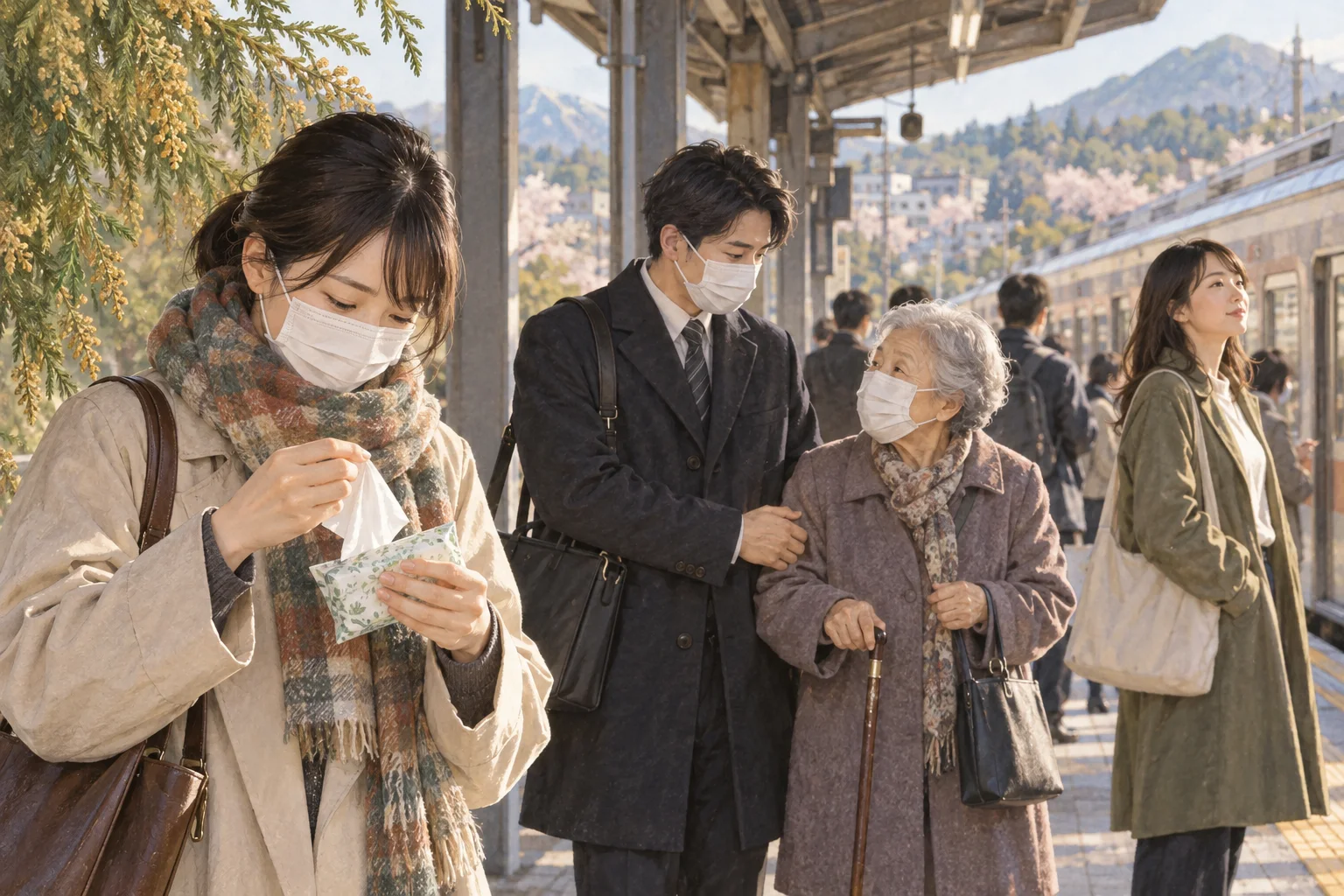
壱In one line一言で言うと
In Japan people wear masks to avoid passing on illness, to block pollen, and sometimes simply to cover their face.
弐In 30 seconds30秒で説明する
Mask wearing in Japan predates the pandemic by a century. The primary reason given is consideration: if you have a cough, you wear one so you do not pass it to others. Hay fever season drives a second wave of use every spring. And a significant number of people wear them for reasons unrelated to health, including simply not wanting to be looked at.
参As a short speechスピーチ・英作文
Masks were a normal sight in Japan long before 2020. The usual explanation is the important one: you wear a mask when you are the one who is ill. The logic is not primarily about protecting yourself but about not passing something to the people around you, and going to work with a cough and no mask is considered inconsiderate.
The second driver is hay fever. Cedar pollen affects a large proportion of the population every spring, and for those weeks masks are everywhere for reasons that have nothing to do with infection. There is a third reason people are less likely to tell you.
Some wear them because they have not put on makeup, because they are self-conscious, or because a mask creates a small private space in a crowded country. That last use has a name in Japanese, date masuku, a mask worn for show rather than for health, and it was being discussed here well before the pandemic made masks universal.
マスクますくmasukuwhy people wear masks in Japan
感染症が流行っていなくても着ける。理由は「うつさないため」だけではない。
壱一言で言うとIn one line
日本では、人にうつさないため、花粉を防ぐため、そして単に顔を隠すためにもマスクを着けます。
弐30秒で説明するIn 30 seconds
日本のマスク着用は、パンデミックより百年早く始まっています。第一の理由として挙げられるのは配慮です。咳が出るなら、人にうつさないよう着ける。春には花粉症で第二の波が来ます。そして健康と無関係な理由で着ける人も相当数います。単に顔を見られたくない、という理由も含めて。
参スピーチ・英作文As a short speech
マスクは2020年よりずっと前から、日本では見慣れた光景でした。よく挙げられる説明が、いちばん大事なものです。体調を崩しているほうが着ける、ということ。自分を守るためというより、周りにうつさないための論理で、咳をしながらマスクなしで出勤するのは配慮に欠けるとされます。
第二の要因は花粉症です。毎年春、スギ花粉が人口のかなりの割合に影響し、その数週間は感染とは無関係にマスクがあふれます。第三の理由は、あまり口にされません。
化粧をしていないから、人目が気になるから、あるいは人の多い国で小さな私的空間を作るために着ける人がいます。この用法には「伊達マスク」という日本語の呼び名があり、パンデミックがマスクを世界共通にするずっと前から、ここでは話題になっていました。
こう聞かれたらQuestions people actually ask
QSo it's not about protecting yourself?
AThat is the traditional framing: you wear it because you are ill, for others. Protective use is common too, especially for pollen and in crowds, but the social expectation runs the other way.
では、自分の身を守るためではないのですか。伝統的にはそうです。自分が体調を崩しているから、人のために着ける。自分を守るための着用も、とくに花粉や人ごみでは一般的ですが、社会的な期待は逆向きです。
QWhen did it start?
AMask use spread widely during the 1918 influenza pandemic and was reinforced after later epidemics. By the time hay fever became widespread in the late twentieth century, the habit was already established.
いつごろ始まったのですか。1918年のインフルエンザ大流行で広まり、その後の流行のたびに定着しました。20世紀後半に花粉症が広がったころには、習慣はすでにできあがっていました。
QIs it still required anywhere?
ALegally it was never a requirement in Japan; it was always a request. Hospitals and some clinics still ask for it, and many people continue to wear one on crowded trains by choice.
いまも必要とされる場所はありますか。法的な義務になったことは一度もなく、常に要請でした。病院や一部の医療機関では今も求められますし、混んだ電車では自分の判断で着け続ける人も多くいます。
誤解されやすいA common misunderstanding
MYTHJapanese people started wearing masks because of the pandemic.日本人はパンデミックをきっかけにマスクを着け始めたと思われがちです。
FACTMask wearing spread widely in Japan during the 1918 influenza pandemic and was already an everyday sight, particularly in hay fever season, decades before 2020.1918年のインフルエンザ大流行で広まり、とくに花粉の季節には、2020年の何十年も前から日常の光景でした。
そのまま使えるフレーズPhrases you can use
- You wear one when you're the one who's ill.体調が悪いほうが着けます。
- Spring is hay fever season here.春は花粉症の季節です。
- It was never a legal requirement, only a request.法的な義務ではなく、要請でした。
- Some people wear one just to cover their face.顔を隠すために着ける人もいます。
- Going to work coughing without one looks inconsiderate.咳をしながらマスクなしで出勤するのは、配慮がないと見られます。
豆知識Background
日本でマスクが広く使われるようになったのは1918年のスペイン風邪の流行が契機で、当時の内務省は「マスクをかけぬ命知らず」という標語のポスターを掲示した。花粉症は1960年代にスギ花粉症が国内で初めて報告され、戦後に大量植林されたスギが成長したことで患者が急増した。全国の耳鼻咽喉科医とその家族を対象にした2019年の調査では、スギ花粉症の有病率は約4割だった。「伊達マスク」は、健康上の理由なく着けるマスクを指す語で、2010年代から広く使われるようになった。日本ではマスク着用が法的義務になったことは一度もなく、政府の方針も一貫して「要請」の形をとった。
出典日本文化ナビ(原田英語.com)「マスクを英語で説明する(masuku)」https://www.haradaeigo.com/japanese-culture/en/masks
- 文
- 日本文化ナビ編集部(原田英語.com)— 英文・和訳・解説はすべて独自に作成
- イラスト
- 日本文化ナビ オリジナル
- 発行
- 原田英語.com https://www.haradaeigo.com/
- 印刷日
- 2026.10.17
© 2026 Harada Eigo (原田英語.com). Text and illustration: Japan Culture Navi.
ページはこちら