給食当番
壱In one line一言で言うと
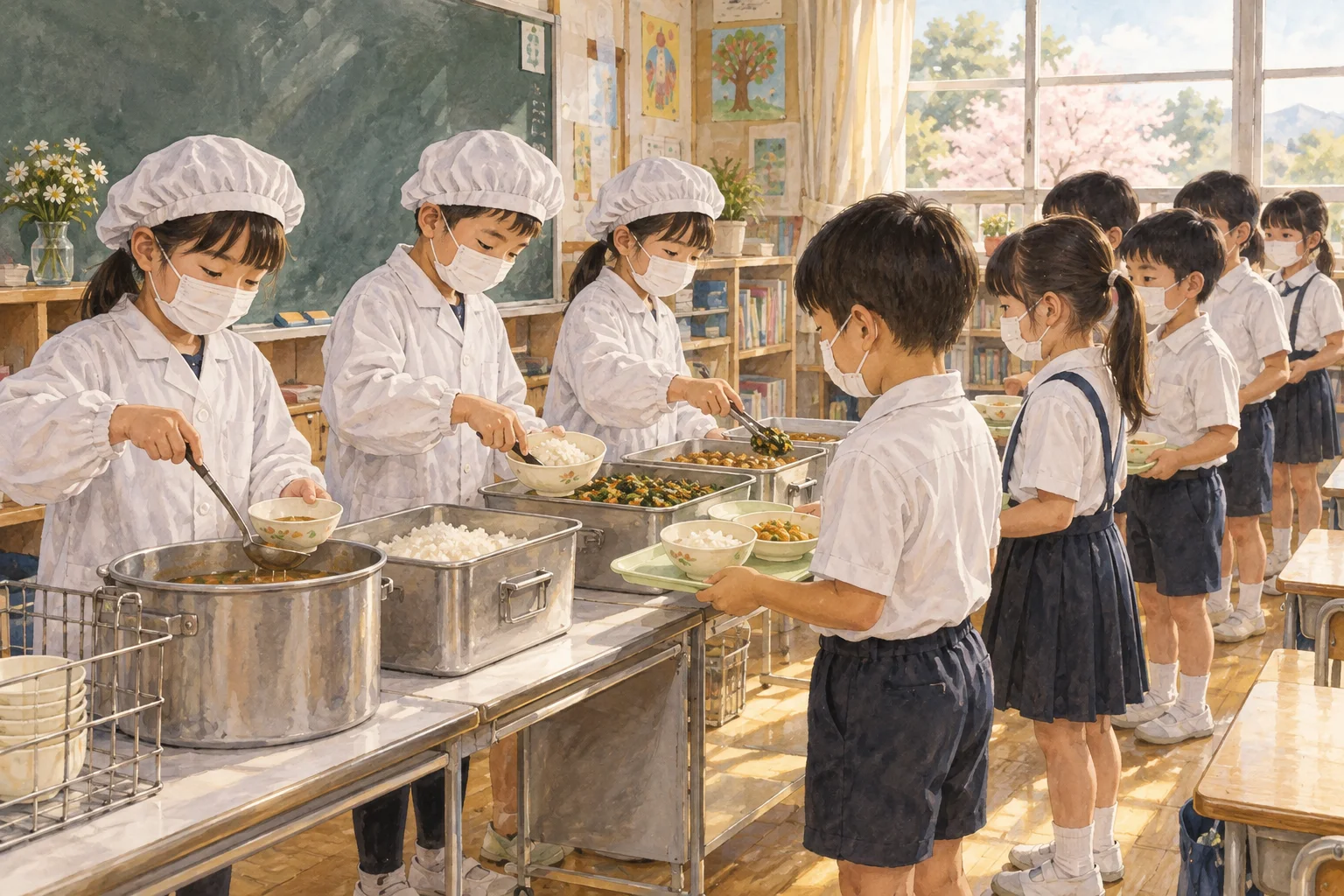
Kyushoku-toban is the rotating duty where students themselves, dressed in white coats, serve lunch to the whole class.
弐In 30 seconds30秒で説明する
In Japanese elementary and junior high schools, a small group of students takes turns serving lunch to their own class. They change into white coats, caps and masks, carry the food containers from the kitchen or delivery cart, and dish out rice, soup and side dishes onto each classmate's tray. The duty rotates through the whole class over the year, so every student serves and is served in turn. A teacher supervises, but no adult does the serving.
参As a short speechスピーチ・英作文
Kyushoku-toban is the student duty that runs Japan's school lunch. A small group, usually one table's worth, changes into white serving coats, caps or headscarves and masks before lunch, then carries the heavy food containers from the kitchen or the corridor cart into the classroom. They ladle out rice, soup and the main dish onto each classmate's tray while the rest of the class waits quietly at their desks, and everyone, teacher included, eats together once serving is done.
The role rotates so that every student takes a turn over the school year. It is treated as real responsibility rather than a game: education ministry hygiene rules require students showing any stomach symptoms to be swapped out of the duty that day, and washing hands is checked before anyone starts serving.
給食当番きゅうしょくとうばんkyushoku tobanthe student duty that serves lunch to the whole class
小学生が白衣とマスクで給食をよそう。先生の仕事ではない。
壱一言で言うとIn one line
給食当番とは、白衣を着た児童・生徒が交代で、クラス全員に給食をよそって配る係のことです。
弐30秒で説明するIn 30 seconds
日本の小学校や中学校では、少人数の生徒が交代で自分のクラスの給食を配ります。白衣、帽子、マスクに着替え、給食室や配膳台から食缶を運び、ご飯・汁物・おかずを一人ひとりの盆によそいます。当番はクラス全員を一年かけて順に回るので、誰もが配る側と配られる側の両方を経験します。先生は見守りますが、よそうのは大人ではなく生徒です。
参スピーチ・英作文As a short speech
給食当番は、日本の学校給食を動かす生徒の係です。ふつう一つの班ほどの人数が、配膳の前に白い上っ張り、帽子や三角巾、マスクに着替え、給食室や廊下の配膳台から重い食缶を教室まで運びます。ほかの生徒が席で静かに待つあいだ、ご飯、汁物、主菜を一人ひとりの盆によそい、配り終えると先生も含めた全員でそろって食べ始めます。
この役目は一年をかけてクラス全員に順番が回るように交代します。単なる遊びではなく、本当の責任として扱われており、文部科学省の衛生の基準では、お腹の症状がある生徒はその日の当番から外すことが求められ、手を洗ったかどうかも配膳の前に確認されます。
こう聞かれたらQuestions people actually ask
QWhy do children serve the food instead of staff?
AIt's treated as part of the education, not just a chore — students learn to portion food fairly, handle a group task, and take turns being responsible for classmates. It also keeps down the number of adults a school needs at lunchtime.
どうして職員ではなく子どもが配るのですか。単なる雑用ではなく、教育の一部として扱われているからです。生徒は食べ物を公平に分ける経験や、集団の作業をこなす経験、クラスメートに対する責任を交代で担う経験を積みます。昼食の時間に必要な大人の人数を抑える面もあります。
QWhat if a child on duty is sick?
ANational hygiene guidelines require any student with stomach symptoms to be taken off the duty for the day, and a substitute steps in. Hand-washing is checked before serving begins.
当番の子が体調不良のときはどうするのですか。国の衛生基準により、お腹の症状がある生徒はその日の当番から外され、代わりの生徒が入ります。配膳の前には手洗いも確認されます。
QIs everyone forced to take a turn?
AGenerally, yes — in most public schools it rotates through the whole class over the year rather than being assigned to a fixed group, so no student skips it entirely.
全員が必ず当番をやらされるのですか。多くの公立校ではその通りです。特定の生徒に固定するのではなく、一年をかけてクラス全員に順番が回るため、誰も丸ごと免除されることはありません。
誤解されやすいA common misunderstanding
MYTHMaking children serve food to other children is unhygienic or a form of child labor.子どもに子どもの食事を配らせるのは不衛生、あるいは一種の労働だと思われがちです。
FACTIt runs under the national school lunch hygiene standards — white coats, masks, hand-washing checks, and being pulled from duty at the first sign of illness — and is framed as food education, not unpaid work.白衣やマスク、手洗いの確認、体調不良ならすぐ交代させるといった、国の学校給食の衛生基準の下で行われており、労働ではなく食育として位置づけられています。
そのまま使えるフレーズPhrases you can use
- It's my turn on lunch duty today.今日は給食当番です。
- Please wait quietly until everyone is served.全員によそい終わるまで静かに待ってください。
- Wash your hands before you serve.配膳の前に手を洗ってください。
- The duty rotates every week.当番は毎週交代します。
- You're off duty today — you don't feel well.今日は体調が悪いので当番を外れてください。
豆知識Background
給食当番は法令で定められた制度ではなく、各学校の運営の中で広く定着した慣行である。文部科学省の学校給食衛生管理基準は、給食に携わる児童生徒について下痢や発熱などの症状がないかを毎日確認し、症状があれば当番から外すことを求めている。白衣・帽子・マスクの着用も同基準にもとづく指導で、髪の毛やほこりの混入を防ぎ、私服が汚れるのも防ぐ。人数や交代の周期は学校や学級によって幅があり、給食係、配膳係などと呼び名が違うこともある。
出典日本文化ナビ(原田英語.com)「給食当番を英語で説明する(kyushoku toban)」https://www.haradaeigo.com/japanese-culture/en/kyushoku-toban
- 文
- 日本文化ナビ編集部(原田英語.com)— 英文・和訳・解説はすべて独自に作成
- イラスト
- 日本文化ナビ オリジナル
- 発行
- 原田英語.com https://www.haradaeigo.com/
- 印刷日
- 2026.10.17
© 2026 Harada Eigo (原田英語.com). Text and illustration: Japan Culture Navi.
ページはこちら