衣替え
壱In one line一言で言うと
Koromogae is the custom of switching to summer or winter clothes on a set date, usually in June and October.
弐In 30 seconds30秒で説明する
On the first of June and the first of October, many schools and companies with uniforms switch them between summer and winter versions. Households do the same, moving one season's clothes into storage and bringing the other out. The dates are conventional rather than weather-based, which means people are sometimes in winter uniform on a hot day.
参As a short speechスピーチ・英作文
Koromogae is the practice of changing your wardrobe on a fixed date rather than when the weather changes. The two switch days are the first of June and the first of October. On those mornings, students at many schools appear in a different uniform, and in offices that still have one the same thing happens.
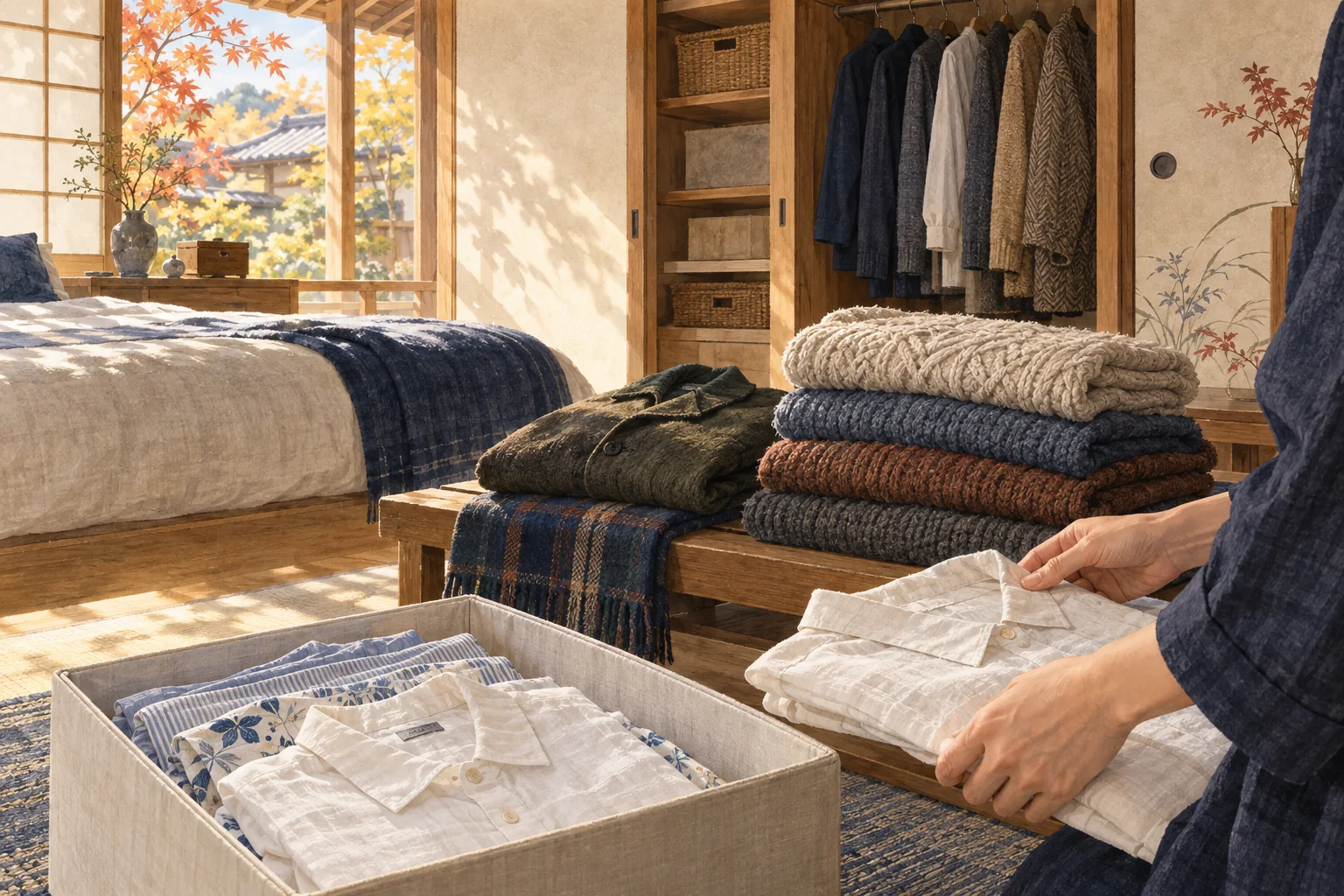
At home it means a day of work: winter coats and sweaters are washed and packed into the closet, summer clothes come out, and the futon is changed for a lighter one. The custom goes back to the court calendar, where clothing was changed on set days, and the uniforms of the Meiji era carried the idea into government offices and schools.
The obvious weakness is that a calendar date and the climate do not agree, and as summers have grown hotter many schools have introduced transition periods of a few weeks where either uniform is acceptable. It is a small thing, but it shows how much of Japanese life still runs on a shared schedule rather than on individual judgment.
衣替えころもがえkoromogaethe seasonal switch between summer and winter clothing
六月一日と十月一日。多くの学校で、この日に制服が変わる。
壱一言で言うとIn one line
衣替えとは、決まった日に夏服と冬服を入れ替える習慣で、ふつうは六月と十月です。
弐30秒で説明するIn 30 seconds
六月一日と十月一日に、多くの学校や制服のある会社が、制服を夏服と冬服で入れ替えます。家庭も同じように、片方の季節の服をしまい、もう片方を出します。日付は気温ではなく慣習で決まっているので、暑い日に冬服という日も出てきます。
参スピーチ・英作文As a short speech
衣替えは、天気が変わったときではなく、決まった日に衣類を入れ替える習慣です。切り替えの日は六月一日と十月一日です。その朝、多くの学校で生徒の制服が一斉に変わり、制服のある会社でも同じことが起きます。家庭では一日仕事になります。
冬のコートやセーターを洗ってしまい、夏物を出し、布団も薄いものに替えます。この習わしは、決まった日に衣を改めた宮中の暦に遡り、明治の制服を通じて役所や学校に受け継がれました。弱点ははっきりしています。
暦の日付と実際の気候は一致しません。夏が暑くなるにつれ、どちらの制服でもよい移行期間を数週間設ける学校が増えました。小さなことですが、日本の暮らしのどれだけが、各自の判断ではなく共有された日程で動いているかがよく分かります。
こう聞かれたらQuestions people actually ask
QWhat if it is cold on the first of June?
AMany schools now allow a transition period of a few weeks when either uniform is fine, and students add a cardigan. Strict schools still expect the change on the day, and that has been criticized as summers get hotter.
6月1日が寒かったらどうするのですか。今は、どちらの制服でもよい移行期間を数週間設ける学校が多く、生徒はカーディガンを足します。決まった日に切り替えさせる学校も残っており、夏が暑くなる中で批判もあります。
QDo adults do it too?
AAt home, yes, and it is a recognized seasonal chore. Companies with uniforms follow the same dates, and the government's summer dress-down campaign, Cool Biz, encourages lighter office clothing in the hot months.
大人もやるのですか。家庭ではします。季節の家事として広く知られています。制服のある会社は同じ日付に従い、夏の軽装を勧める国の取り組み(クールビズ)では、暑い時期に涼しい服装で働くことが呼びかけられています。
QWhy not just change when you feel like it?
AIndividually you can, and many people do. Where a uniform is involved, a shared date avoids the question of who decides, which is the same logic behind fixed holidays and a shared start of the business year.
好きなときに替えればいいのでは。個人ならそうできますし、実際そうしている人も多いです。制服のある場では、共通の日付にすれば、誰が決めるのかという問題が起きません。祝日や年度の始まりをそろえるのと同じ考え方です。
誤解されやすいA common misunderstanding
MYTHJapanese people change clothes on those dates because of a strict rule about the seasons.日本人は季節の厳しい決まりがあってその日に服を替えると思われがちです。
FACTIt is a convention inherited from the school and court calendar, not a rule anyone enforces on the public. Outside uniforms, people dress for the weather like anywhere else.学校や宮中の暦から受け継いだ慣習であって、一般の人に強いられるものではありません。制服の外では、どこの国とも同じように、気候に合わせて着ています。
そのまま使えるフレーズPhrases you can use
- The uniform changes on the first of June.六月一日から夏服になります。
- I packed away the winter clothes yesterday.昨日、冬物をしまいました。
- There is a transition period this year.今年は移行期間があります。
- It is too hot for a blazer today.今日は上着を着るには暑すぎます。
- Time to swap the futon for a thinner one.そろそろ布団を薄いものに替える時期です。
豆知識Background
宮中では季節ごとに装束を改める行事があり、その暦の考え方が広まって今の形になったと説明されます。明治以降、役所や軍の制服に夏服と冬服が定められ、学校がそれにならいました。今も六月一日と十月一日を境とする学校が多く、その前後に移行期間を置くところが増えています。家庭では、防虫剤を入れて衣類をしまい、寝具も同時に替えるのがふつうです。梅雨に入る前の晴れた日を選んでしまう家庭も多く、湿気を避けるためです。夏の軽装を勧める取り組みが広まり、暑い時期に上着とネクタイを外す職場が一般的になりました。
出典日本文化ナビ(原田英語.com)「衣替えを英語で説明する(koromogae)」https://www.haradaeigo.com/japanese-culture/en/koromogae
- 文
- 日本文化ナビ編集部(原田英語.com)— 英文・和訳・解説はすべて独自に作成
- イラスト
- 日本文化ナビ オリジナル
- 発行
- 原田英語.com https://www.haradaeigo.com/
- 印刷日
- 2026.10.17
© 2026 Harada Eigo (原田英語.com). Text and illustration: Japan Culture Navi.
ページはこちら