米
壱In one line一言で言うと
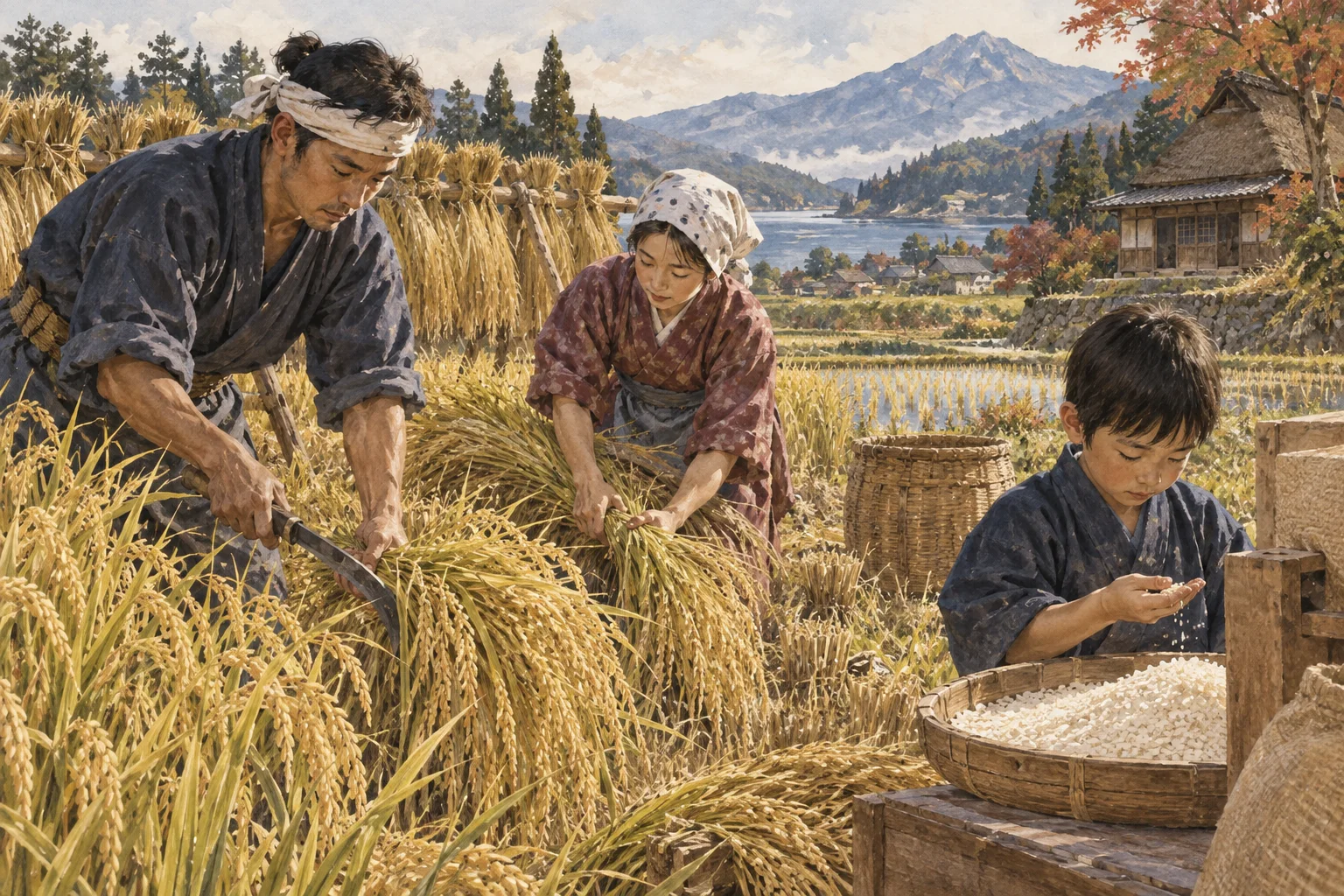
Kome, or rice, is not a side dish in Japan but the center that every other dish is seasoned against.
弐In 30 seconds30秒で説明する
Japanese rice is short-grain and slightly sticky, cooked in plain water with no salt or oil. It is eaten from a bowl held in the hand, and the other dishes on the table are salted with the assumption that rice will be eaten between them. The word gohan means both cooked rice and a meal, which tells you how central it has been.
参As a short speechスピーチ・英作文
Rice in Japan is not a side dish. It is cooked plain, without salt, butter or stock, and it is the fixed point that everything else is measured against. That is why Japanese main dishes taste stronger than visitors expect: grilled fish is salty and simmered dishes are sweet and dark because you are meant to eat rice between mouthfuls.
The grain is short and slightly sticky, so it holds together well enough to pick up with chopsticks. Autumn brings the new crop, labeled shinmai, which is softer and more fragrant and is genuinely looked forward to.
One honest note: Japanese people eat much less rice than they used to. Consumption per person peaked in the early 1960s and has since fallen by more than half, as bread, noodles and pasta took over meals that rice once filled.
米こめkomerice as the center of the meal
ご飯は料理ではなく、食事そのものを指す言葉でもある。
壱一言で言うとIn one line
米とは、日本では付け合わせではなく、ほかのすべての料理が味を合わせる中心です。
弐30秒で説明するIn 30 seconds
日本の米は短粒で少し粘りがあり、塩も油も入れずに水だけで炊きます。手に持った茶碗から食べ、食卓のほかの料理は、その合間にご飯を食べる前提で塩気がつけられています。ご飯という語が炊いた米と食事の両方を指すことが、その中心性を物語っています。
参スピーチ・英作文As a short speech
日本の米は付け合わせではありません。塩もバターも出汁も入れずに炊かれ、ほかのすべてがそれを基準に測られる定点です。日本の主菜が訪日客の予想より味が濃いのはそのためです。焼き魚は塩辛く、煮ものは甘く色が濃い。
合間にご飯を食べることが前提だからです。粒は短く少し粘りがあるので、箸でつまめるだけまとまります。秋には新米が出回ります。やわらかく香りがよく、本当に待たれている食べものです。
正直に書いておくと、日本人が食べる米の量はかつてよりずっと少なくなりました。一人あたりの消費量は1960年代初めをピークに半分以下まで減り、かつて米が埋めていた食事をパン、麺、パスタが引き受けています。
こう聞かれたらQuestions people actually ask
QWhy is Japanese rice sticky?
AIt is a short-grain variety with a different starch balance from the long-grain rice used in much of Asia. Japanese people generally prefer it that way, and it is easy to pick up with chopsticks because it holds together.
日本の米はどうして粘りがあるのですか。アジアの多くで使われる長粒種とはでんぷんの組成が違う、短粒種だからです。日本人は一般にこの粘りを好み、まとまるので箸でも食べやすいのです。
QWhat is shinmai?
AThe newly harvested rice of that year, usually on shelves from around September. It holds more moisture, so it is cooked with slightly less water, and it is softer and more fragrant than rice from the previous year.
新米とは何ですか。その年に収穫されたばかりの米で、だいたい九月ごろから店に並びます。水分を多く含むため、炊くときの水はやや少なめにします。前の年の米よりやわらかく、香りが立ちます。
QIs it rude to leave rice in the bowl?
AIt is not scolded in a restaurant, but many people were raised to finish every grain, sometimes with the line that each grain took a farmer's work. Leaving rice tends to be noticed more than leaving anything else.
茶碗にご飯を残すのは失礼ですか。店でとがめられることはありませんが、一粒残さず食べるように育てられた人は多く、米一粒にも作った人の手間がかかっていると言われたりします。ご飯を残すことは、ほかのものを残すより気づかれやすいものです。
そのまま使えるフレーズPhrases you can use
- Rice is eaten with every dish, not after them.ご飯はほかの料理と一緒に食べます。
- You can pick up the bowl.茶碗は持ち上げてかまいません。
- This is this year's new rice.これは今年の新米です。
- Would you like a second helping?おかわりはいかがですか。
- The word for rice also means meal.ご飯は食事という意味でもあります。
豆知識Background
米は日本語で状態によって名前が変わります。田にあるうちは稲、収穫して脱穀したものが米、炊けばご飯です。ご飯は食事そのものも指し、朝ご飯、晩ご飯という言い方になります。農林水産省の食料需給表によれば、一人あたりの米の消費量は1962年度の年間およそ118キロをピークに減り続け、近年はその半分以下です。それでも新米の時季には売り場に「新米入荷」の札が立ち、産地と品種を選んで買う人が少なくありません。
出典日本文化ナビ(原田英語.com)「米を英語で説明する(kome)」https://www.haradaeigo.com/japanese-culture/en/kome
- 文
- 日本文化ナビ編集部(原田英語.com)— 英文・和訳・解説はすべて独自に作成
- イラスト
- 日本文化ナビ オリジナル
- 発行
- 原田英語.com https://www.haradaeigo.com/
- 印刷日
- 2026.10.17
© 2026 Harada Eigo (原田英語.com). Text and illustration: Japan Culture Navi.
ページはこちら