気合
壱In one line一言で言うと
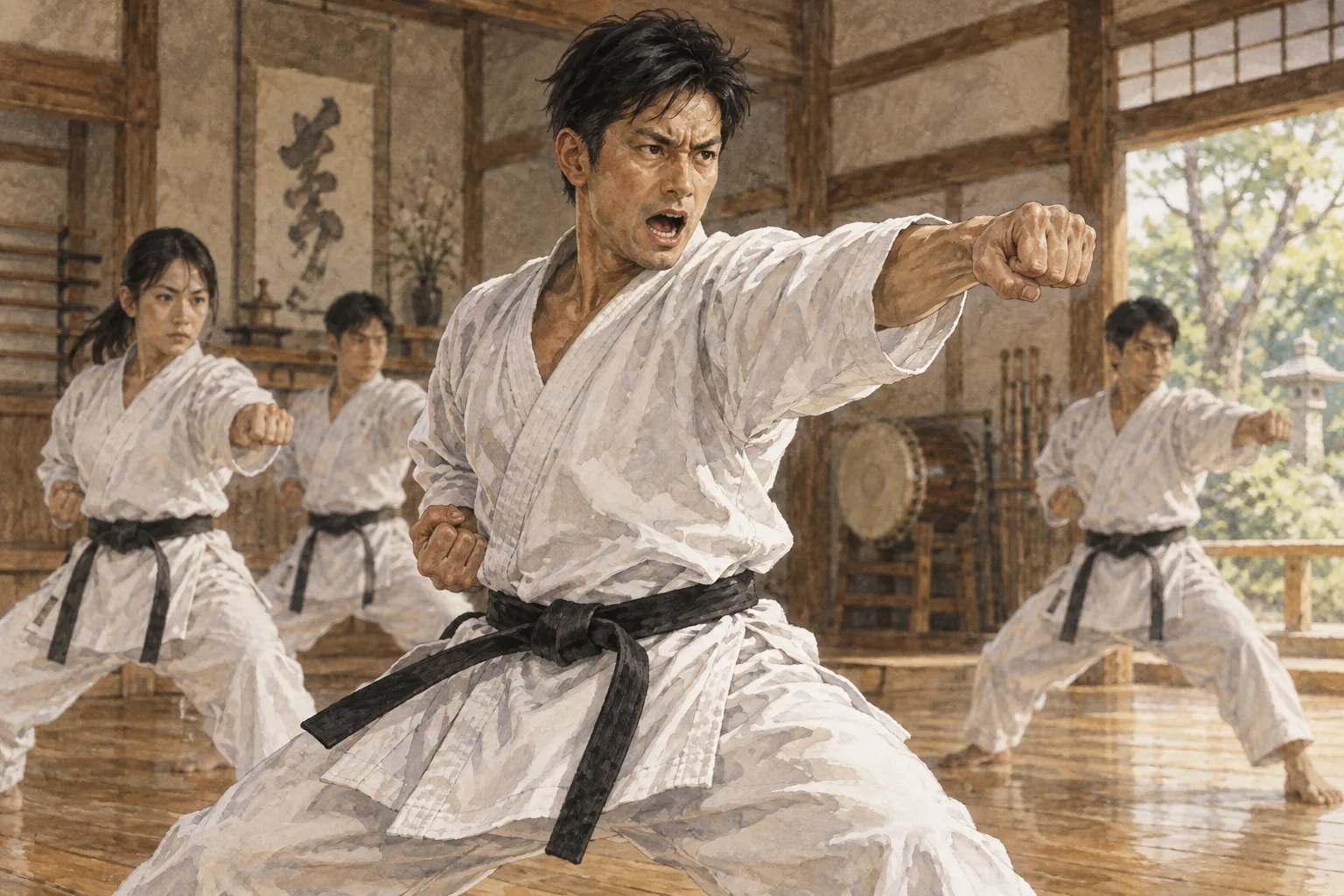
Kiai is the sharp shout martial artists make while striking, meant to focus breath and energy rather than just express aggression.
弐In 30 seconds30秒で説明する
Kiai is the short, sharp shout heard in karate, kendo and other martial arts at the moment of a strike, a cut or a throw. It isn't random noise; it comes from exhaling forcefully as the technique lands, tightening the core and, practitioners say, adding power and focus to the movement while also startling an opponent for a split second. Some arts treat kiai as essential enough to grade in competition, judging whether a point-scoring strike had proper kiai behind it, not just correct form.
参As a short speechスピーチ・英作文
A kiai sounds, to an outsider, like an aggressive yell, but it's really a breathing technique with a sound attached. The shout is timed to a sharp exhale exactly as a strike, cut or throw lands, which tightens the torso and is said to add power to the technique while also using the breath more efficiently than holding it or breathing shallowly. In kendo scoring, a valid point technically requires the striker to demonstrate proper spirit and follow-through, and referees do listen for a kiai as part of judging whether a hit was clean and committed rather than accidental.
The exact sound varies by school and even by person; some arts favor a single hard syllable, others allow a longer shout, and a few traditions deliberately mix in unpredictable timing so an opponent can't read the attack from the sound alone. Newer students often feel embarrassed shouting loudly in front of others, and instructors sometimes spend real time just getting beginners to commit to a full, unselfconscious kiai before worrying about anything else in the technique.
気合きあいkiaithe shout that focuses breath and energy into a technique
叫んでいるのではなく、息を吐き切って技に力を集める。声の質も審査の対象。
壱一言で言うとIn one line
気合とは、武道家が打つ瞬間に発する鋭い声で、攻撃性の表現より呼吸と力を集めることが目的です。
弐30秒で説明するIn 30 seconds
気合とは、空手や剣道などの武道で、打突や斬撃、投げの瞬間に発せられる短く鋭い声です。無作為な叫び声ではなく、技が決まる瞬間に強く息を吐き出すことで体幹が締まり、稽古する人たちは、動きに力と集中が加わると同時に、一瞬相手をひるませる効果もあると言います。剣道など一部の武道では、得点になる打突に正しい気合が伴っていたかどうかも、形の正確さと並んで審査の対象になるほど重視されています。
参スピーチ・英作文As a short speech
気合は、外から見ると攻撃的な叫び声のように聞こえますが、実際には音を伴った呼吸法です。打突や斬撃、投げが決まる瞬間に鋭く息を吐き出すタイミングで発せられ、それによって体幹が締まり、息を止めたり浅く吸ったりするより効率よく呼吸を使いながら技に力を加えるとされています。剣道の判定では、一本が成立するには打った側が正しい気迫と打ち終わりの姿勢を示すことが実質的に求められ、審判は打突が偶然ではなく澄んだ確かな打ちだったかを判断する材料として、気合の有無も聞いています。
実際の声質は流派や個人によって違い、短く鋭い一音を好む流派もあれば、長めの叫びを許す流派もあり、あえてタイミングを読みにくくして相手に声だけで攻撃を読ませない伝統もあります。新しい稽古生は人前で大きな声を出すことを恥ずかしがることが多く、指導者は技の巧拙より先に、遠慮なく声を出しきることそのものに時間をかけて取り組ませることもあります。
こう聞かれたらQuestions people actually ask
QIs kiai just about intimidating the opponent?
AThat's part of it, since a sudden loud shout can genuinely startle someone for a fraction of a second, but the main function is physical: a forceful exhale timed with the strike is thought to add power and tighten the body correctly.
気合は相手を威嚇するためだけのものですか。それも一つの要素です。突然の大きな声は実際に一瞬相手をひるませます。しかし主な役割は身体的なもので、打突に合わせて強く息を吐くことで力が加わり、体が正しく締まるとされています。
QDoes every martial art use kiai?
AMost striking arts and sword arts use it in some form, karate and kendo especially, though the exact sound, timing and how much emphasis is placed on it varies a lot between schools and even individual teachers.
すべての武道で気合は使われるのですか。打撃系や刀を使う武道の多くは何らかの形で気合を使い、特に空手や剣道では顕著です。ただし実際の声質やタイミング、どれほど重視するかは流派や指導者によってかなり違います。
QWhy do some referees judge a point invalid without a proper kiai?
AIn kendo, a scoring strike is supposed to show clear commitment and follow-through, and a weak or missing kiai can be read as a hesitant, poorly committed technique rather than a clean, decisive one.
なぜ審判は、きちんとした気合が無いと一本を無効と判定することがあるのですか。剣道では、得点になる打突には明確な気迫と打ち終わりの姿勢が伴うべきとされています。気合が弱かったり無かったりすると、澄んだ決定的な技ではなく、ためらいのある未熟な技と受け取られることがあるためです。
そのまま使えるフレーズPhrases you can use
- Put more kiai into that strike.その技にもっと気合を入れて。
- Don't be embarrassed to shout loudly.大きな声を出すのを恥ずかしがらないで。
- The kiai should match the moment of impact.気合は打突の瞬間に合わせます。
- His kiai startled everyone in the dojo.彼の気合は道場中を驚かせました。
- Exhale sharply as you strike.打つときに鋭く息を吐いてください。
豆知識Background
気合は、技を出す瞬間に強く息を吐きながら発する声で、空手や剣道、柔道など多くの武道で用いられる。剣道では一本の成立条件に「気剣体一致」があり、打突の際の気合と姿勢、竹刀の当たりがそろっているかを審判が見て判定する。流派によって発声のタイミングや音の長さはさまざまで、あえて大きな声を出さず、息だけで気を集めることを重んじる流派もあるとされる。初心者にとっては、技の巧拙より先に、恥ずかしがらず大きな声を出すこと自体が最初の壁になりやすい。
出典日本文化ナビ(原田英語.com)「気合を英語で説明する(kiai)」https://www.haradaeigo.com/japanese-culture/en/kiai
- 文
- 日本文化ナビ編集部(原田英語.com)— 英文・和訳・解説はすべて独自に作成
- イラスト
- 日本文化ナビ オリジナル
- 発行
- 原田英語.com https://www.haradaeigo.com/
- 印刷日
- 2026.10.17
© 2026 Harada Eigo (原田英語.com). Text and illustration: Japan Culture Navi.
ページはこちら