数え年
壱In one line一言で言うと
Kazoedoshi is the old way of counting age: one at birth, plus a year each New Year, not on birthdays.
弐In 30 seconds30秒で説明する
Kazoedoshi counts a newborn as one and adds a year to everyone on New Year's Day, so a baby born in December turned two a few weeks later. Japan legally moved to counting from zero with birthdays in the twentieth century, but the old system survives where tradition sets the age: shrine rites for children, unlucky years, and the timing of Buddhist memorial services.
参As a short speechスピーチ・英作文
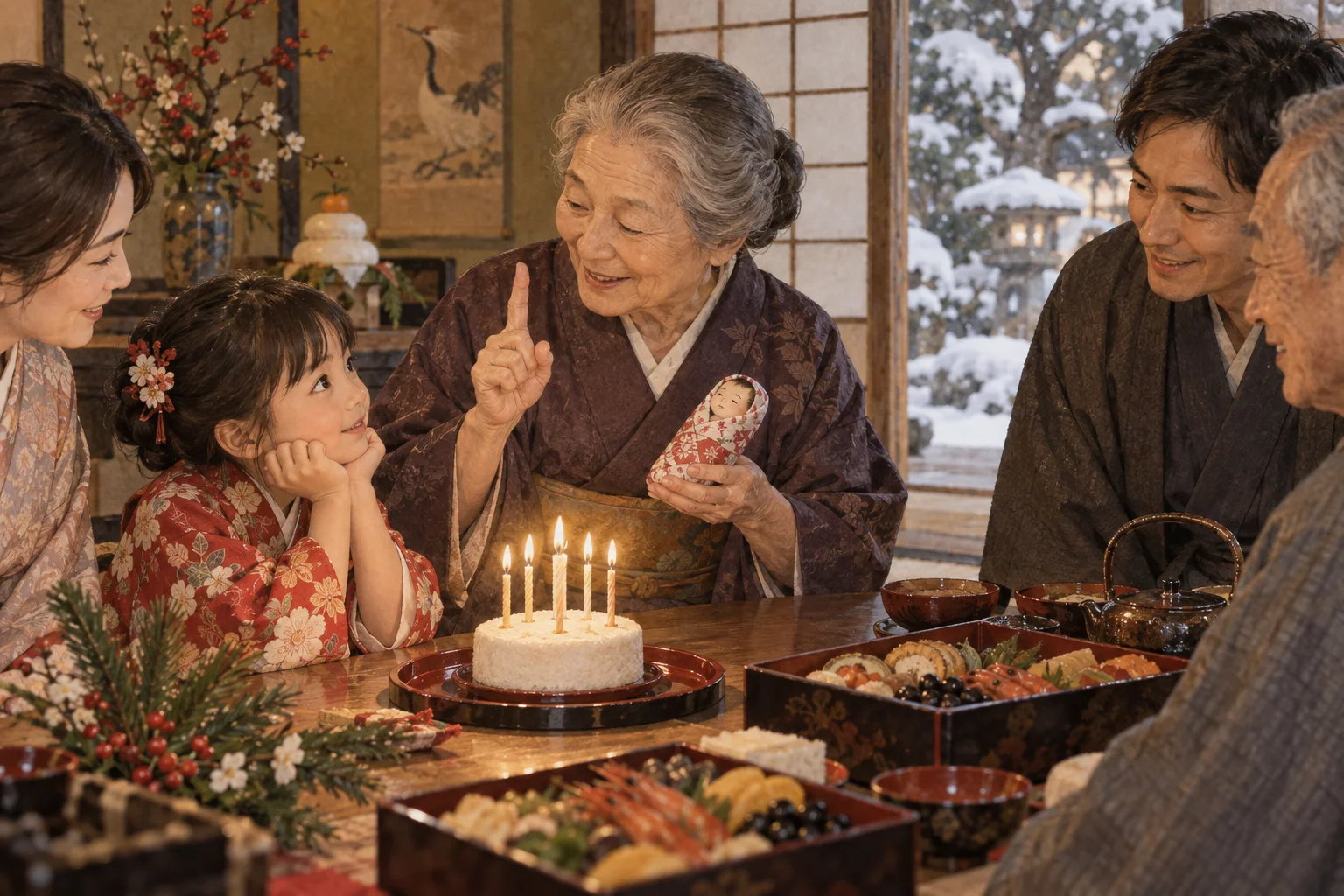
Until the mid-twentieth century, many Japanese people did not have an age in the sense you might expect. Under kazoedoshi a baby was one year old on the day it was born, because the time in the womb counted, and then everyone in the country gained a year together on New Year's Day.
Birthdays were not the moment your age changed. This means a child born in late December was counted as two when it was only days old. Japan introduced counting from zero by law and pushed the public to use it from 1950, and today everybody gives their age the modern way.
The old count survives in places where a tradition fixes the age. Shrines calculate the seven-five-three rite both ways, unlucky years are worked out in the old count, and Buddhist memorial services are timed by counting inclusively, so the third-year service comes two years after a death.
数え年かぞえどしkazoedoshithe old way of counting age, from one at birth
生まれた日に一歳。誕生日ではなく、正月にみんな一つ増える。
壱一言で言うとIn one line
数え年とは、生まれた時点で一歳とし、誕生日ではなく正月に一つ年を取る、古い年の数え方です。
弐30秒で説明するIn 30 seconds
数え年では、生まれたときを一歳とし、元日に全員が一つ加えます。十二月に生まれた子は、数週間後に二歳になる計算です。日本は二十世紀に、誕生日で数える満年齢を法律で定めましたが、伝統が年齢を決める場面には数え年が残っています。子どもの神社の行事、厄年、法要の年回りなどです。
参スピーチ・英作文As a short speech
二十世紀の半ばまで、多くの日本人には、今の意味での年齢がありませんでした。数え年では、生まれた日にもう一歳です。胎内にいた時間を数えるためだと説明されます。そして元日になると、国じゅうの人が一斉に一つ増えます。
誕生日は、年齢が変わる日ではありませんでした。十二月の終わりに生まれた子は、生後わずか数日で二歳と数えられることになります。日本は法律で満年齢を定め、1950年からは広く使うよう促しました。今はみな、現代のやり方で年齢を言います。
それでも、伝統が年齢を決める場面には古い数え方が残っています。七五三の年齢は両方で計算され、厄年は数え年で見ます。法要の年回りも、亡くなった年を一と数えるので、三回忌は亡くなって二年後に来ます。
こう聞かれたらQuestions people actually ask
QSo how old am I in the old system?
AAdd one to your current age, and add one more if your birthday has not come yet this year. That is the count a shrine would use for unlucky years.
数え年では、私は何歳になりますか。今の年齢に一つ足してください。今年の誕生日がまだ来ていなければ、さらに一つ足します。神社が厄年などで使うのはその数です。
QWhy did they change it?
AFor administration, statistics and rations. The modern count was already in law from 1902, but usage stayed mixed until a further law in 1949 pushed people to use it in daily life from the following year.
どうして変えたのですか。行政や統計、配給の都合です。満年齢は1902年の法律で定められていましたが、実際の使われ方は混ざったままでした。1949年の法律が、翌年から日常でも満年齢を使うよう促しました。
QWhere will I still meet it?
AAt shrines and temples. Unlucky year charts, the seven-five-three ceremony and memorial service intervals are reckoned traditionally, so the notice board age may not match your passport.
今もどこで出会いますか。神社と寺です。厄年の表、七五三、法要の年回りは、伝統の数え方によります。掲示されている年齢が旅券と合わないのはそのためです。
そのまま使えるフレーズPhrases you can use
- Everyone got a year older at New Year.正月に全員が一つ年を取りました。
- A newborn was counted as one.生まれた時点で一歳と数えました。
- That age is in the old count.それは数え年の年齢です。
- Add one to your actual age.実際の年齢に一つ足してください。
- Shrines still use it for these rites.神社ではこの行事に今も使います。
豆知識Background
数え年は、生まれた時点を一歳とし、元日ごとに一つ加える数え方です。誕生日ではなく正月に全員の年齢が変わるため、年末生まれの子は生後まもなく二歳になります。満年齢は1902年の年齢計算ニ関スル法律で定められましたが、日常では数え年が使われ続け、1949年の年齢のとなえ方に関する法律によって、翌年から満年齢を用いるよう促されました。現在も、厄年、七五三、法要の年回りなどは伝統的な数え方で見ることが多いです。なお還暦は、今は満六十歳で祝うのがふつうです。
出典日本文化ナビ(原田英語.com)「数え年を英語で説明する(kazoedoshi)」https://www.haradaeigo.com/japanese-culture/en/kazoedoshi
- 文
- 日本文化ナビ編集部(原田英語.com)— 英文・和訳・解説はすべて独自に作成
- イラスト
- 日本文化ナビ オリジナル
- 発行
- 原田英語.com https://www.haradaeigo.com/
- 印刷日
- 2026.10.17
© 2026 Harada Eigo (原田英語.com). Text and illustration: Japan Culture Navi.
ページはこちら