顔を立てる
壱In one line一言で言うと
Kao wo tateru means acting so that someone keeps their standing in front of other people.
弐In 30 seconds30秒で説明する
Literally to make someone's face stand, this means arranging things so that a person is not embarrassed in front of others: letting a senior announce a decision, raising an objection privately, giving credit to the person whose idea it nominally was. It runs alongside a matching phrase for losing face.
参As a short speechスピーチ・英作文
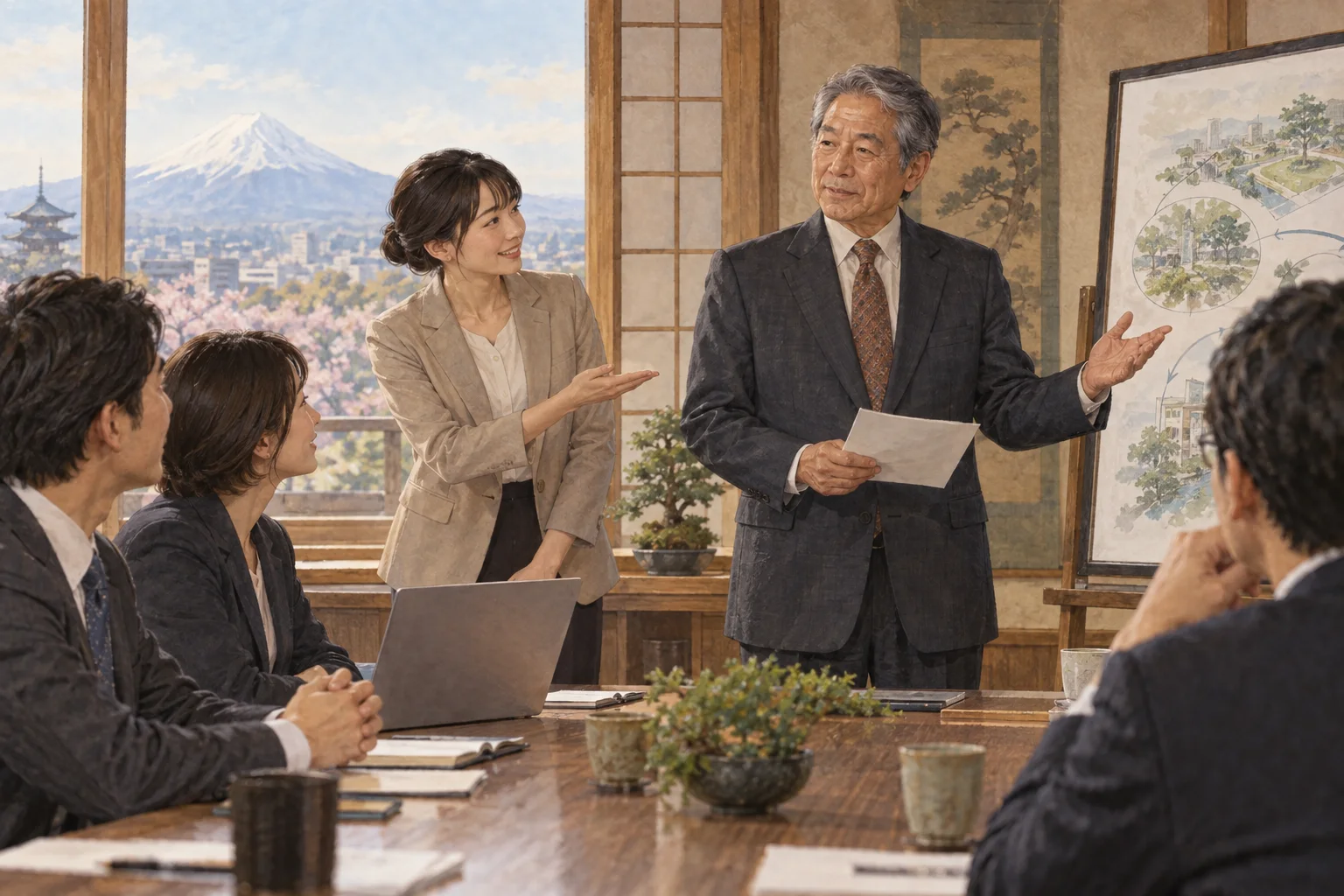
Kao wo tateru means to let someone keep their face, and while the idea of face is not unique to Japan, the specific moves are worth knowing if you work here. It covers things like this: a decision has effectively been made by the team, but it is announced by the section chief, because announcing it is the chief's role.
A client is wrong about a detail, and you correct it in an email afterwards rather than in the room. A proposal you wrote goes up under your manager's name. To an outsider several of these look like dishonesty or excessive deference. Inside the system they are read as competence, because the alternative, correcting someone publicly, costs far more than the accuracy gains.
The matching phrase is kao wo tsubusu, to crush someone's face, and that is a serious thing to do to a person you will keep working with. My advice for a foreign worker is narrow but useful: be as direct as you like about the substance, and careful about the audience. What matters is usually not what you say but who is watching when you say it.
顔を立てるかおをたてるkao wo tateruletting someone keep their standing in front of others
相手の面目を保つ。正しさより、人前で恥をかかせないことを先に置く場面がある。
壱一言で言うとIn one line
顔を立てるとは、相手が人前で面目を保てるように振る舞うことです。
弐30秒で説明するIn 30 seconds
文字どおりには相手の顔を立たせるという意味で、人前で恥をかかせないように取り計らうことを指します。決定を目上の人から発表してもらう、反対は個別に伝える、名目上その人の案だったものに功を譲る、といった形です。対になる、顔をつぶすという言い方もあります。
参スピーチ・英作文As a short speech
顔を立てるとは、相手の面目を保たせることです。面目という考え方そのものは日本だけのものではありませんが、具体的な立ち回りは、ここで働くなら知っておく値打ちがあります。たとえばこういうことです。実際には現場で決まっている案を、発表するのは課長にする。それは課長が言うべきことだからです。
取引先の担当者が細かい点を取り違えている。その場では正さず、あとからメールで直す。自分が書いた提案を、上司の名前で出す。外から見ると、いくつかは不誠実にも、行きすぎた遠慮にも見えます。この仕組みの中では、それは有能さとして読まれます。人前で正すという別の道は、正確さで得るものよりずっと高くつくからです。
対になるのが顔をつぶすという言い方で、これからも一緒に働く相手にするには、重いことです。外国から来て働く人への私の助言は、狭いけれど役に立ちます。中身についてはいくら率直でもかまいません。気をつけるのは、誰が見ているかです。効いてくるのは、何を言うかより、言うときに誰がその場にいるか、であることが多いのです。
こう聞かれたらQuestions people actually ask
QIs this just about flattering the boss?
ANot only. You can give face to a junior colleague by letting them present the work they did, or to a client by not correcting them publicly. It is about the audience, not about rank alone.
これは上司にへつらうということですか。上司を立てるだけの話ではありません。後輩が自分でやった仕事を自分で説明できるようにするのも、取引先を人前で正さないのも、顔を立てることです。地位だけの話ではなく、誰が見ているかの話です。
QDoes it mean I cannot disagree?
AYou can disagree fully; the question is where. Raising it one to one beforehand is expected and effective. Raising it for the first time in front of everyone is what causes damage, regardless of whether you are right.
反対してはいけないということですか。いくらでも反対できます。問題はどこで言うかです。前もって一対一で伝えるのは、当然のことであり、よく効きます。皆の前で初めて出すのが、傷を作ります。こちらが正しいかどうかとは関わりなくです。
QWhat if the mistake has to be corrected immediately?
AThen correct it, and do it in a way that leaves a route out: attributing the confusion to the document, or saying you may have explained it poorly. Safety and facts come first; the wording is what you control.
すぐに直さなければならない間違いの場合はどうするのですか。その場で正します。ただし、逃げ道の残る言い方にします。資料の書き方のせいにする、自分の説明が悪かったと述べる、といった形です。安全と事実が先で、こちらが選べるのは言い方のほうです。
誤解されやすいA common misunderstanding
MYTHSaving face means Japanese people will not admit mistakes.面目を保つというのは、日本人が誤りを認めないことだと思われがちです。
FACTMistakes are admitted, often very formally and in public, as press conferences with deep bows show. What is avoided is forcing someone else into that position unnecessarily in front of an audience.誤りは認められますし、深く頭を下げる記者会見のように、非常に形式ばった形で公にされることもあります。避けられているのは、必要も無いのに、人前で他人をその立場に追い込むことです。
そのまま使えるフレーズPhrases you can use
- Let the section chief announce it.発表は課長にお願いしましょう。
- I will mention it to him privately.あとで個別に伝えておきます。
- Perhaps I explained it badly.私の説明が足りなかったかもしれません。
- That was her idea originally.もともとは彼女の案です。
- Let's not raise it in front of the client.客先の前では出さないでおきましょう。
豆知識Background
顔を立てるの対は顔をつぶすで、どちらもよく使われます。顔が広い、顔が利く、といった言い方も同じ系統で、ここでの顔は、人のあいだでの通りや信用を指します。会議の前に個別に話を通しておく根回しは、この考え方と組みになった手順です。謝罪の場では、当事者が深く頭を下げる形が広く行われ、誤りを認めないという話ではありません。人前で正さないのは、正確さを軽んじているのではなく、直す場所を選んでいるということです。
出典日本文化ナビ(原田英語.com)「顔を立てるを英語で説明する(kao wo tateru)」https://www.haradaeigo.com/japanese-culture/en/kao-wo-tateru
- 文
- 日本文化ナビ編集部(原田英語.com)— 英文・和訳・解説はすべて独自に作成
- イラスト
- 日本文化ナビ オリジナル
- 発行
- 原田英語.com https://www.haradaeigo.com/
- 印刷日
- 2026.10.17
© 2026 Harada Eigo (原田英語.com). Text and illustration: Japan Culture Navi.
ページはこちら