鏡餅と鏡開き
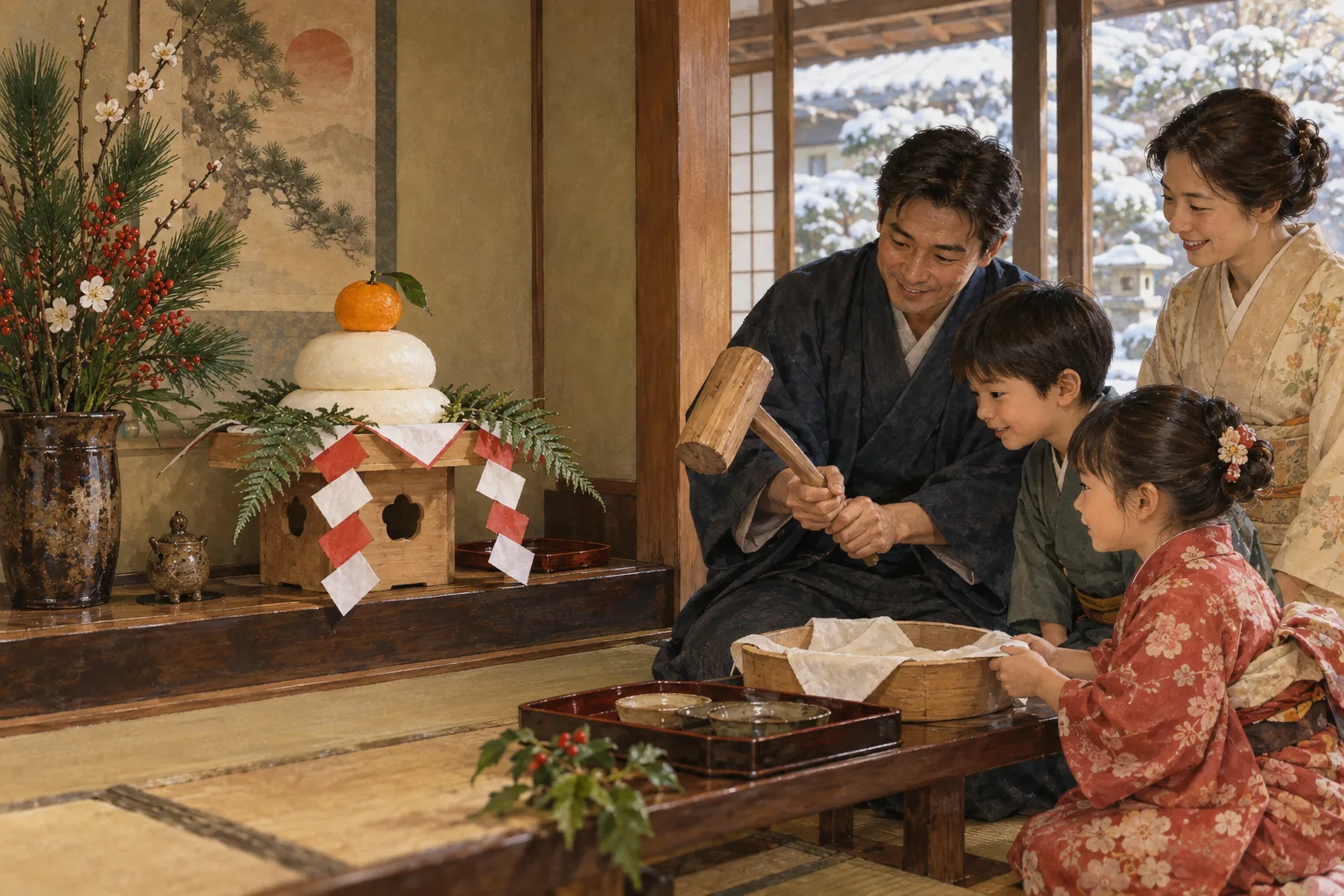
壱In one line一言で言うと
Kagamimochi is a stack of two round rice cakes displayed at New Year and broken open in January.
弐In 30 seconds30秒で説明する
Kagamimochi is two round rice cakes stacked with a bitter orange on top, displayed from late December as an offering. Around January 11th the household takes it down and eats it, usually in soup or grilled. It is broken by hand or with a mallet rather than cut, because cutting carries an unlucky association.
参As a short speechスピーチ・英作文
Kagamimochi is the New Year decoration that looks like a small snowman made of rice cake. Two round cakes are stacked, largest at the bottom, with a bitter orange called daidai on top, and the whole thing sits in the main room or on a household altar from late December.
It is an offering: the New Year deity is said to settle in it during the holiday. The name comes from old round bronze mirrors, which the shape resembles. Around January 11th, a day that varies by region, the family performs kagami-biraki, opening the mirror.
The rice cake has gone hard by then, and it is broken apart with hands or a wooden mallet rather than cut with a knife, because cutting an offering with a blade reminded samurai households of seppuku, ritual suicide. The pieces are then eaten in soup or grilled with soy sauce. Many households now buy a plastic shell containing wrapped cakes, which is practical and keeps mold away.
鏡餅と鏡開きかがみもちとかがみびらきkagamimochithe stacked New Year rice cakes
餅を二段に重ね、みかんをのせる。刃物では切らずに割る。
壱一言で言うとIn one line
鏡餅は正月に飾る二段重ねの丸い餅で、一月に割って食べます。
弐30秒で説明するIn 30 seconds
鏡餅は、丸い餅を二つ重ね、上に橙をのせた供えもので、十二月の末から飾ります。一月十一日ごろに下ろして食べます。汁に入れるか焼くのがふつうです。刃物で切らず、手や木槌で割るのは、切ることが縁起の悪い連想を招くからです。
参スピーチ・英作文As a short speech
鏡餅は、餅でできた小さな雪だるまのような正月の飾りです。丸い餅を大きいほうを下にして二つ重ね、上に橙という柑橘をのせ、十二月の末から座敷や神棚に据えます。これは供えものです。正月の間、年神がここに宿ると言われます。
名は古い青銅の円い鏡に形が似ていることに由来します。一月十一日ごろ、地域によって日は変わりますが、家族は鏡開きを行います。そのころ餅は固くなっており、包丁で切らずに手や木槌で割ります。
刃物で供えものを切ることが、武家にとって切腹を連想させたためです。割った餅は汁に入れるか、焼いて醤油で食べます。今では、包装した餅の入ったプラスチックの容器を買う家庭も多く、カビが生えにくく実用的です。
こう聞かれたらQuestions people actually ask
QWhen exactly is kagami-biraki?
AJanuary 11th in much of the country, but the 4th, 15th or 20th in some regions, following older local calendars. Households usually follow whatever their family has always done.
鏡開きは正確にはいつですか。全国の多くで一月十一日ですが、地域によっては四日、十五日、二十日に行います。古い土地の暦に従ったものです。家ではたいてい、代々してきたとおりにします。
QWhat is the orange on top?
AA daidai, a bitter orange. The name sounds like a phrase meaning generation after generation, so it stands for the family continuing. At home a mikan, a mandarin orange, is often used instead.
上に載っている柑橘は何ですか。橙という苦い柑橘です。その名が代々と同じ音になることから、家が続くことを表します。家庭ではみかんで代えることもよくあります。
QCan I really not cut it?
AYou can physically, and many people do soften it in the microwave. The convention against the knife comes from samurai households, and the word used is open rather than cut for the same reason.
本当に包丁で切ってはいけないのですか。実際には切れますし、電子レンジでやわらかくする人も多くいます。刃物を避ける習わしは武家に由来し、切るではなく開くと言うのも同じ理由からです。
そのまま使えるフレーズPhrases you can use
- We put it out before New Year.年内に飾ります。
- Don't cut it with a knife.包丁では切りません。
- We break it open on the eleventh.十一日に鏡開きをします。
- It's gone rock hard.かちかちになっています。
- We'll put it in soup.お汁に入れて食べます。
豆知識Background
鏡餅の名は、古代の円い鏡に形が似ていることに由来するとされます。二段に重ねるのは、月と日、あるいは陰と陽を表すという説があります。飾る場所は床の間や神棚が伝統的ですが、今は玄関や居間に置く家庭も多くあります。飾り始めは十二月二十八日がよいとされ、二十九日は九が苦に通じるため、三十一日は一夜飾りとして避けられます。鏡開きの日付は地域差が大きく、江戸では一月二十日だったものが、徳川家光の忌日を避けて十一日に移ったという説があります。
出典日本文化ナビ(原田英語.com)「鏡餅と鏡開きを英語で説明する(kagamimochi)」https://www.haradaeigo.com/japanese-culture/en/kagamimochi
- 文
- 日本文化ナビ編集部(原田英語.com)— 英文・和訳・解説はすべて独自に作成
- イラスト
- 日本文化ナビ オリジナル
- 発行
- 原田英語.com https://www.haradaeigo.com/
- 印刷日
- 2026.10.17
© 2026 Harada Eigo (原田英語.com). Text and illustration: Japan Culture Navi.
ページはこちら