十三参り
壱In one line一言で言うと
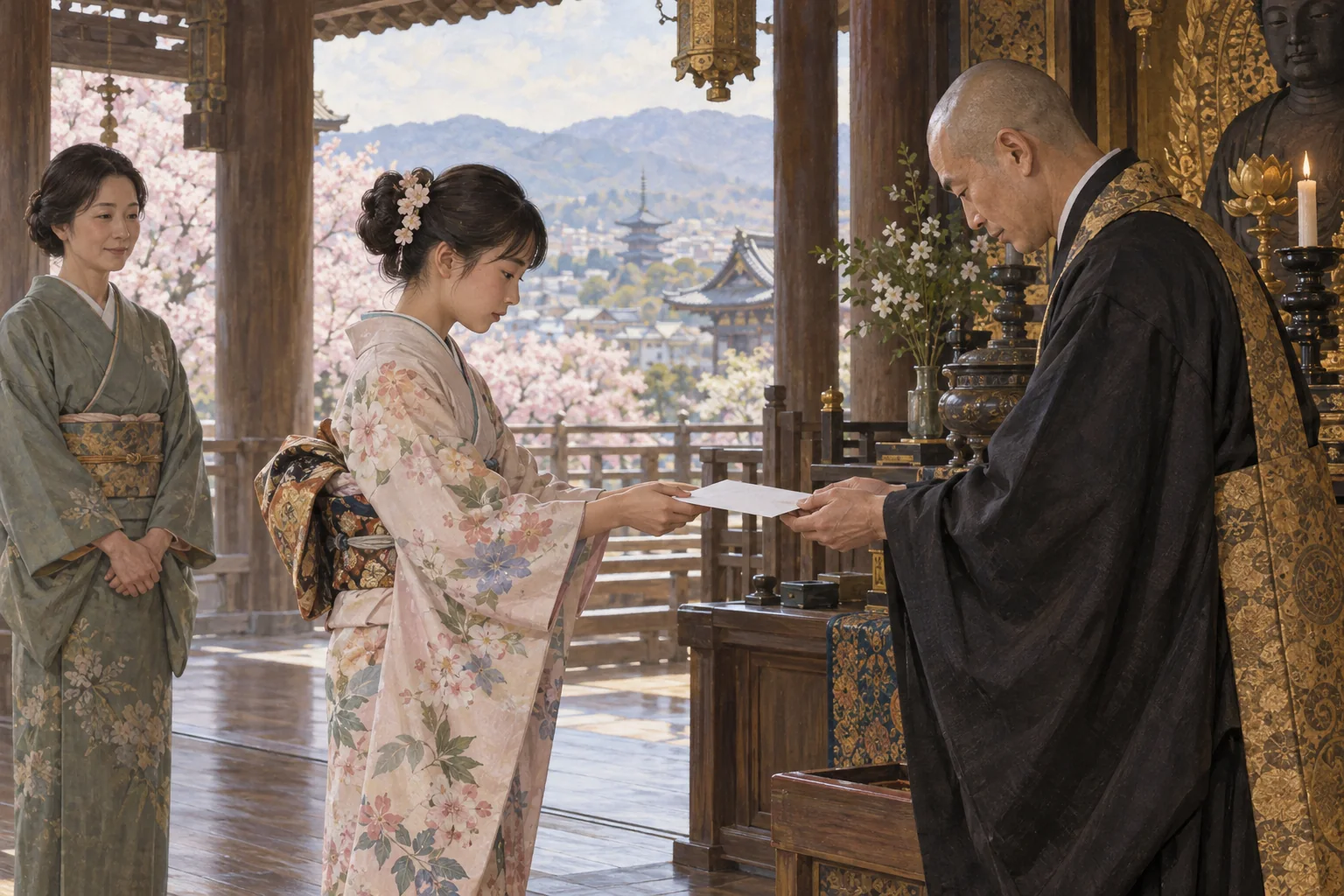
Jusan mairi is a Kansai temple visit at thirteen to ask for wisdom, without looking back on the way home.
弐In 30 seconds30秒で説明する
Jusan mairi is a rite of passage at the age of thirteen by the traditional count, most strongly kept in the Kansai region. Children visit a temple dedicated to the bodhisattva of wisdom, offer a character they have written, and are told not to look back on the way home or the wisdom will be left behind.
参As a short speechスピーチ・英作文
Jusan mairi is a less famous rite of passage than shichi-go-san, and it belongs mainly to the Kansai region. Children make the visit in the spring of the year they turn thirteen by the traditional count, an age that marked the first return of one's zodiac sign and the threshold of adulthood in the old calendar.
The visit is to a temple enshrining Kokuzo, a bodhisattva associated with wisdom and memory. The child writes a single character representing something they want, offers it, and receives a blessing. Girls often wear their first kimono cut to adult proportions.
The part everyone remembers is the instruction on leaving: do not look back until you have crossed the bridge or left the approach, or the wisdom you were given will go back to the temple. Watching a row of thirteen-year-olds walking downhill with fierce concentration, refusing to turn around, is one of the more charming sights in Kyoto in April.
十三参りじゅうさんまいりjusan mairithe shrine visit at thirteen
数え十三の春、知恵を授かりに参る。帰りに振り返らない。
壱一言で言うとIn one line
十三参りとは、関西で数え年十三の子が寺に参って知恵を授かり、帰り道で振り返らないようにする行事です。
弐30秒で説明するIn 30 seconds
十三参りは、数え年十三歳の節目に行う通過儀礼で、関西でとくに続いています。知恵をつかさどる菩薩を祀る寺に参り、自分で書いた一字を納め、帰り道で振り返ると授かった知恵が戻ってしまうと言われます。
参スピーチ・英作文As a short speech
十三参りは七五三ほど知られていない通過儀礼で、主に関西の習わしです。数え年で十三になる年の春に参ります。十三は、生まれた干支が初めて一巡する年であり、古い暦では大人への入り口とされた年齢です。
参るのは、知恵と記憶をつかさどるとされる虚空蔵菩薩を祀る寺です。子どもは自分の望むものを表す一字を書いて納め、祈祷を受けます。女の子は、大人と同じ寸法で仕立てた本裁ちの着物を初めて着ることもあります。誰もが覚えているのは、帰るときの言いつけです。
橋を渡りきるまで、あるいは参道を出るまで振り返ってはいけない。振り返ると、授かった知恵が寺に戻ってしまうからです。十三歳の子どもたちが、ものすごい集中で坂を下りながら、決して後ろを向かない。四月の京都で、かわいらしい光景の一つです。
こう聞かれたらQuestions people actually ask
QWhy thirteen?
AIt is the first return of one's birth zodiac sign, and in the old system it marked the passage toward adulthood. The traditional count also makes it younger than thirteen in the modern reckoning.
どうして十三歳なのですか。生まれた年の干支が初めて巡ってくる年であり、古い数え方では大人への入り口とされたからです。数え年なので、今の数え方では十三より若いことになります。
QIs it observed nationwide?
AIt is strongest in the Kansai region, especially Kyoto, and less common elsewhere, though temples in other regions hold it too. Many families outside Kansai have never heard of it.
全国で行われているのですか。関西、とくに京都で盛んで、ほかの地域ではあまり行われません。各地の寺で執り行うところもあります。関西以外の家庭では、聞いたことがないという人も多くいます。
QWhat happens if you look back?
ANothing, of course. The instruction is a piece of folk practice that gives the rite a memorable ending, and families tell the story afterwards for years.
振り返るとどうなると言われているのですか。もちろん何も起きません。この言いつけは、儀礼に忘れがたい結びを与える民間の作法で、家族はその話を何年も語ります。
そのまま使えるフレーズPhrases you can use
- Don't look back until we cross the bridge.橋を渡るまで振り返らないでください。
- Write one character you care about.大切にしたい一字を書いてください。
- She's thirteen this year.今年で十三になります。
- It's mainly a Kansai custom.主に関西の習わしです。
- We'll go in April.四月に行きます。
豆知識Background
十三参りは、数え年十三歳の春に虚空蔵菩薩に参り、知恵を授かる行事です。京都の嵐山にある寺の十三参りがよく知られ、渡月橋を渡りきるまで振り返ってはいけないという言い伝えがあります。参拝の際には、自分で選んだ一字を毛筆で書いて納めます。女の子が本裁ちの着物を初めて身につける機会になることもあります。七五三や成人式ほど全国的ではありませんが、関西では今も続けられています。
出典日本文化ナビ(原田英語.com)「十三参りを英語で説明する(jusan mairi)」https://www.haradaeigo.com/japanese-culture/en/junisan-mairi
- 文
- 日本文化ナビ編集部(原田英語.com)— 英文・和訳・解説はすべて独自に作成
- イラスト
- 日本文化ナビ オリジナル
- 発行
- 原田英語.com https://www.haradaeigo.com/
- 印刷日
- 2026.10.17
© 2026 Harada Eigo (原田英語.com). Text and illustration: Japan Culture Navi.
ページはこちら