住民票
壱In one line一言で言うと
Juminhyo, or resident registration, is Japan's official record of where you live, which almost every procedure asks you to prove.
弐In 30 seconds30秒で説明する
Every resident of Japan, including foreign residents staying more than three months, is registered at a municipal office by address. Moving means filing a notice within fourteen days, and the certificate printed from that register — the juminhyo — is what you show to open a bank account, sign a phone contract, register a car or enroll a child in school. Copies can now be collected from convenience store machines.
参As a short speechスピーチ・英作文
Juminhyo is an administrative system that explains a lot about daily life in Japan. Every resident is entered on a municipal register by address — not in one national database, but by household at an address in a particular ward. Foreign residents staying more than three months are on it too.
When you move, you file a notice of leaving at the old office and a notice of arrival at the new one, within fourteen days, and if you miss that deadline there is technically a fine. The certificate printed from this register is what you produce constantly: opening a bank account, getting a phone contract, buying a car, registering a child for school, applying for almost any public benefit.
Because so much depends on it, the address on it has to be right, and that is why Japanese people care about doing the move notification promptly. What has changed recently is access: with a My Number card you can print a copy from a machine in a convenience store from early morning until late at night, instead of queuing at the ward office during working hours.
住民票じゅうみんひょうjuminhyothe address registration that everything else depends on
引っ越したら14日以内に届ける。これが無いと、口座も契約も進まない。
壱一言で言うとIn one line
住民票とは、どこに住んでいるかを記録した公の書類で、ほとんどの手続きで提示を求められるものです。
弐30秒で説明するIn 30 seconds
日本に住む人は、三か月を超えて滞在する外国人を含め、住所によって市区町村に登録されます。引っ越したら十四日以内に届け出が要り、その台帳から印刷される住民票が、銀行口座、携帯の契約、車の登録、子どもの就学で提示を求められます。写しはコンビニの機械でも取れるようになりました。
参スピーチ・英作文As a short speech
住民票は、意味が分かると日本の暮らしの多くが見えてくる、行政の仕組みの一つです。住んでいる人は全員、住所によって市区町村の台帳に載ります。全国の名簿に名前が並ぶのではなく、特定の市区町村の、特定の住所の世帯として載る形です。三か月を超えて滞在する外国人も対象です。
引っ越すときは、前の役所に転出の届け、新しい役所に転入の届けを、十四日以内に出します。遅れると、制度の上では過料の定めがあります。この台帳から印刷される住民票の写しを、あらゆる場面で出すことになります。銀行口座、携帯の契約、車の購入、子どもの就学、ほとんどの公的な給付の申請。
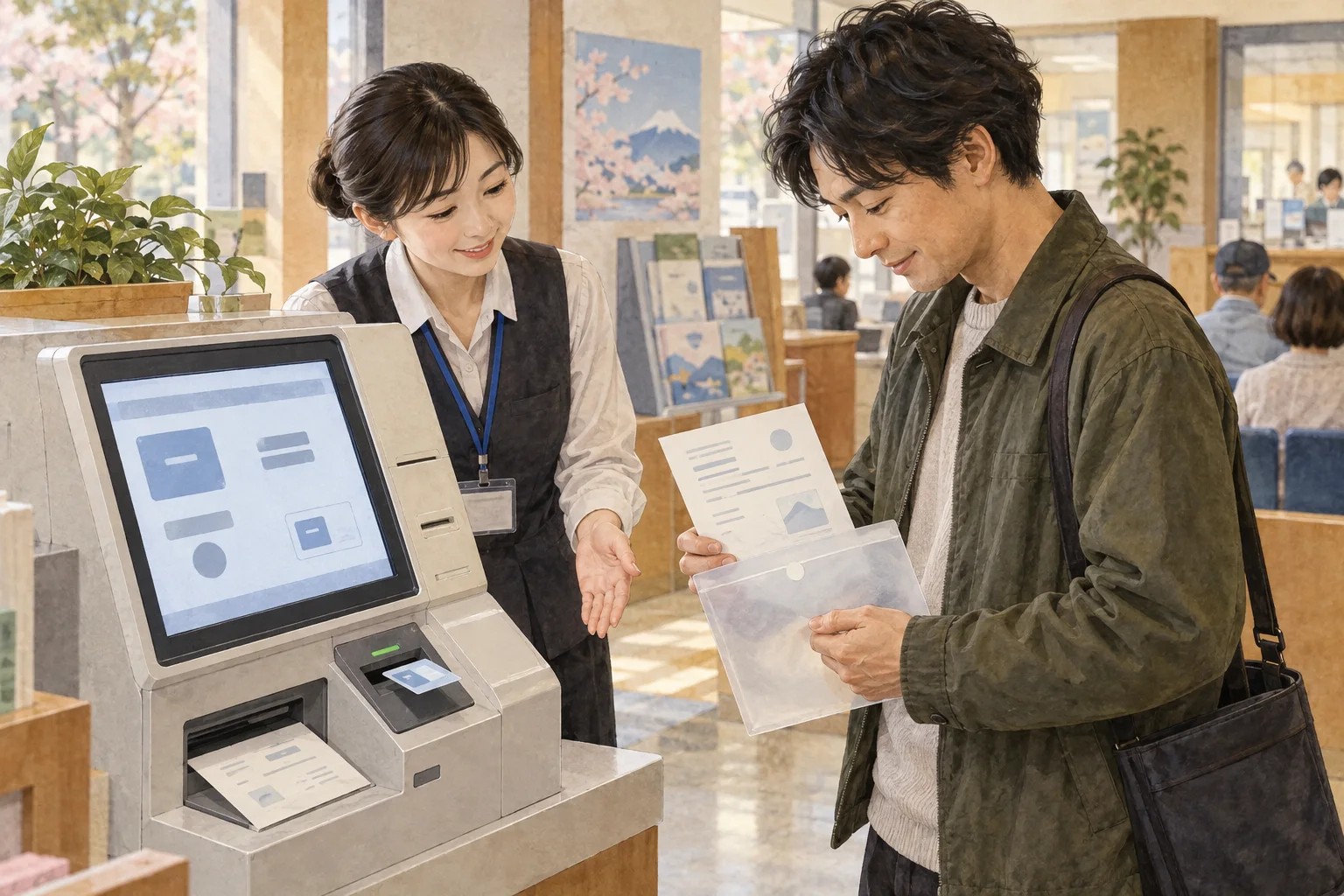
これほど多くの手続きがこれに頼っているので、記載された住所が正しいことが大事で、日本人が引っ越しの届けを急ぐのはそのためです。近年変わったのは、受け取り方です。マイナンバーカードがあれば、役所の窓口に平日に並ばなくても、コンビニの機械で早朝から夜まで写しを印刷できます。
こう聞かれたらQuestions people actually ask
QDo foreign residents have one?
AYes, since 2012. Anyone with a status of residence staying more than three months is on the register, and gets the same certificate.
外国人にもありますか。2012年からあります。三か月を超える在留資格で滞在する人は台帳に載り、同じ住民票が取れます。
QWhat happens if I move and don't report it?
AMail and official notices go to the old address, and procedures that check your address fail. There is also a fine provided for in the law, though it is not always applied.
引っ越して届け出ないとどうなりますか。郵便や公の通知が前の住所に届き、住所を確認する手続きが通りません。法律には過料の定めもありますが、必ず科されるわけではありません。
QIs it the same as a family register?
ANo. The koseki records family relationships and is held where the family is registered; the juminhyo records where you currently live. Both exist and are used for different things.
戸籍と同じですか。違います。戸籍は家族の関係を記録するもので、本籍地に置かれます。住民票は、いまどこに住んでいるかの記録です。両方あり、使い道が違います。
誤解されやすいA common misunderstanding
MYTHJapan has a single national ID register of everyone.日本には全国民を載せた一つの身分登録がある、と思われがちです。
FACTResidence is registered municipality by municipality, and family relationships are recorded separately in the koseki. They are two different systems.住まいは市区町村ごとに登録され、家族の関係は戸籍に別に記録されます。二つの別の仕組みです。
そのまま使えるフレーズPhrases you can use
- It's the official record of where you live.どこに住んでいるかの公の記録です。
- You have to report a move within fourteen days.引っ越しは十四日以内に届け出ます。
- You need it for a bank account or a phone contract.口座や携帯の契約に必要です。
- Foreign residents are on it too.外国人も載ります。
- You can print a copy at a convenience store.コンビニで写しを印刷できます。
豆知識Background
住民基本台帳法にもとづき、転入・転居の届出は住み始めた日から14日以内と定められ、正当な理由なく届け出ない場合は5万円以下の過料の対象となる。2012年7月の外国人登録制度の廃止により、中長期在留者などは住民基本台帳の対象となった。マイナンバーカードを使ったコンビニ交付は2010年代から広がり、多くの自治体で早朝から夜間まで住民票の写しを取得できる。戸籍が家族関係を、住民票が居住関係を記録する点で役割が分かれている。
出典日本文化ナビ(原田英語.com)「住民票を英語で説明する(juminhyo)」https://www.haradaeigo.com/japanese-culture/en/juminhyo
- 文
- 日本文化ナビ編集部(原田英語.com)— 英文・和訳・解説はすべて独自に作成
- イラスト
- 日本文化ナビ オリジナル
- 発行
- 原田英語.com https://www.haradaeigo.com/
- 印刷日
- 2026.10.17
© 2026 Harada Eigo (原田英語.com). Text and illustration: Japan Culture Navi.
ページはこちら