地震への備え
壱In one line一言で言うと
Jishin e no sonae, or earthquake preparedness, is everyday readiness, including alarms on every phone seconds before shaking arrives.
弐In 30 seconds30秒で説明する
Earthquake preparation in Japan is built into daily life. Phones receive an automatic alert that can arrive seconds before strong shaking, buildings are designed to sway, schools and offices run drills, and households keep water and food. Shaking is measured on a seven-step intensity scale describing what it does at a given place, not by magnitude alone.
参As a short speechスピーチ・英作文
If you spend time in Japan you will feel an earthquake, so it is worth knowing how the country handles them. The first thing you will meet is the alert. When sensors detect the fast-traveling first wave, a warning goes out automatically to phones, television and trains, and it can arrive a few seconds to a few tens of seconds before the strong shaking.
Every phone in the room sounds the same tone at once, which is alarming the first time and is the point. Second, the measurement. Japan reports shindo, an intensity scale from zero to seven with weak and strong divisions at five and six, describing the effect at a particular place rather than the size of the event. Third, the buildings.
Standards were tightened substantially in 1981, and modern towers are designed to sway rather than resist. What you should actually do is simple: get under a table or protect your head, stay away from windows, do not run outside during shaking, and afterwards check whether an evacuation instruction has been issued. Hotels keep an evacuation map on the back of the door.
地震への備えじしんへのそなえjishin e no sonaehow Japan prepares for earthquakes
揺れる数秒前に、全員の携帯が鳴る。あの音を知らないと、ただ驚く。
壱一言で言うとIn one line
地震への備えとは、日ごろの備えのことで、揺れが来る数秒前に全員の携帯が鳴る警報もその一つです。
弐30秒で説明するIn 30 seconds
日本では、地震への備えが暮らしに組み込まれています。携帯には強い揺れの数秒前に届くことのある警報が自動で配信され、建物は揺れることを前提に設計され、学校も会社も訓練を行い、家庭は水と食料を備えます。揺れの大きさは、規模だけでなく、その場所で何が起きるかを表す震度階級で示されます。
参スピーチ・英作文As a short speech
日本に滞在すれば、地震には必ず出会います。ですから、この国がどう扱っているかを知っておく値打ちがあります。まず出会うのは警報です。速く伝わる最初の波をとらえると、携帯、テレビ、鉄道へ自動で警報が出されます。強い揺れの数秒から数十秒前に届くことがあります。
部屋じゅうの携帯が同時に同じ音で鳴るので、初めてだと驚きますが、驚かせるのが目的です。次に、揺れの表し方です。日本では震度を発表します。0から7までの階級で、5と6には弱と強の区別があります。地震そのものの規模ではなく、その場所で何が起きるかを表します。三つめは建物です。
基準は1981年に大きく強められ、今の高い建物は、抵抗するのではなく揺れるように設計されています。実際にすることは単純です。机の下に入るか頭を守る。窓から離れる。揺れているあいだに外へ走り出さない。収まったら避難の指示が出ていないか確かめる。ホテルでは、扉の裏に避難経路の図が貼ってあります。
こう聞かれたらQuestions people actually ask
QWhat is that loud alarm on everyone's phone?
AIt is the earthquake early warning, sent automatically to all phones in the area. It means strong shaking may arrive within seconds. Take cover immediately rather than looking at the screen.
みんなの携帯が鳴らしているあの警報は何ですか。緊急地震速報です。その地域のすべての携帯へ自動で送られます。数秒のうちに強い揺れが来るかもしれない、という意味です。画面を見るより先に、身を守ってください。
QShould I run outside?
ANo, not during the shaking. Falling glass, signs and tiles make the area just outside a building one of the more dangerous places. Protect your head, wait for the shaking to stop, then move if instructed.
外へ逃げるべきですか。揺れているあいだは、出てはいけません。落ちてくるガラス、看板、瓦のせいで、建物のすぐ外はかえって危ない場所です。頭を守り、揺れが収まってから、指示があれば動いてください。
QWhat does shindo five mean?
AIt is an intensity level describing effects at a location: at five, unsecured furniture may move and some people find it hard to walk. It is divided into weak and strong, and it is not the same thing as magnitude.
震度5とはどういう意味ですか。その場所での影響を表す階級です。震度5では、固定していない家具が動き、歩きにくいと感じる人が出ます。弱と強に分かれており、地震の規模を表すマグニチュードとは別のものです。
誤解されやすいA common misunderstanding
MYTHJapanese buildings are earthquake-proof, so there is nothing to worry about.日本の建物は地震に耐えるから心配ないと思われがちです。
FACTThey are designed to protect life in a large quake, not to be undamaged. Older buildings predating the 1981 standards are a known risk, and in recent earthquakes a large share of injuries have come from falling furniture and glass rather than collapse.大きな地震で命を守るための設計であって、無傷で済むという意味ではありません。1981年の基準より前の建物は危険が知られており、近年の地震では、けがの多くが倒壊ではなく、倒れた家具や割れたガラスによるものです。
そのまま使えるフレーズPhrases you can use
- That is an earthquake early warning.緊急地震速報です。
- Get under the table and protect your head.机の下に入って、頭を守ってください。
- Stay away from the windows.窓から離れてください。
- Where is the evacuation site?避難場所はどこですか。
- We keep water and food for three days.三日分の水と食料を備えています。
豆知識Background
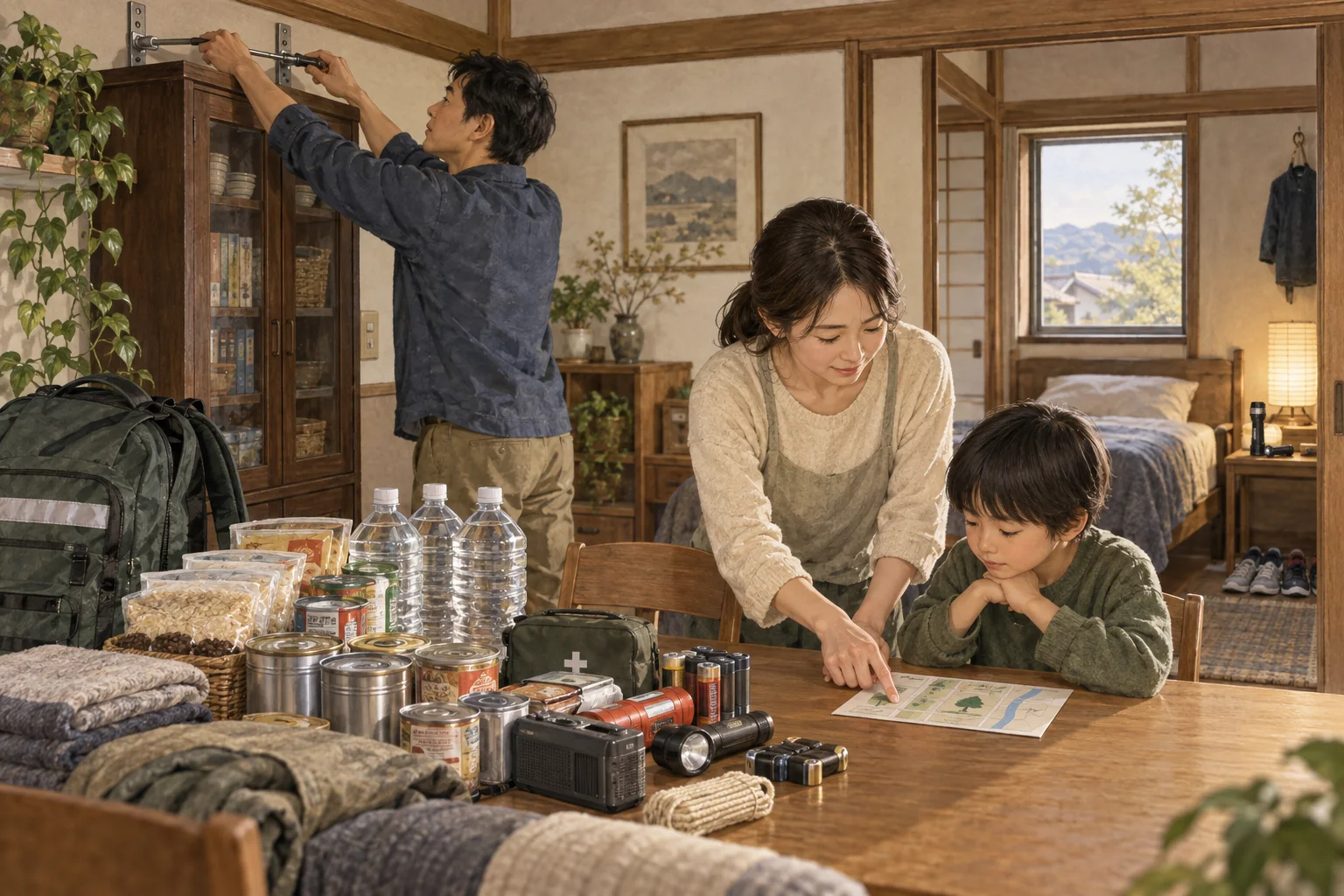
震度は0から7までの階級で、5と6には弱と強があるため、全部で10段階になります。マグニチュードが地震そのものの規模を表すのに対し、震度はその場所での揺れの強さを表します。建物の耐震の基準は1981年に大きく改められ、それ以前かどうかは物件を見るときの目安として広く知られています。自治体は避難場所を指定し、標識を立てています。ホテルや旅館では、扉の裏に避難経路の図が掲示されています。家庭では、家具を壁に固定し、水と食料を数日分備えることが勧められています。
出典日本文化ナビ(原田英語.com)「地震への備えを英語で説明する(jishin e no sonae)」https://www.haradaeigo.com/japanese-culture/en/jishin-e-no-sonae
- 文
- 日本文化ナビ編集部(原田英語.com)— 英文・和訳・解説はすべて独自に作成
- イラスト
- 日本文化ナビ オリジナル
- 発行
- 原田英語.com https://www.haradaeigo.com/
- 印刷日
- 2026.10.17
© 2026 Harada Eigo (原田英語.com). Text and illustration: Japan Culture Navi.
ページはこちら