人力車
壱In one line一言で言うと
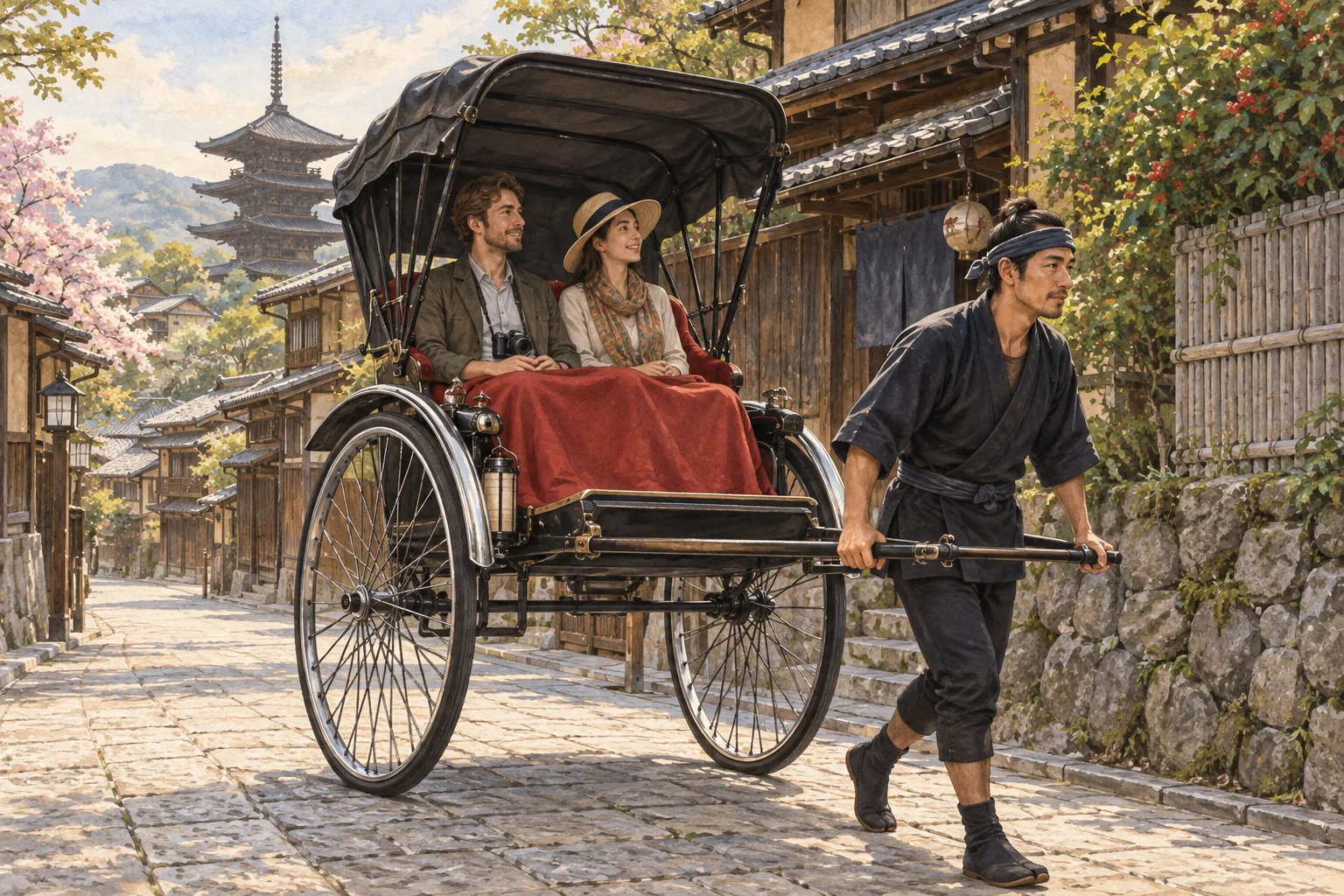
Jinrikisha, or a rickshaw, is a person-pulled two-wheeled cart, invented in Japan around 1870 and now used only for sightseeing.
弐In 30 seconds30秒で説明する
The jinrikisha appeared in Tokyo around 1870 and spread across Japan within a few years, replacing the palanquin as ordinary transport. It was exported to China, Southeast Asia and India, and the English word rickshaw comes from the Japanese name. Motor vehicles pushed it out by the 1930s. It survives today only in tourist districts such as Asakusa, Kyoto and Kamakura, where the pullers double as guides.
参As a short speechスピーチ・英作文
The jinrikisha is a rare case of a Japanese invention that spread across a continent and then came back as an English word. It appeared in Tokyo around 1870 — several people claimed to have invented it and the patent history is disputed — and it did something the palanquin could not: one person could pull one or two passengers on wheels, faster and much more cheaply than the two or more bearers a palanquin needed.
Within a few years there were tens of thousands in Tokyo alone, and pulling one became a common job for men who had come to the city looking for work. It was exported abroad, taking hold in Shanghai, Singapore, Calcutta and elsewhere, and the English word rickshaw is simply jinrikisha minus its first syllable.
Motorized taxis and trams displaced it in Japan from the 1920s and it had essentially gone by the war. What remains is a tourist trade in a handful of districts, where the pullers are trained as guides, remember the history of each street, and will stop for photographs. A short ride costs a few thousand yen.
人力車じんりきしゃjinrikishathe two-wheeled passenger cart Japan invented and exported
明治初めの日本で生まれ、アジア中に広がった。英語のrickshawは、この語が訛ったもの。
壱一言で言うとIn one line
人力車とは、人が引く二輪の車で、1870年ごろ日本で生まれ、いまは観光のためだけに使われています。
弐30秒で説明するIn 30 seconds
人力車は1870年ごろの東京に現れ、数年で全国に広がって、それまでの駕籠にかわる移動の手段になりました。中国、東南アジア、インドへ輸出され、英語のrickshawはこの日本語が訛ったものです。1930年代には自動車に押し出されました。いまは浅草、京都、鎌倉といった観光地に残るだけで、引き手は案内役も兼ねています。
参スピーチ・英作文As a short speech
人力車は、日本で生まれたものが大陸に広がり、英語の単語になって戻ってきた、めずらしい例です。1870年ごろの東京に現れました。考案者を名乗る人が複数いて、特許の経緯には争いがあります。ただ、この車は駕籠にできないことをしました。一人が車輪で一人か二人を運べる。
二人以上で担ぐ駕籠より速く、そしてずっと安い。数年のうちに東京だけで数万台になり、引くことは、仕事を求めて都会に出てきた男たちのふつうの職業になりました。海外へも輸出され、上海、シンガポール、カルカッタなどで根づきます。英語のrickshawは、「じんりきしゃ」から頭の「じん」が落ちたものにすぎません。
日本では1920年代から自動車と路面電車に押され、戦争のころにはほぼ姿を消しました。いま残っているのは、いくつかの地区の観光の商いです。引き手は案内役として訓練され、通りごとの由来を覚えていて、写真のために止まってくれます。短い区間で数千円です。
こう聞かれたらQuestions people actually ask
QWho invented it?
AIt is disputed. Several men in Tokyo claimed it around 1869 to 1870 and were granted a joint license, and some accounts credit a foreign resident. There is no settled answer.
誰が考えたのですか。争いがあります。1869年から1870年ごろ、東京の数人が名乗り出て、連名で営業の許可を得ました。在留外国人を挙げる説もあります。決着はしていません。
QIs rickshaw really from Japanese?
AYes. It is a shortening of jinrikisha, which means human-powered vehicle, and it entered English in the late nineteenth century as the carts spread through Asia.
rickshawは本当に日本語からですか。そうです。人力車を縮めたもので、人の力で動く車という意味です。車がアジアに広がった十九世紀の後半に英語に入りました。
QHow much is a ride?
AUsually a few thousand yen for ten to thirty minutes for two people, with fixed courses posted. Agree the course and price before getting on.
料金はいくらですか。二人で十分から三十分、数千円が目安で、決まった経路が掲示されています。乗る前に経路と料金を確かめてください。
誤解されやすいA common misunderstanding
MYTHRickshaws are an ancient form of Japanese transport.人力車は日本の昔からの乗り物だ、と思われがちです。
FACTIt was invented around 1870, after Japan opened, and lasted about fifty years as ordinary transport before cars replaced it.開国のあと、1870年ごろに生まれたものです。ふつうの乗り物としての寿命は五十年ほどで、自動車に置きかわりました。
そのまま使えるフレーズPhrases you can use
- It was invented in Japan around 1870.1870年ごろ日本で生まれました。
- The English word rickshaw comes from this.英語のrickshawはこれが語源です。
- It replaced the palanquin, then cars replaced it.駕籠にかわり、そして自動車にかわられました。
- Now it's only for sightseeing.いまは観光のためだけです。
- Agree the route and price before you get on.乗る前に経路と料金を決めてください。
豆知識Background
人力車は1869年から1870年ごろに東京で作られたとされ、和泉要助・高山幸助・鈴木徳次郎の三人が1870年に製造と営業の許可を受けている。ただし、在留外国人の考案とする説もあり、発明者は確定していない。明治中期には全国で20万台を超えたとされる。英語の rickshaw は jinrikisha の略で、十九世紀後半に英語へ入った。現在は浅草、京都の嵐山、鎌倉、倉敷などで観光用に営業している。
出典日本文化ナビ(原田英語.com)「人力車を英語で説明する(jinrikisha)」https://www.haradaeigo.com/japanese-culture/en/jinrikisha
- 文
- 日本文化ナビ編集部(原田英語.com)— 英文・和訳・解説はすべて独自に作成
- イラスト
- 日本文化ナビ オリジナル
- 発行
- 原田英語.com https://www.haradaeigo.com/
- 印刷日
- 2026.10.17
© 2026 Harada Eigo (原田英語.com). Text and illustration: Japan Culture Navi.
ページはこちら