伊勢神宮
壱In one line一言で言うと
Ise Jingu is regarded as the most important shrine in Shinto, dedicated to the sun deity Amaterasu.
弐In 30 seconds30秒で説明する
Ise Jingu in Mie Prefecture is the shrine at the center of Shinto. Its formal name is simply Jingu, the Shrine. It is not one building but a complex of 125 shrines, with two main sanctuaries: the Inner Shrine to the sun deity Amaterasu, and the Outer Shrine to the deity of food and clothing.
参As a short speechスピーチ・英作文
Ise Jingu, in Mie Prefecture, is the shrine at the center of Shinto, and its formal name is simply Jingu, which means the Shrine, because it does not need distinguishing from any other.
It is not a single building but a complex of a hundred and twenty-five shrines spread over a wide area, with two principal sanctuaries several kilometers apart: the Inner Shrine dedicated to Amaterasu, the sun deity from whom the imperial line is traditionally descended, and the Outer Shrine dedicated to the deity of food, clothing and shelter. Custom is to visit the Outer Shrine first.
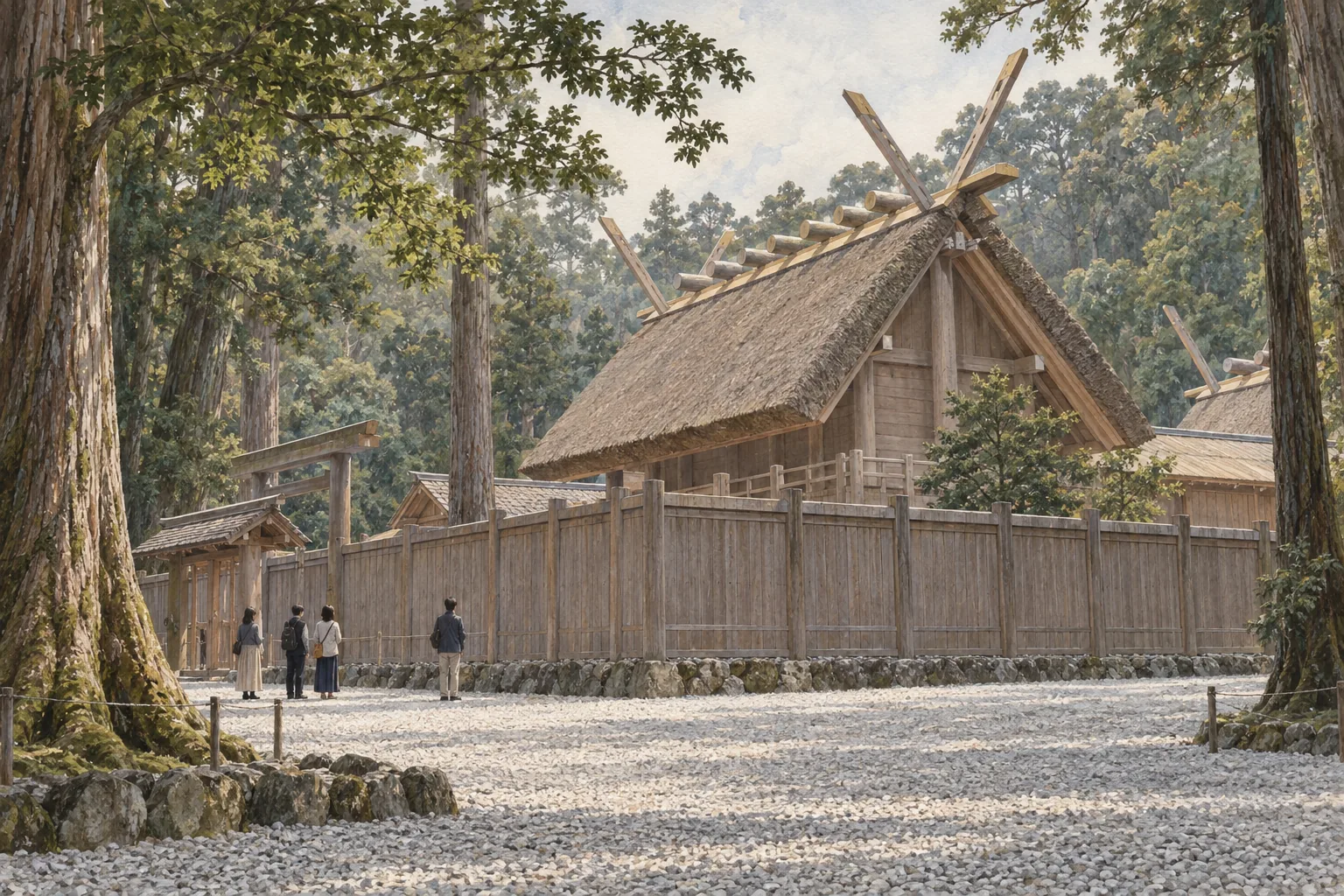
What visitors find surprising is that you cannot see very much. The innermost sanctuaries stand behind fences and you approach only to a point, with photography prohibited beyond a marked line, and the buildings themselves are plain unpainted cypress with thatched roofs, deliberately simple. The approach through old cedar forest and over a wooden bridge is a large part of the experience.
伊勢神宮いせじんぐうIse Jinguthe central shrine of Shinto
正式な名前はただの「神宮」。ほかの神社と区別する必要がないから。
壱一言で言うとIn one line
伊勢神宮は神道で最も重んじられる神社で、太陽の神である天照大御神を祀ります。
弐30秒で説明するIn 30 seconds
三重県の伊勢神宮は、神道の中心にある神社です。正式な名称は単に「神宮」、すなわち「その神社」です。一つの建物ではなく125の宮社からなる集まりで、二つの正宮があります。太陽の神である天照大御神を祀る内宮と、衣食住の神を祀る外宮です。
参スピーチ・英作文As a short speech
三重県の伊勢神宮は神道の中心にある神社で、正式な名称はただ「神宮」です。ほかのどの神社とも区別する必要がないからです。一つの建物ではなく、広い範囲に散らばる125の宮社からなり、数キロ離れた二つの正宮があります。
天照大御神を祀る内宮と、衣食住の神を祀る外宮です。天照大御神は、皇室が伝統的にその血を引くとされる太陽の神です。参拝は外宮からというのが習わしです。訪れた人が意外に思うのは、あまり多くを見られないことです。
最も奥の正宮は垣の向こうにあり、進めるのは決められた場所までで、そこから先は撮影が禁じられています。建物そのものも、彩色しない檜に茅葺きという、あえて簡素な姿です。古い杉の森を抜け、木の橋を渡って進む参道が、この体験の大きな部分を占めています。
こう聞かれたらQuestions people actually ask
QCan I see the main buildings?
AOnly partly. You approach the outer gate of each main sanctuary and pray there; the inner compound is not open. Photography is prohibited past a marked point, and staff will remind you politely if you raise a camera.
本殿を見ることはできますか。一部だけです。正宮の外側の門まで進んで拝みます。内側の区画は公開されていません。決められた場所から先は撮影が禁じられていて、カメラを構えると係の人がていねいに知らせてくれます。
QIs it a place only for Japanese people?
ANo, anyone may visit and pray. There is no entrance fee, no requirement of belief, and English maps are available. Dress and behave as you would at any place of worship, and follow the marked paths.
日本人のためだけの場所ですか。そんなことはありません。誰でも参拝できます。拝観料はなく、信仰を求められることもなく、英語の地図もあります。ほかの祈りの場と同じ服装と振る舞いで、決められた道を通ってください。
そのまま使えるフレーズPhrases you can use
- Its formal name is simply Jingu.正式には単に神宮といいます。
- Visit the Outer Shrine first.外宮から先に参拝します。
- There are 125 shrines in total.全部で125の宮社があります。
- No photography past this point.ここから先は撮影できません。
豆知識Background
伊勢神宮の正式名称は「神宮」で、内宮は皇大神宮、外宮は豊受大神宮といいます。江戸時代には「おかげ参り」と呼ばれる集団参詣が周期的に起こり、数百万人が伊勢を目指した年もあったと伝えられます。参道の先にあるおはらい町とおかげ横丁は、門前町として整えられた通りで、赤福餅などの店が並びます。式年遷宮によって社殿は20年ごとに建て替えられ、常に新しい姿を保っています。
出典日本文化ナビ(原田英語.com)「伊勢神宮を英語で説明する(Ise Jingu)」https://www.haradaeigo.com/japanese-culture/en/ise-jingu
- 文
- 日本文化ナビ編集部(原田英語.com)— 英文・和訳・解説はすべて独自に作成
- イラスト
- 日本文化ナビ オリジナル
- 発行
- 原田英語.com https://www.haradaeigo.com/
- 印刷日
- 2026.10.17
© 2026 Harada Eigo (原田英語.com). Text and illustration: Japan Culture Navi.
ページはこちら